Key Points
🇺🇸 Worldwide Cement Consumption:
America’s Enduring Strength in a Global Market
Building the Backbone of Freedom – From Coast to Coast
A Proud American Legacy in Cement
As the land of the free and home of the brave, America has long stood as a beacon of innovation and resilience. Our concrete foundations power the world’s mightiest infrastructure – from the Golden Gate Bridge to the endless highways that connect our great nation. While global cement consumption tells a story of worldwide growth, it’s the American spirit that drives sustainable, high-quality production right here at home. At Volume Concrete, we’re proud to fuel America’s build with ready-mix excellence, supporting jobs, communities, and the American Dream.
Global Cement Consumption: The Big Picture (2025 Update)
Worldwide, cement remains the lifeblood of progress, with consumption stabilizing at approximately 4.15 billion metric tons in 2025 – a modest 1-2% recovery from 2024’s 4.2 billion tons (excluding China’s fluctuations). This growth, valued at over $410 billion, is propelled by urbanization in Asia and Africa, but America’s efficient, eco-conscious production sets the global standard.
- Top Consumers (2025 Est.): China (~2.1B tons, 51%), India (~400M tons, 9.5%), EU (~180M tons, 4.3%), and emerging markets like Vietnam and Brazil.
- U.S. Share: A mighty 2.3% globally, but with unmatched per-capita impact – powering our infrastructure renaissance.
- Key Driver: Data centers alone projected to consume 247,000 tons worldwide in 2025, with America leading the charge in AI-fueled builds.
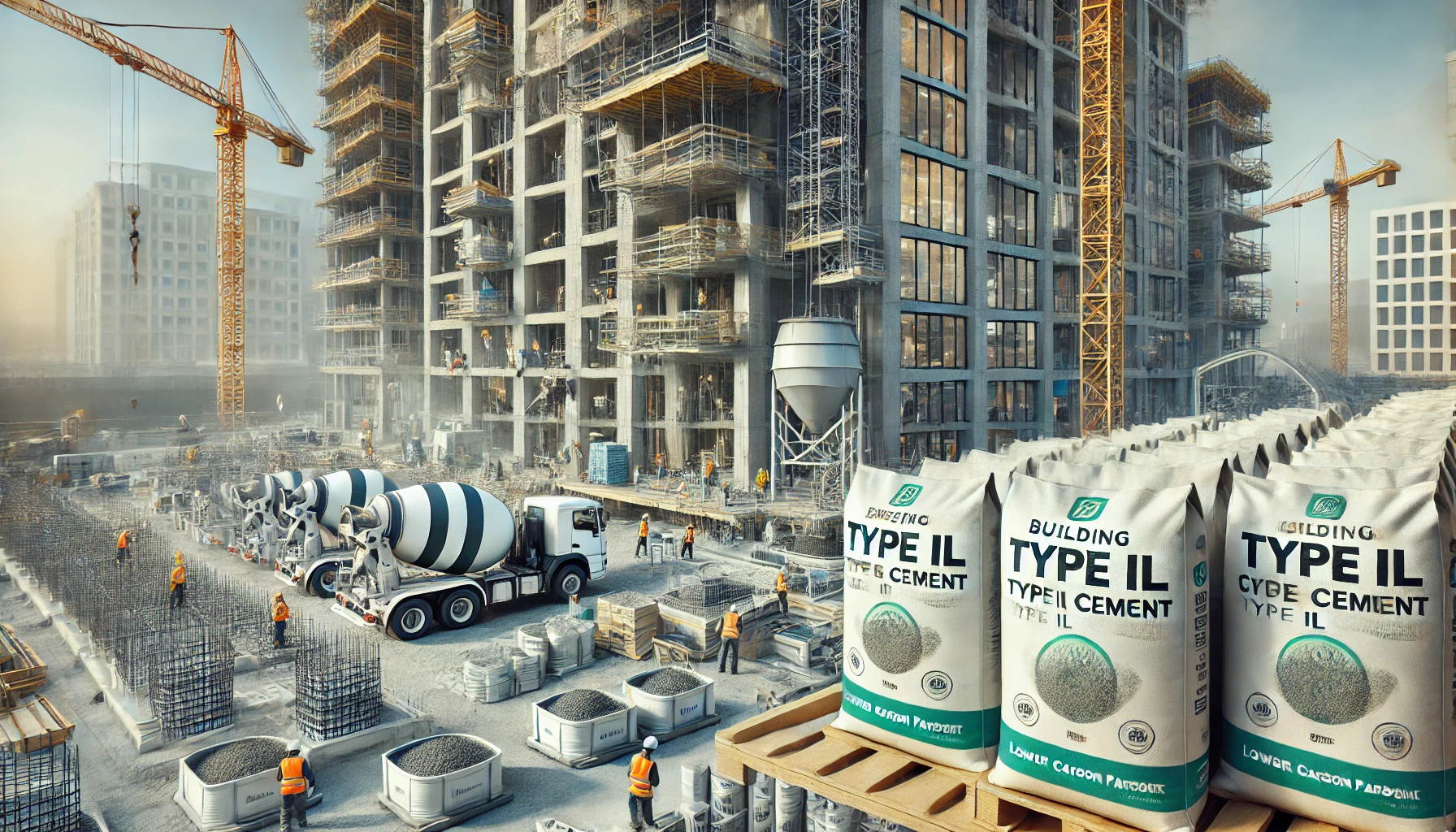
Emissions challenge remains: Cement accounts for 4-8% of global CO2, but U.S. innovations in low-carbon mixes (like Type IL) are leading the green revolution.
America’s Construction Boom: Today and Tomorrow
In 2025, U.S. new construction starts reflect our unbreakable drive: 1.31 million annualized housing units in August alone, with single-family homes at 890,000 – down slightly from peaks but steady amid economic headwinds. Total authorizations hit ~1.5 million units in 2024, aligning with pre-2008 norms, yet we’re tackling a 2.5-5.5 million unit housing shortfall through bold projects.
Cement consumption? A resilient ~100 million tons projected for 2025 (down 1.6% from 2024’s dip), but market value surges to $15.22 billion at 4.5% growth. Nonresidential sectors like highways (+11% in Q4 2024) shine, fueled by federal investments.
| Sector | 2025 Starts/Consumption (Est.) | Key American Wins |
|---|---|---|
| Single-Family Housing | ~950,000 units | Reviving the suburbs – family homes for the next generation |
| Multifamily | 316,000 units (5+) | Urban renewal: Affordable living in red, white, and blue cities |
| Nonresidential (Data Centers) | 1M tons cement by 2028 | AI powerhouse: 6,000 centers by 2027, securing U.S. tech dominance |
| Infrastructure (Highways/Bridges) | +11% growth | IIJA legacy: Rebuilding America, one mile at a time |
Future Expectations: America’s Horizon of Opportunity (2026-2030)
Looking ahead, the stars and stripes wave high for U.S. construction. Total spending climbs to $1.26 trillion in 2026 (+4%), with nonresidential buildings up 3% and infrastructure at +4.1%. By 2030, North American cement volume hits 252 million tons (4.42% CAGR), market value $26 billion – driven by AI data centers (5x historic levels), renewable energy (+6.5%), and healthcare modernizations.
- Global Projection: 4.8B tons by 2026, 12-23% growth by 2050 – but non-OECD demand (Asia/Africa) surges to 56%.
- U.S. Boom: +1.8% investment pivot in 2026; 500,000 new jobs needed. Data centers alone: $61.6B spend by 2030. Residential rebounds with rates <5.5%, adding 30M population-fueled demand.
- Patriotic Edge: Tariffs boost domestic production; green tech like CCS positions America as the world’s sustainable builder.
Challenges? Labor shortages (439,000 gap in 2026) and costs – but American ingenuity prevails. We’re not just building structures; we’re forging the future.
Global vs. U.S. Cement Trends: A Visual Salute
Disclaimer: Data sourced from USGS, Statista, ACA, Census Bureau, Deloitte, and industry forecasts (as of Dec 2025). Estimates vary; actuals depend on policy, economy, and innovation. For project-specific needs, consult Volume Concrete – America’s trusted partner.
🇺🇸 Built Strong, Built Proud – Volume Concrete
- Research suggests global cement consumption has grown significantly, reaching about 4.1 billion metric tons in 2023, driven by urbanization and infrastructure.
- It seems likely that China dominates, accounting for over 51% of consumption, with India and the EU also major players.
- The evidence leans toward cement production contributing 4-8% of global CO2 emissions, posing environmental challenges.
- Future projections indicate continued growth, especially in developing regions, with efforts toward sustainability like low-carbon technologies.
Cement is a vital material in construction, forming the basis of concrete used in buildings, roads, and infrastructure worldwide. Its consumption reflects economic activity, particularly in developing regions undergoing rapid urbanization. This article explores global cement consumption trends, highlighting its growth, geographical distribution, environmental impact, and future outlook, aiming to provide a comprehensive understanding for readers interested in construction and sustainability.
Historical Context
Global cement consumption has seen exponential growth over decades. In 1995, production was around 1.39 billion metric tons, rising to 4.1 billion metric tons by 2023, a nearly threefold increase. This growth is largely driven by Asia, with China’s production surging 100-fold from 1970 to 2020 due to massive infrastructure projects. Outside China, production grew 3.2 times over the same period, reflecting global urbanization trends.
Geographical Insights
China leads global cement consumption, accounting for 51.6% of production in 2022, translating to about 2.1 billion metric tons in 2023. India follows with 9.5% (around 400 million metric tons), and the EU27 at 4.3%. Other notable consumers include the US (2.3%), Vietnam, Turkey, and Indonesia. This distribution shows a shift from OECD countries, which saw their share drop from 64% in 1970 to 12% in 2020, to emerging economies in Asia and Africa, projected to dominate future demand.
Driving Factors
Several factors fuel cement consumption:
- Economic Growth: Increased infrastructure and housing needs accompany economic expansion.
- Urbanization: With 68% of the global population expected to live in urban areas by 2050, new construction drives demand.
- Infrastructure Projects: Governments invest in roads, bridges, and dams, major cement users.
- Population Growth: Rising populations, especially in developing countries, increase housing needs.
These drivers are particularly strong in regions like Africa, where population growth is expected to make it the largest cement producer by century’s end, despite lower per capita demand.
Environmental Concerns
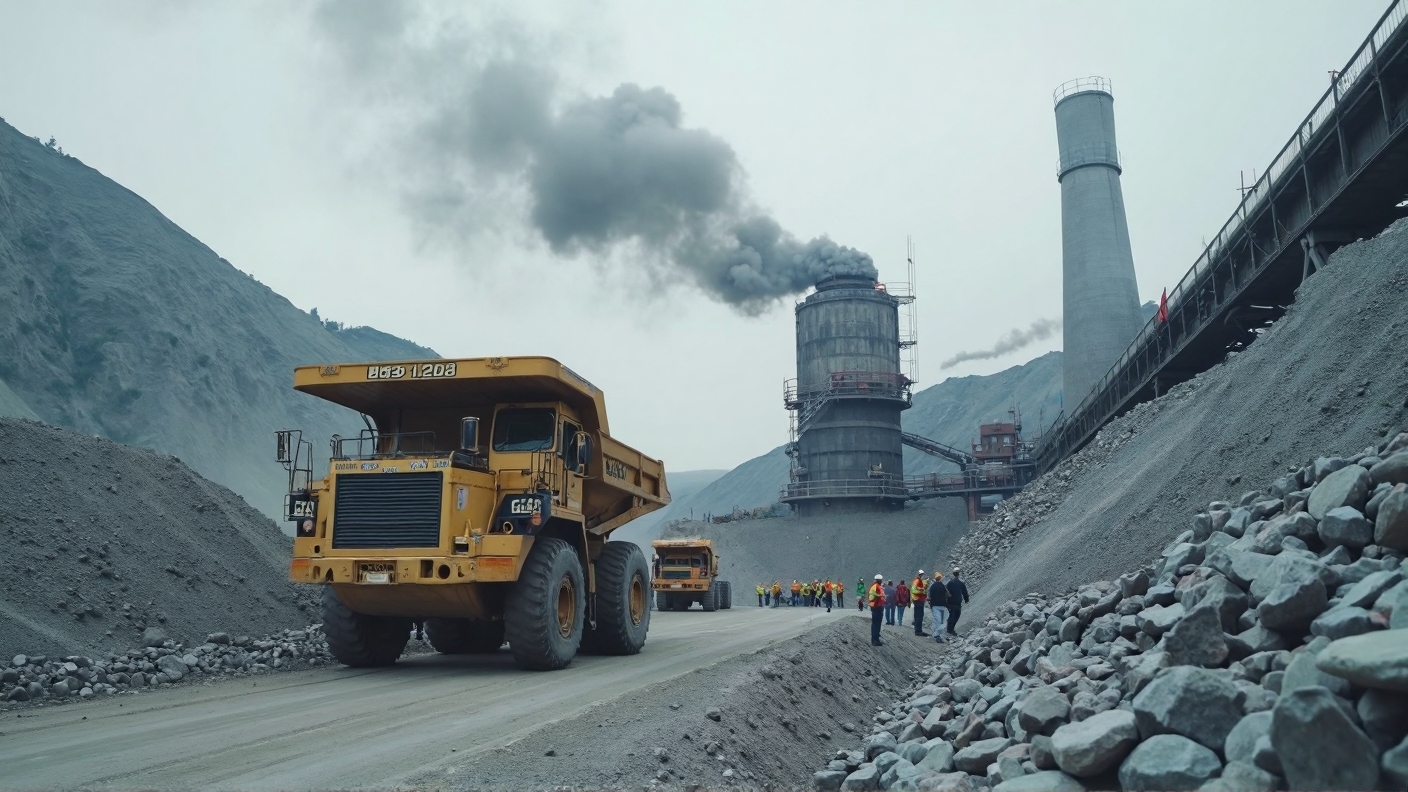
The cement industry significantly impacts the environment, contributing 4-8% of global CO2 emissions. This arises from calcination (releasing CO2 from limestone) and energy use, often fossil fuel-based. In 2023, emissions were around 2.4 billion metric tons, with China contributing the most. Other impacts include air pollution, water usage, and land disruption from quarrying, exacerbating urban heat islands and runoff issues in cities.
Industry and Market Dynamics
The cement market is fragmented, with leaders like LafargeHolcim, Anhui Conch Cement, and China National Building Material Company. Only 2.6% of cement is traded globally, indicating local consumption dominance. Challenges include overcapacity in China and a push for sustainability, with companies investing in carbon capture and alternative fuels to meet regulatory pressures.
Future Outlook
Global cement consumption is projected to grow 12-23% by 2050, with demand outside China and OECD rising from 30% today to 56% by 2050 and 84% by 2100. Sustainability efforts include low-carbon cements, energy efficiency, and recycling, aiming to reduce the industry’s carbon footprint while meeting infrastructure needs. Balancing growth with environmental goals will be crucial as urbanization continues.
Worldwide Cement Consumption: An In-Depth Survey Note
Cement, a fundamental component of concrete, is indispensable for global construction, underpinning infrastructure, housing, and urban development. This survey note provides a detailed examination of worldwide cement consumption, covering historical trends, geographical distribution, influencing factors, environmental impacts, industry dynamics, and future projections, based on recent data and analyses as of May 2025.
Historical Trends and Statistics
Global cement consumption has experienced significant growth over the past decades, reflecting the expansion of construction activities worldwide. Historical data indicates that in 1995, global cement production was approximately 1.39 billion metric tons, escalating to an estimated 4.1 billion metric tons by 2023, according to Statista – Global cement production. This nearly threefold increase highlights the industry’s response to urbanization and economic development.
Key historical trends include:
- China’s cement production surged 100-fold from 1970 to 2020, driven by rapid urbanization and infrastructure projects, as noted in Rhodium Group – The Global Cement Challenge. By 2023, China accounted for 51.6% of global production, per GCCA – Key Facts.
- Outside China, global cement production grew by 3.2 times from 1970 to 2020, reflecting demand in other developing regions.
- The OECD’s share in global cement production declined from 64% in 1970 to 12% in 2020, as emerging economies took the lead, per Rhodium Group.
Specific consumption figures, such as 2020’s global consumption contracting by 0.2% to 4,143.7 million metric tons, are detailed in Uncertain times from International Cement Review, with China alone consuming 2,377.68 million metric tons, or 57% of the global total.
Geographical Distribution
Cement consumption is closely aligned with production due to the material’s low trade volume (only 2.6% globally traded, per Rhodium Group). The geographical distribution is as follows:
- Top Consuming Countries (2022 Data):
- China: 51.6% of global production, approximately 2.1 billion metric tons in 2023, as per Statista – Cement production by country.
- India: 9.5%, around 400 million metric tons in 2023, per Statista.
- EU27: 4.3%, per GCCA – Key Facts.
- United States: 2.3%, with production at 91 million metric tons in 2023, per Statista.
- Other significant consumers include Vietnam (120 million metric tons), Turkey, Indonesia, Brazil, Iran, Russia, Egypt, Saudi Arabia, and South Korea, as listed in GCCA.
- Regional Shifts:
- Asia dominates, with China and India leading due to infrastructure needs. Rhodium Group projects that demand outside China and OECD will rise from 30% of the global total today to 56% by 2050 and 84% by 2100.
- Africa is expected to become the largest cement producer by the end of the century due to population growth, though per capita demand remains lower than in developed regions, per Rhodium Group.
- The Middle East and Asia (excluding China) are projected to see per capita demand levels between China and OECD, with overall demand doubling by 2050 due to population growth, as per Rhodium Group.
This distribution underscores the shift from industrialized regions to emerging economies, driven by urbanization and population growth.
Factors Influencing Consumption
Several factors drive global cement consumption, as identified in various analyses:
- Economic Growth: As economies expand, there is increased demand for infrastructure and housing. For instance, China’s economic boom in the early 2000s significantly boosted cement consumption, per [Rhodium Group](https://rhodium Group – The Global Cement Challenge).
- Urbanization: The United Nations projects that 68% of the global population will live in urban areas by 2050, up from 55% in 2018, driving construction needs, as noted in GCCA – Key Facts.
- Infrastructure Development: Major projects like roads, bridges, and dams are significant cement consumers. China’s Belt and Road Initiative is a prime example, per Rhodium Group.
- Population Growth: Rising populations, especially in developing countries, increase housing and public facility needs, with Africa projected to see significant growth, per Rhodium Group.
- Government Policies: Stimulus packages and infrastructure investments, such as post-COVID recovery efforts, have boosted consumption, as seen in 2020 data from Uncertain times from International Cement Review.
These factors are particularly pronounced in regions undergoing rapid development, such as Asia and Africa.
Environmental Impact
The cement industry’s environmental impact is substantial, primarily due to its high energy consumption and CO2 emissions, as detailed in multiple sources:
- CO2 Emissions:
- Cement production contributes 4-8% of global CO2 emissions, per Environmental impact of concrete – Wikipedia. This is due to calcination (releasing CO2 from limestone) and energy use, often from fossil fuels, as noted in Monitoring the impact of cement on the environment – Kunak.
- In 2023, global CO2 emissions from cement were around 2.4 billion metric tons, with China contributing the largest share, per Projecting future carbon emissions from cement production in developing countries | Nature Communications.
- A study in Ecuador found that producing one ton of cement requires 3,191.95 MJ of energy and generates 510.57 kg of CO2, per Monitoring the impact of cement on the environment – Kunak.
- Other Environmental Impacts:
- Air Pollution: Cement production releases particulate matter, nitrogen oxides, and sulfur dioxide, contributing to local air quality issues, per Environmental impacts and decarbonization strategies in the cement and concrete industries | Nature Reviews Earth & Environment.
- Water Usage: Significant water is required, particularly in water-scarce regions, per Environmental & Ecological Impacts of Cement | UKGBC.
- Land Use: Quarrying for raw materials like limestone can lead to habitat destruction and soil erosion, per Environmental impact of cement production and Solutions: A review – ScienceDirect.
- Urban Heat Islands: Concrete surfaces absorb heat, exacerbating urban heat island effects, per Why is concrete so damaging to the environment? | FairPlanet.
- Regional Disparities:
- Developing countries, where production is growing rapidly, face the greatest environmental challenges. For example, cement emissions in developing countries (excluding China) are projected to reach 1.4-3.8 Gt by 2050, compared to 0.7 Gt in 2018, per Projecting future carbon emissions from cement production in developing countries | Nature Communications.
Efforts to mitigate these impacts include alternative fuels, carbon capture and storage (CCS), and developing low-carbon cement technologies, as discussed in Cut Carbon and Toxic Pollution, Make Cement Clean and Green – NRDC.
Industry and Market Analysis
The global cement industry is highly fragmented, with numerous players ranging from small local producers to large multinationals. Key dynamics include:
- Major Players:
- LafargeHolcim (Switzerland): The world’s largest by market capitalization, over $32 billion in 2023, per Cement and Concrete: The Environmental Impact — PSCI.
- Anhui Conch Cement (China): Largest Chinese producer, with a market cap over $34 billion, per Statista – Cement production by country.
- China National Building Material Company (China): Another major player, per Cement and Concrete: The Environmental Impact — PSCI.
- Other significant companies include HeidelbergCement (Germany), Cemex (Mexico), and UltraTech Cement (India), per Statista – Global cement industry.
- Market Dynamics:
- Overcapacity: Some regions, particularly China, face overcapacity, leading to price competition and market consolidation, per Statista – Global cement industry.
- Global Trade: Only 2.6% of global cement is traded internationally, indicating local consumption dominance, per Rhodium Group.
- Sustainability Initiatives: Many companies are investing in green technologies, such as CCS and alternative fuels, to meet regulatory pressures, per Environmental impacts and decarbonization strategies in the cement and concrete industries | Nature Reviews Earth & Environment.
The industry is influenced by government regulations, particularly those aimed at reducing CO2 emissions and promoting sustainable construction practices.
Future Projections and Sustainability
Future projections indicate continued growth in global cement consumption, driven by urbanization and infrastructure needs in developing regions. Key projections include:
- Demand Growth:
- By 2050, global cement production is expected to grow by 12-23% from current levels, according to the International Energy Agency (IEA), per GCCA – Key Facts.
- Demand outside China and OECD is projected to rise from 30% of the global total today to 56% by 2050 and 84% by 2100, per Rhodium Group.
- Africa will become the largest cement producer by the end of the century due to population growth, though per capita demand will remain lower, per Rhodium Group.
- The Middle East and Asia (excluding China) are expected to see per capita demand levels between China and OECD, with overall demand doubling by 2050 due to population growth, per Rhodium Group.
- Sustainability Challenges:
- The industry must reduce its carbon footprint to meet global climate goals. Solutions include:
- Low-Carbon Technologies: Developing cements with lower clinker content or alternative binders like geopolymers, per Environmental impact of cement production and Solutions: A review – ScienceDirect.
- Energy Efficiency: Improving kiln efficiency and using renewable energy sources, per IEA – Cement.
- Carbon Capture and Storage (CCS): Capturing CO2 emissions from cement plants, per Environmental impacts and decarbonization strategies in the cement and concrete industries | Nature Reviews Earth & Environment.
- Recycling: Increasing the use of recycled concrete and waste materials, per Cut Carbon and Toxic Pollution, Make Cement Clean and Green – NRDC.
- The industry must reduce its carbon footprint to meet global climate goals. Solutions include:
- Policy and Innovation:
- Governments are implementing stricter emissions regulations, driving innovation, per Environmental & Ecological Impacts of Cement | UKGBC.
- Research into alternative materials and construction methods is ongoing, though concrete remains unmatched for its durability and cost-effectiveness, per Why is concrete so damaging to the environment? | FairPlanet.
Balancing growth with environmental goals will be crucial as urbanization continues, with the industry playing a pivotal role in shaping the global built environment.
Conclusion
Worldwide cement consumption is a critical aspect of global economic and societal development, reflecting the world’s growing need for infrastructure, housing, and urbanization. Historically dominated by China and India, future growth is expected to shift towards Africa and other developing regions. While cement is indispensable, its production contributes significantly to global CO2 emissions (4-8%) and other environmental issues. The industry must balance its role in supporting development with sustainability, through innovation, policy changes, and greener technologies, to ensure a sustainable future as the world continues to urbanize and develop.
Key Citations
- Statista Global cement production statistics
- Rhodium Group global cement consumption trends
- GCCA key facts on cement production
- ScienceDirect environmental impact cement production
- Statista cement production by country data
- IEA cement industry energy use
- Wikipedia environmental impact of concrete
- Monitoring cement environmental impact Kunak
- Nature Communications cement emissions projections
- Nature Reviews cement decarbonization strategies
- NRDC cut carbon in cement production
- UKGBC environmental impacts of cement
- FairPlanet concrete environmental damage
- International Cement Review uncertain times
- PSCI cement and concrete environmental impact
- Statista global cement industry overview