Concept: Limestone Calcined Clay Cement (LC3) combines limestone with calcined clay to create a low-carbon alternative to traditional Portland cement. It leverages limestone’s benefits while incorporating clay’s pozzolanic properties to further reduce clinker content and emissions.
- Environmental Impact: LC3 can reduce CO₂ emissions by up to 30-40% compared to traditional cement, surpassing PLC’s 10% reduction. This is due to the lower clinker content (often 50% or less) and the use of widely available clay, as noted in ACEEE.
- Performance: LC3 offers comparable or superior strength and durability, with improved resistance to chloride ingress, making it ideal for marine environments, according to Global Cement and Concrete Association.
- Adoption Challenges: While LC3 is gaining traction in regions like India and Latin America, scaling in the U.S. requires investment in calcination infrastructure and regulatory approval. This could be a future focus for limestone’s role in cement.
- Integration: Add a section on LC3 as an evolution of PLC, highlighting limestone’s continued centrality in innovative cement formulations. Discuss its potential to complement PLC in markets with abundant clay resources.
2. Carbon Capture and Utilization (CCU) with Limestone in Cement
Concept: Limestone can be integrated into carbon capture and utilization processes, where CO₂ from cement production is captured and mineralized into limestone-like compounds or used to enhance concrete curing, further reducing the industry’s carbon footprint.
- Technology: Companies like CarbonCure (referenced in the original analysis) inject CO₂ into concrete mixes, where it reacts with calcium from limestone to form stable carbonates, locking carbon away. This can reduce emissions by an additional 5-10%, as per CarbonCure Technologies.
- Circular Economy: Captured CO₂ can be used to produce synthetic limestone aggregates, creating a closed-loop system. This aligns with the sustainability narrative of the original analysis.
- Scalability: While promising, CCU technologies require significant upfront investment and energy, which could be a barrier. However, they enhance limestone’s role as a sustainability enabler.
- Integration: Introduce a subsection on CCU, linking it to limestone’s chemical reactivity and its potential to make cement production carbon-neutral or even carbon-negative in the future.
3. Limestone’s Role in Geopolymer and Alternative Binders
Concept: Limestone can be used in geopolymer cements or alkali-activated materials, which are low-carbon alternatives to Portland cement. These binders use industrial byproducts like fly ash or slag, with limestone as a filler or activator.
- Sustainability: Geopolymers can reduce emissions by 60-80% compared to Portland cement, as they require no clinker. Limestone enhances workability and acts as a reactive filler, per Global Cement and Concrete Association.
- Applications: These binders are gaining interest for niche applications like precast concrete and infrastructure in harsh environments, where limestone’s fine particles improve durability.
- Challenges: Limited availability of precursors (e.g., fly ash due to coal plant phase-outs) and slower standardization hinder adoption. Limestone’s abundance makes it a reliable component to bridge this gap.
- Integration: Expand the analysis to include a discussion on alternative binders, positioning limestone as a versatile ingredient across both traditional and novel cement systems.
4. Regional and Geological Variations in Limestone Quality
Concept: The quality and composition of limestone vary by region, affecting its suitability for cement production. Exploring these variations can highlight optimization strategies and regional adoption trends.=
- Quality Factors: High-purity limestone (>90% CaCO₃) is ideal for cement, but impurities like silica or magnesium can affect performance. Regions like Karnataka, India, with vast high-quality reserves, have a competitive edge, as noted in LinkedIn.
- Optimization: Advanced processing techniques, such as selective quarrying or blending, can mitigate impurities, improving limestone’s efficacy in PLC or LC3.
- Global Trends: Regions with abundant limestone (e.g., North America, Asia) are better positioned to adopt PLC and LC3, while limestone-scarce areas may rely on imports or alternatives.
- Integration: Add a section on geological considerations, discussing how limestone quality influences cement production efficiency and sustainability outcomes, with examples from key regions.
5. Limestone in 3D-Printed Concrete and Smart Construction
Concept: Limestone’s fine particle size and reactivity make it suitable for 3D-printed concrete, an emerging construction technology. It can enhance printability and sustainability in automated building processes.
- Printability: Limestone’s uniform particle distribution improves the flowability and setting time of 3D-printing mixes, critical for layer-by-layer construction, as discussed in CarbonCure Technologies.
- Sustainability: Using PLC in 3D printing reduces the carbon footprint of printed structures, aligning with the original analysis’s eco-friendly focus.
- Future Potential: As 3D printing scales for housing and infrastructure, limestone’s role could grow, especially in regions prioritizing rapid, sustainable construction.
- Integration: Introduce a forward-looking section on limestone’s applications in smart construction, linking its properties to the demands of automation and precision in modern building techniques.
6. Socioeconomic Impacts of Limestone Mining for Cement
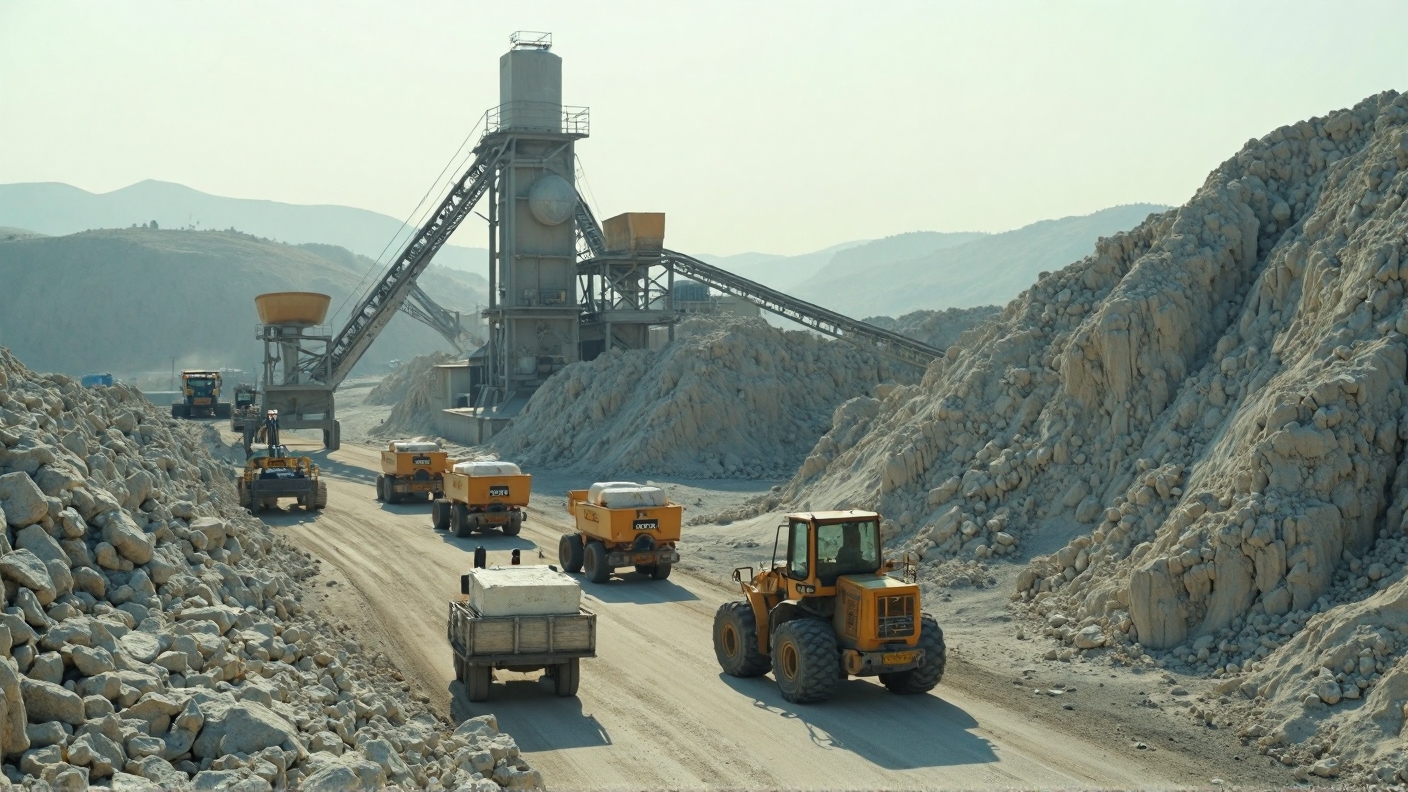
Concept: Limestone mining for cement production has socioeconomic implications, including job creation, environmental concerns, and community impacts. Addressing these adds a human dimension to the narrative
- Economic Benefits: Limestone mining supports local economies, with India’s cement industry employing millions directly and indirectly, as implied in LinkedIn.
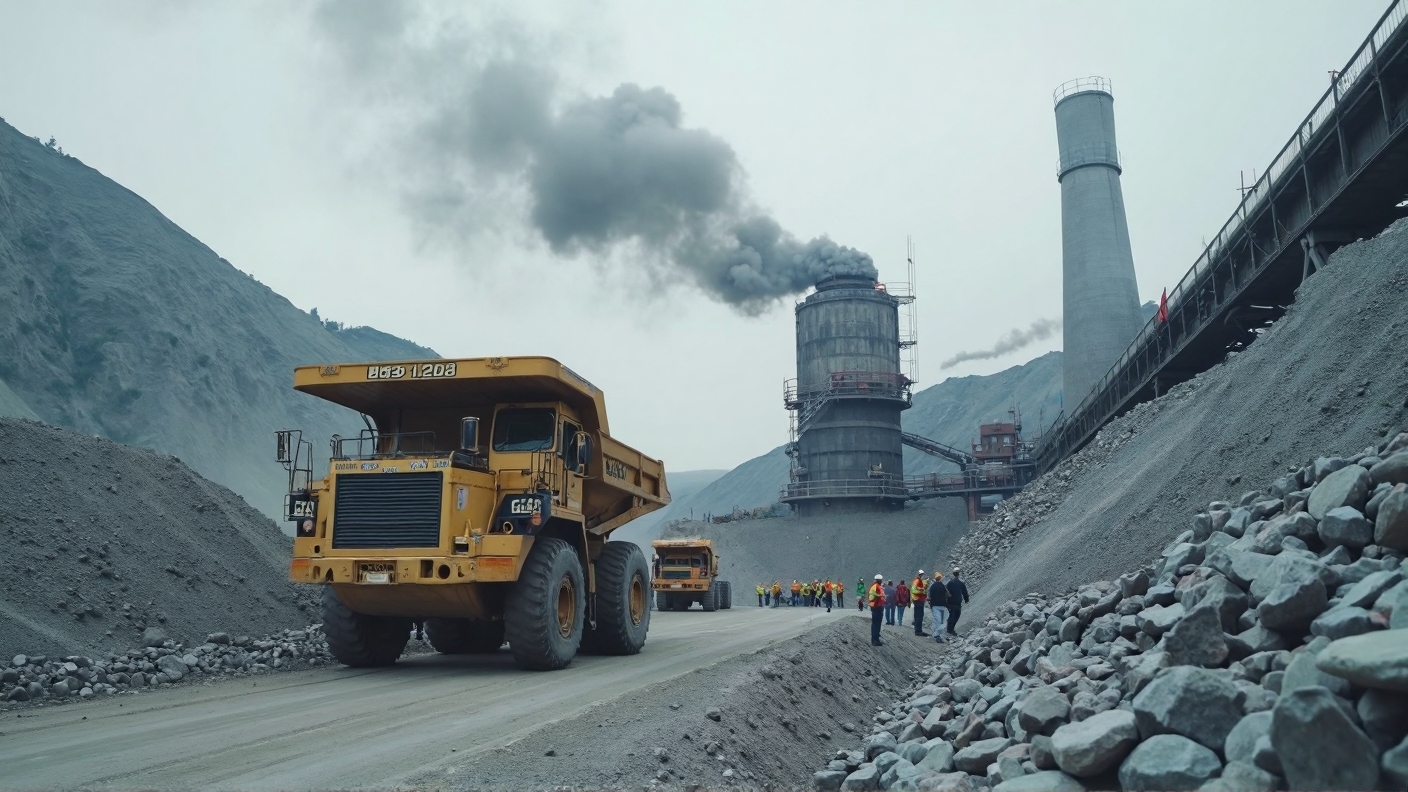
- Environmental Concerns: Mining can lead to habitat disruption and dust pollution, requiring sustainable practices like reclamation and dust control, as noted in Fote Machinery.
- Community Engagement: Balancing mining with community needs (e.g., through royalties or infrastructure development) is critical for social license to operate.
- Integration: Include a section on the socioeconomic context, discussing how responsible limestone sourcing supports the sustainability narrative while addressing potential trade-offs.
7. Policy and Regulatory Drivers for Limestone-Based Cements
Concept: Government policies and international standards are accelerating the adoption of limestone-based cements like PLC and LC3, driven by climate goals and building codes.
- Regulations: The U.S. EPA and EU’s carbon pricing mechanisms incentivize low-carbon cements, with PLC approved by ASTM and AASHTO standards, as per CarbonCure Technologies.
- Global Commitments: The Paris Agreement and net-zero pledges push for limestone’s integration, with initiatives like the Global Cement and Concrete Association’s roadmap targeting 50% emission reductions by 2030.
- Barriers: Inconsistent standards across regions and resistance from traditional cement producers slow adoption, requiring policy harmonization.
- Integration: Add a policy-focused section, linking limestone’s rise to regulatory frameworks and global climate commitments, reinforcing its strategic importance.
8. Limestone’s Role in Circular Construction Practices
Concept: Limestone can support circular construction by enabling the recycling of concrete, where crushed concrete is reused as a limestone-rich aggregate or raw material for new cement.
- Recycling: Concrete recycling recovers limestone-based materials, reducing the need for virgin limestone and landfill waste, as discussed in PROSOCO.
- Clinker Production: Recycled concrete can partially replace limestone in clinker production, lowering emissions, though technical challenges like alkali content need addressing.
- Market Potential: Circular practices are gaining traction in Europe and could expand in the U.S., aligning with limestone’s sustainability benefits.
- Integration: Incorporate a section on circularity, showing how limestone enables closed-loop systems in construction, enhancing the original analysis’s sustainability focus.
| Aspect | Details |
|---|---|
| Primary Use | Key raw material for clinker (80-90% of kiln feed), providing calcium for binding. |
| Admixture Role | Used in PLC (5-15% limestone) and LC3 (with calcined clay), enhancing sustainability. |
| Carbon Footprint Reduction | PLC reduces emissions by ~10%; LC3 up to 30-40%; CCU adds 5-10% via CO₂ mineralization. |
| Performance Benefits | Improves particle distribution, reactivity, and durability; ideal for 3D printing and geopolymers. |
| Cost Benefits | Often less expensive; recycled limestone from concrete supports circular economy savings. |
| Industry Adoption | 40% U.S. market share for PLC; LC3 growing in developing nations; policy drives adoption. |
| Socioeconomic Impact | Supports jobs but requires sustainable mining to mitigate environmental and community concerns. |
Key Citations (Reused and New)
- 2 Major Roles of Limestone in Cement Manufacturing | Fote Machinery
- What is Portland Limestone Cement, and is it Becoming the New Norm? | CarbonCure Technologies Inc.
- Limestone filler | Global Cement and Concrete Association
- Adoption of Limestone Calcined Clay Cement and Concrete in the U.S. Market | ACEEE
- Limestone & Cement | LinkedIn
- Innovations in Concrete: 4 Levers to Reduce CO2 Emissions of Concrete | CarbonCure Technologies
These additional ideas enrich the narrative by connecting limestone’s role to cutting-edge innovations, socioeconomic realities, and global policy trends, positioning it as a linchpin in the cement industry’s sustainable future.