The Rubber Meets the Road: Tires for On-Track Performance
Understanding the vital connection between tires and your car’s capability.
In our previous dive into high-speed driving and the subsequent exploration of aerodynamics, we’ve established that raw power and aerodynamic efficiency are crucial. However, without the right connection to the track, these elements are largely academic. That connection, the point of contact where all forces are transferred, is your vehicle’s tires. In autoracing, tires are not just components; they are performance-defining, highly engineered tools that can make or break a lap.
Choosing the correct tires and understanding their behavior is paramount for any on-track driving. The compound, construction, size, and tread pattern all play a critical role in grip, handling, braking, and overall vehicle dynamics. Let’s break down what makes a racing tire tick.
Decoding Tire Sizes: The Language of Performance for Your S650 Mustang
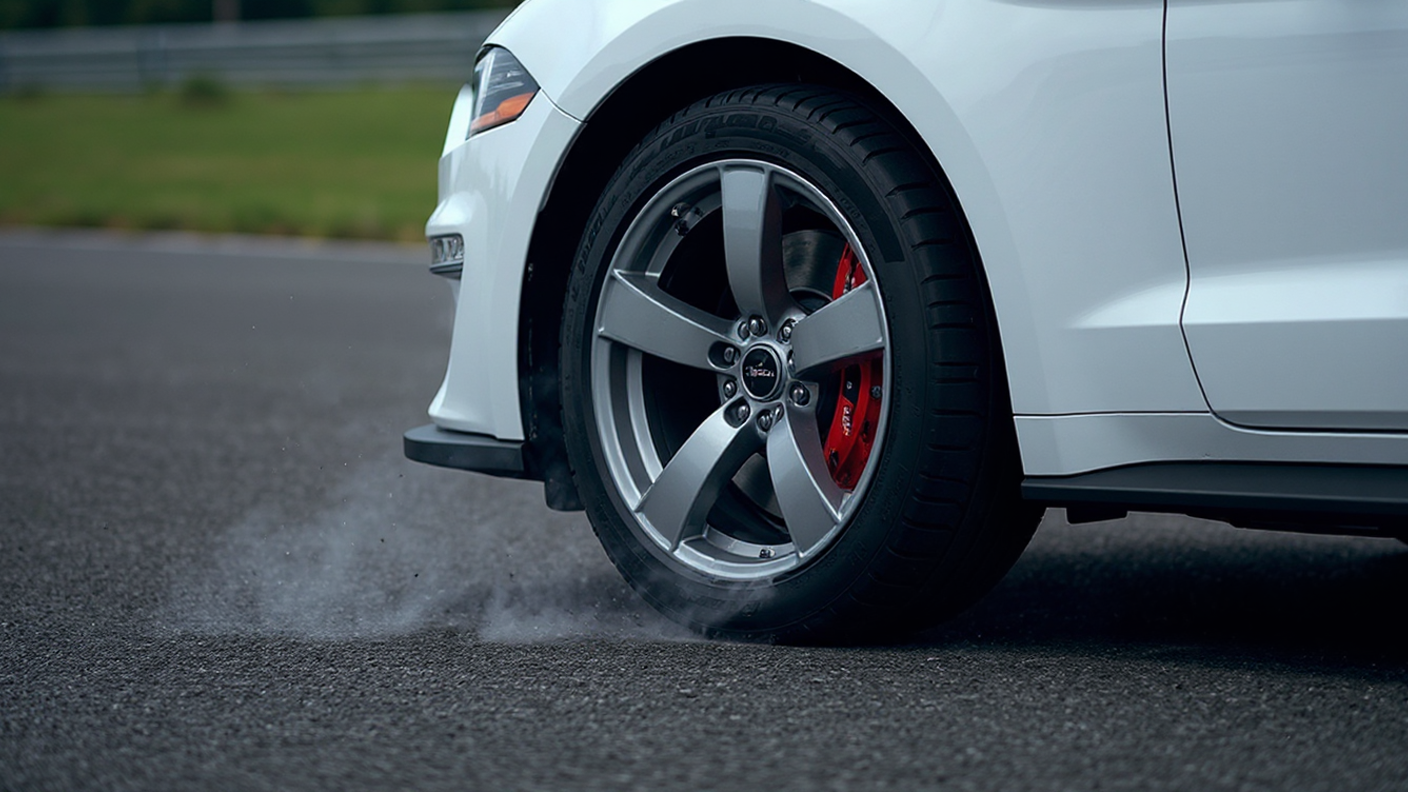
For our Ford Mustang S650, a popular and capable track tire choice is the Firestone Firehawk Indy 500. A typical size might be: 235/50R18.
Let’s decode this common performance size:
- 235: Section Width (mm)
This is the width of the tire from sidewall to sidewall in millimeters. For the S650, 235mm offers a balanced approach, providing good grip without excessive weight or aerodynamic drag compared to much wider tires. - 50: Aspect Ratio (%)
This indicates the sidewall height as a percentage of the section width. Here, the sidewall height is 50% of 235mm. A 50 aspect ratio means a taller sidewall than a performance-oriented 40 or 35 series. This contributes to a more comfortable ride and can offer a bit more compliance on less-than-perfect surfaces, but it can also lead to more sidewall flex during hard cornering, slightly reducing immediate steering response compared to lower aspect ratio tires. - R: Radial Construction
Indicates that the tire has a radial construction, meaning the internal cords run perpendicular to the direction of rotation. Standard for modern performance vehicles. - 18: Rim Diameter (inches)
This specifies the diameter of the wheel (rim) that the tire is designed to fit. The 18-inch wheel is common for many performance vehicles, offering a good balance between accommodating larger brakes and maintaining reasonable tire sidewall height.
Sidewall Height Calculator
Load and Speed Ratings: Understanding Your Tire’s Limits
Beyond dimensions, tires carry crucial certifications that define their load-carrying capacity and maximum speed capability. These are critical safety and performance indicators:
Wider Tires: The Double-Edged Sword of Grip
How Wider Tires Help:
- Increased Contact Patch: A wider tire, assuming it’s properly inflated and the vehicle’s suspension is aligned, will have a larger contact patch with the road surface. A larger contact patch means more rubber is in direct contact with the asphalt, directly translating to higher potential for lateral (cornering) and longitudinal (acceleration/braking) grip.
- Improved Grip Limits: This increased grip allows for higher cornering speeds, later braking points, and more aggressive acceleration without the tires losing traction prematurely.
- Heat Dissipation: A wider tire often has more surface area to dissipate heat generated by friction, which can be beneficial in sustained high-performance driving.
How Wider Tires Hinder:
- Increased Weight: Wider tires and the wider wheels they often require are typically heavier. Unsprung weight (weight not supported by the suspension) has a significant negative impact on handling, acceleration, and braking.
- Aerodynamic Effects: Wider tires can disrupt airflow around the wheel wells more significantly, potentially increasing drag and affecting the car’s aerodynamic balance.
- Hydroplaning Susceptibility: With a larger contact patch and potentially deeper tread grooves, wider tires can be more prone to hydroplaning on wet surfaces if the tread pattern isn’t optimized for water evacuation.
- Reduced Steering Feel: Shorter, stiffer sidewalls often accompany wider tires, which can improve steering response but sometimes at the expense of nuanced feedback to the driver.
- Wheel and Fender Clearance: Fitting wider tires might necessitate wider wheels and can lead to clearance issues with the fenders or suspension components, requiring modifications.
Tire Brands and Compounds: A Spectrum of Performance
The world of performance tires is diverse, with major manufacturers offering a range of products tailored for different applications. While brands like Michelin, Pirelli, Goodyear, Bridgestone, Continental, and Toyo are prominent, Firestone’s Firehawk Indy 500 is a highly regarded option for aggressive street and track use:
| Brand | Example Track-Focused Tire | Key Characteristics / Focus | Common Applications |
|---|---|---|---|
| Michelin | Pilot Sport Cup 2 R | Exceptional dry grip, precise steering response, good durability for its class. | Track days, Autocross, Supercars |
| Pirelli | P Zero Trofeo R | Extreme dry grip, often OE on supercars, designed for maximum track performance. | Supercars, Track days |
| Goodyear | Eagle F1 SuperSport R | Strong all-around performance, balanced dry/wet grip, responsive handling. | Track days, Performance street cars |
| Bridgestone | Potenza RE-71RS | Exceptional grip and responsiveness, very popular in autocross. | Autocross, Track days |
| Continental | ExtremeContact Force | Engineered for track use, durable compounds, optimized heat management. | Track days, Club racing |
| Firestone | Firehawk Indy 500 | Excellent balance of wet and dry grip, strong steering feel, and surprising durability for its performance level. A great value proposition for track enthusiasts. | Performance street driving, Track days, Autocross |
| Toyo | Proxes R888R | Popular semi-slick for aggressive track use, high grip. | Track days, Drifting |
Note: Tire compounds and naming conventions change frequently. Always check the manufacturer’s specifications for the latest offerings.
Larger Wheels and Enhanced Braking Systems
The trend towards larger wheels in performance vehicles is not purely aesthetic; it’s fundamentally tied to improving braking performance:
- Accommodating Larger Brake Rotors: High-performance driving generates immense heat and forces during braking. Larger wheels provide the necessary clearance for larger diameter brake rotors and calipers. Bigger rotors have a greater surface area for heat dissipation, and larger calipers with more pistons can apply more uniform pressure for better stopping power and fade resistance.
- Aerodynamic Advantages: While wider tires can create aero disruption, larger wheel designs themselves can be optimized for better airflow management into brake ducts, ensuring they receive adequate cooling.
- Tire Profile and Sidewall Stiffness: While larger wheels usually mean smaller aspect ratio tires (as seen in the 235/50R18 example on the S650 Mustang, though 50 is not particularly low), which leads to stiffer sidewalls and better steering response, it’s the wheel diameter that directly dictates the maximum size of the brake components that can be fitted within.
The interplay between wheel size, tire size, brake system capability, and suspension geometry is a complex optimization problem that engineers solve to deliver a cohesive on-track experience. Each element is interdependent, and selecting or modifying one often necessitates adjustments to others.
Ultimately, tires are the critical interface between the driver’s intent, the car’s capabilities, and the track itself. Choosing wisely, understanding their limits (especially load and speed ratings), and maintaining them properly are foundational elements for achieving your best performance on track.