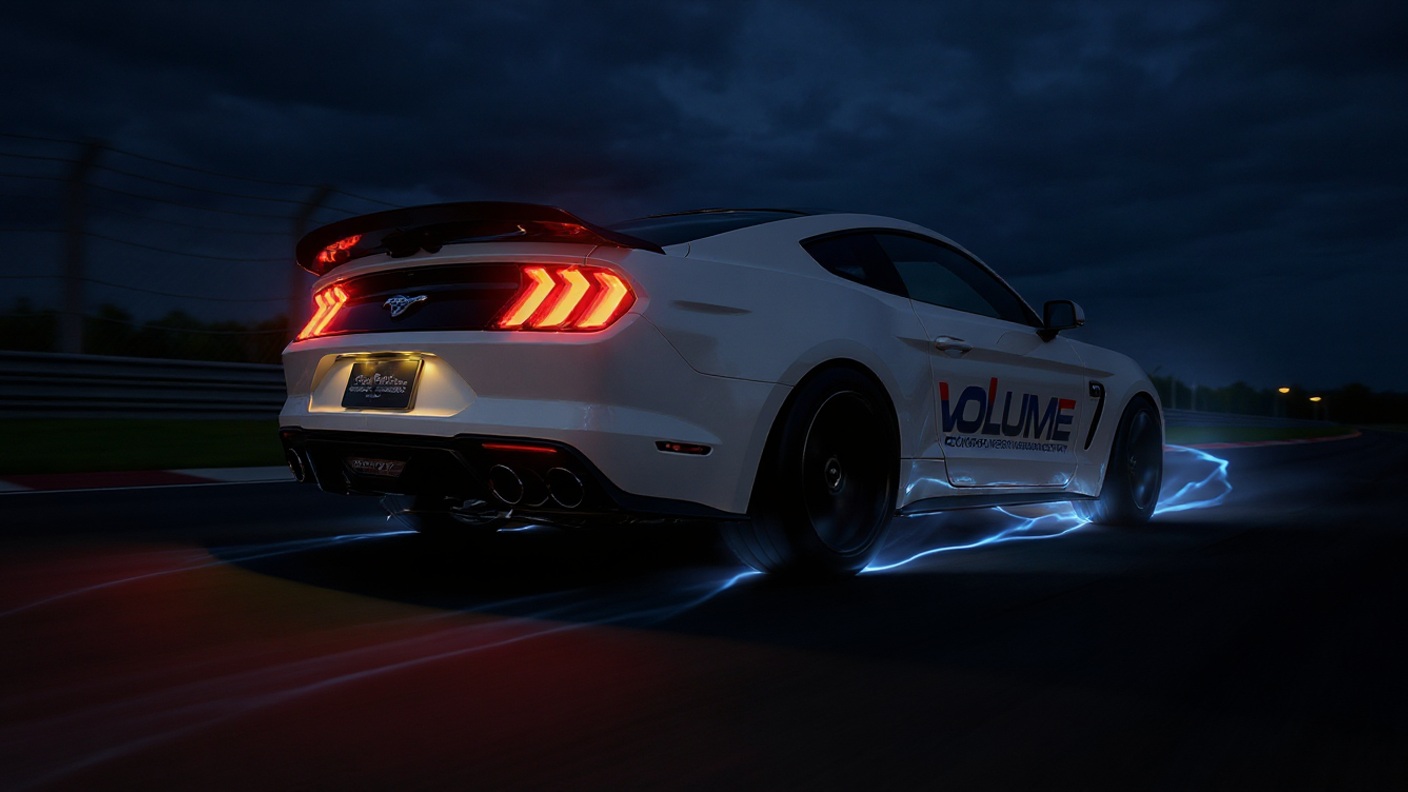
The Symphony of Power: Understanding Engine and Drivetrain Performance
How the heart of the car delivers its roar to the track.
We’ve covered the foundations of driving, the invisible hand of aerodynamics, the critical grip of tires, and the vital role of suspension. Now, let’s talk about the component that provides the raw motivation: the engine and drivetrain. This is the heart of the machine, responsible for generating the power and translating it into motion. In motorsport, every part of this system is honed for maximum performance, reliability, and responsiveness.
Understanding the basic principles of how these systems work is crucial for appreciating what makes a race car tick, why certain setups are chosen, and how they impact your driving experience.
The Internal Combustion Engine: The Heart of Power
Most race cars today are powered by internal combustion engines (ICE). The fundamental principle is to convert chemical energy (fuel) into mechanical energy (rotating crankshaft) through controlled explosions.
Key Engine Concepts
- Cylinders and Displacement: Engines are made up of cylinders, within which pistons move up and down. The total volume swept by all pistons is the engine’s displacement, often measured in liters (L) or cubic inches (ci). Larger displacement generally means more potential for power.
- Horsepower (HP) vs. Torque (lb-ft or Nm):
- Torque is the rotational force produced by the engine. It’s what gives a car its initial “push” or acceleration capability, especially at lower RPMs.
- Horsepower is a measure of how quickly torque is applied over time. It dictates the car’s ultimate speed potential.
- Power and Torque Curves: Engines produce different amounts of torque and horsepower at different RPMs. A race engine might be tuned for peak power at very high RPMs, while a road car engine might prioritize broader torque delivery. Understanding these curves tells you where an engine is strongest.
Common Engine Configurations in Motorsport
Motorsport uses a variety of engine layouts, each with trade-offs:
- Inline (Straight) Engines: Cylinders are arranged in a single line (e.g., Inline-4, Inline-6). Common in many sports cars and touring cars for their simplicity and balance.
- V-Engines: Cylinders are arranged in two banks forming a ‘V’ shape (e.g., V6, V8, V10, V12). These are more compact for a given displacement and often favored for their power output and sound. V8s are iconic in NASCAR and many GT cars.
- Flat (Boxer) Engines: Cylinders are arranged horizontally opposite each other (e.g., Flat-4, Flat-6). Seen in Porsche GT cars. Their low center of gravity aids handling.
- Rotary Engines: While less common today, engines like the Wankel used unique triangular rotors instead of pistons. Known for high-revving power but often challenging for emissions and reliability.
Forced Induction: Boosting Power
Many race engines use forced induction to increase power output:
- Turbochargers: Use exhaust gases to spin a turbine, which forces more air into the engine. This allows for smaller, more efficient engines to produce significant power.
- Superchargers: Mechanically driven by the engine’s crankshaft to force air in. They provide boost immediately upon acceleration, unlike turbochargers which can have a slight lag.
Formula 1 cars, for example, use highly sophisticated turbocharged V6 hybrid powertrains, combining internal combustion with electric motor assistance.
The Drivetrain: Delivering Power to the Ground
The engine creates the power, but the drivetrain is the system that transfers it to the wheels and ultimately allows the car to move. It’s a chain of components designed for efficiency, durability, and performance tuning.
Key Drivetrain Components
- Clutch: Connects and disconnects the engine from the transmission, allowing gear changes and stationary starts. In modern performance cars, this is often an automated or dual-clutch system for rapid shifts.
- Transmission (Gearbox): Alters the gear ratio between the engine and the wheels. Lower gears provide more torque for acceleration, while higher gears allow for greater speed at lower engine RPMs. Race car transmissions are built for rapid, strong shifts.
- Driveshaft / Axles: Transmits rotational power from the transmission to the differential.
- Differential: This crucial component allows the wheels on the same axle to rotate at different speeds (essential for cornering). In rear-wheel-drive cars like a Mustang, the differential is key to how the rear wheels behave.
- Open Differential: The simplest, but it sends power to the wheel with LEAST traction.
- Limited-Slip Differential (LSD): Restricts the difference in rotation speed between the wheels, sending more power to the wheel with MORE traction. This dramatically improves acceleration and corner exit grip. Various types exist: clutch-type, viscous, Torsen.
- Locking Differential: Locks the wheels together completely, providing maximum traction in slippery conditions but hindering cornering.
- Wheels and Tires: The final connection to the road, as discussed previously, are critical for putting power down.
Drivetrain Configurations
- Rear-Wheel Drive (RWD): Power goes from the engine to the rear wheels. Common in sports cars and muscle cars like the Mustang. Offers good balance and is ideal for handling.
- Front-Wheel Drive (FWD): Power goes to the front wheels. Typically found in smaller cars, prioritizing packaging and cost, but can struggle with traction under heavy acceleration.
- All-Wheel Drive (AWD) / Four-Wheel Drive (4WD): Power is sent to all four wheels. Provides excellent traction, especially in slippery conditions, but adds weight and complexity. Often found in high-performance GT cars or SUVs.
Tuning for Performance: Engine and Drivetrain Adjustments
In motorsport, these systems are precisely tuned:
- Engine Tuning (ECU Remapping): Adjusting fuel injection, ignition timing, and boost pressure (if applicable) to optimize power and reliability for specific racing conditions.
- Gear Ratios: Selecting specific transmission gear ratios to match the track’s speed and cornering characteristics.
- Differential Settings: Adjusting the locking bias of an LSD can fine-tune the car’s handling characteristics, affecting how it rotates under acceleration.
The engine and drivetrain are a complex, interconnected system. A powerful engine is only as good as its ability to deliver that power to the wheels effectively. Understanding these components gives you a deeper appreciation for the engineering that goes into every lap.