History of Concrete in the Pacific Northwest – Part 3: Post-War Expansion, Iconic Structures, and the Rise of Ready-Mix
Building on the monumental dam-building era of the 1930s–1950s and Seattle’s Skagit River project, the post-World War II period saw concrete drive explosive urban growth, innovative architecture, and iconic bridges in the Pacific Northwest. The advent of ready-mix concrete revolutionized construction, enabling faster, more consistent builds for highways, skyscrapers, and suburban development. This part explores key post-war dams, landmark bridges, the Space Needle as a symbol of modern concrete use, and the evolution of the ready-mix industry.
Completing the Columbia River System: Later Dams
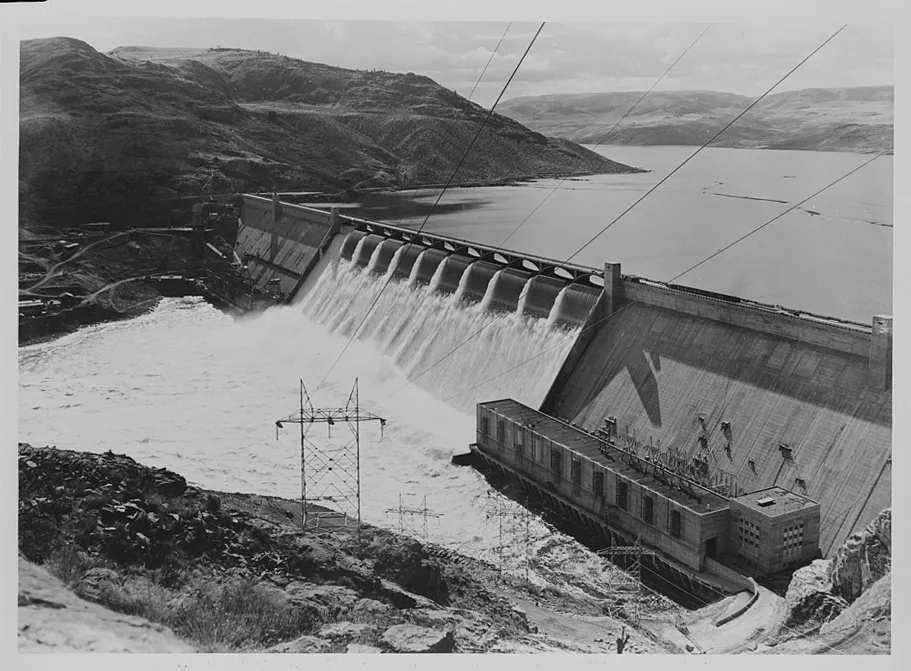
While Grand Coulee and Bonneville kicked off the federal dam-building frenzy, the 1950s–1970s saw completion of the lower Columbia and Snake River hydropower and navigation system under the U.S. Army Corps of Engineers.
The Dalles Dam (1952–1957, Oregon/Washington border): This run-of-the-river concrete gravity dam, located near The Dalles, Oregon, flooded Celilo Falls—an ancient Native American fishing site—and created Lake Celilo. It generates 1,878 MW and includes locks for navigation. Construction displaced communities and further impacted salmon runs.

The Dalles Dam and surrounding area, showing changes to landmarks and transportation
John Day Dam (1958–1971, Oregon/Washington): The third-largest hydropower producer on the Columbia (2,160 MW), this concrete gravity dam features one of the world’s largest navigation locks. It required over 10 million cubic yards of concrete and created Lake Umatilla, extending 76 miles upstream.
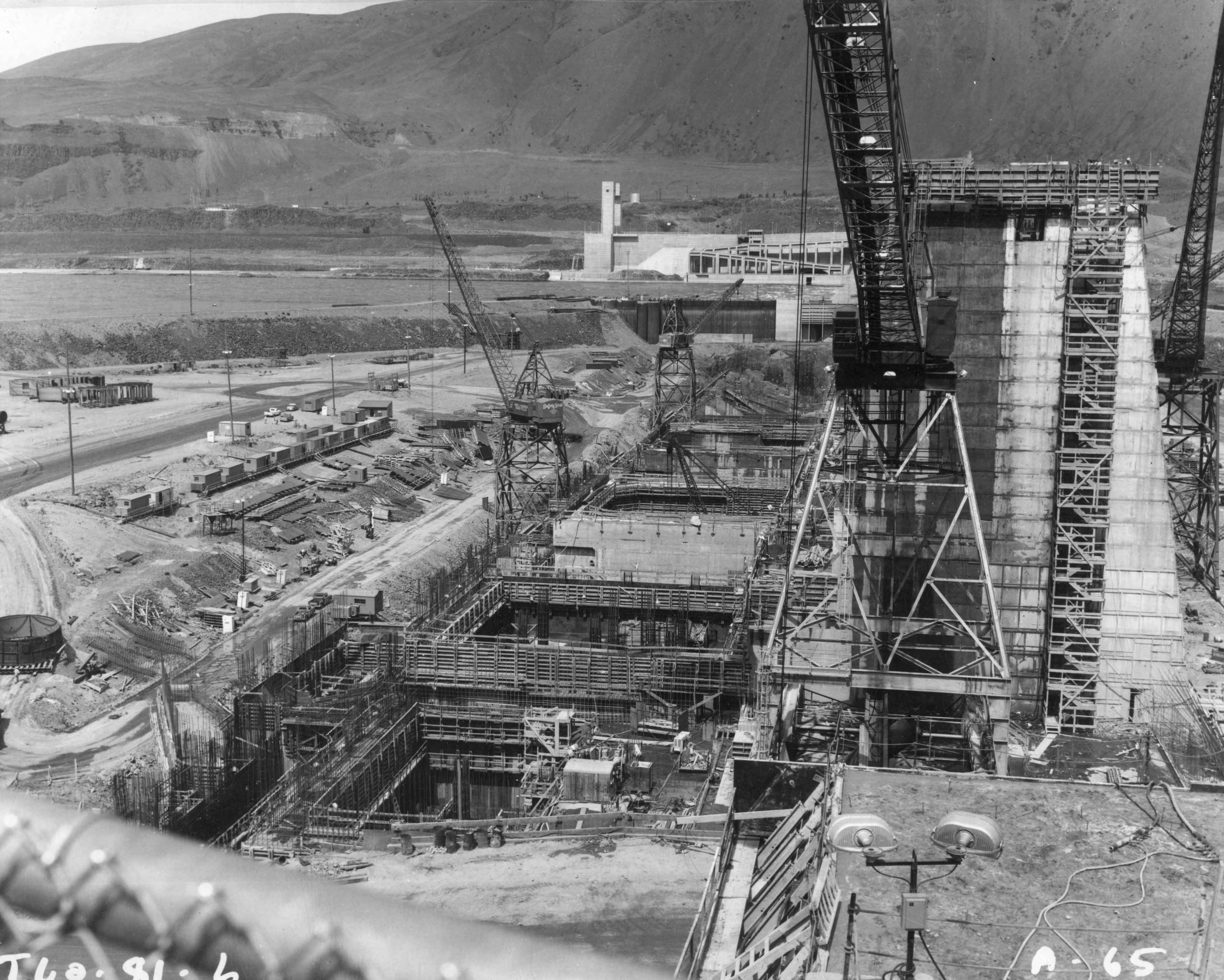
Construction scene at John Day Lock and Dam powerhouse (University of Idaho Library)

John Day Dam on the Columbia River (U.S. Army Corps of Engineers)
Iconic Bridges: Engineering Marvels in Concrete and Steel
Post-war growth demanded new crossings, blending concrete with steel for aesthetic and functional designs.
St. Johns Bridge (1931, Portland, Oregon): Though completed just before the Depression-era dams, this suspension bridge with Gothic-inspired concrete towers became an enduring symbol. Designed by David B. Steinman, its 1,207-foot main span and verdant green paint make it one of America’s most beautiful bridges.
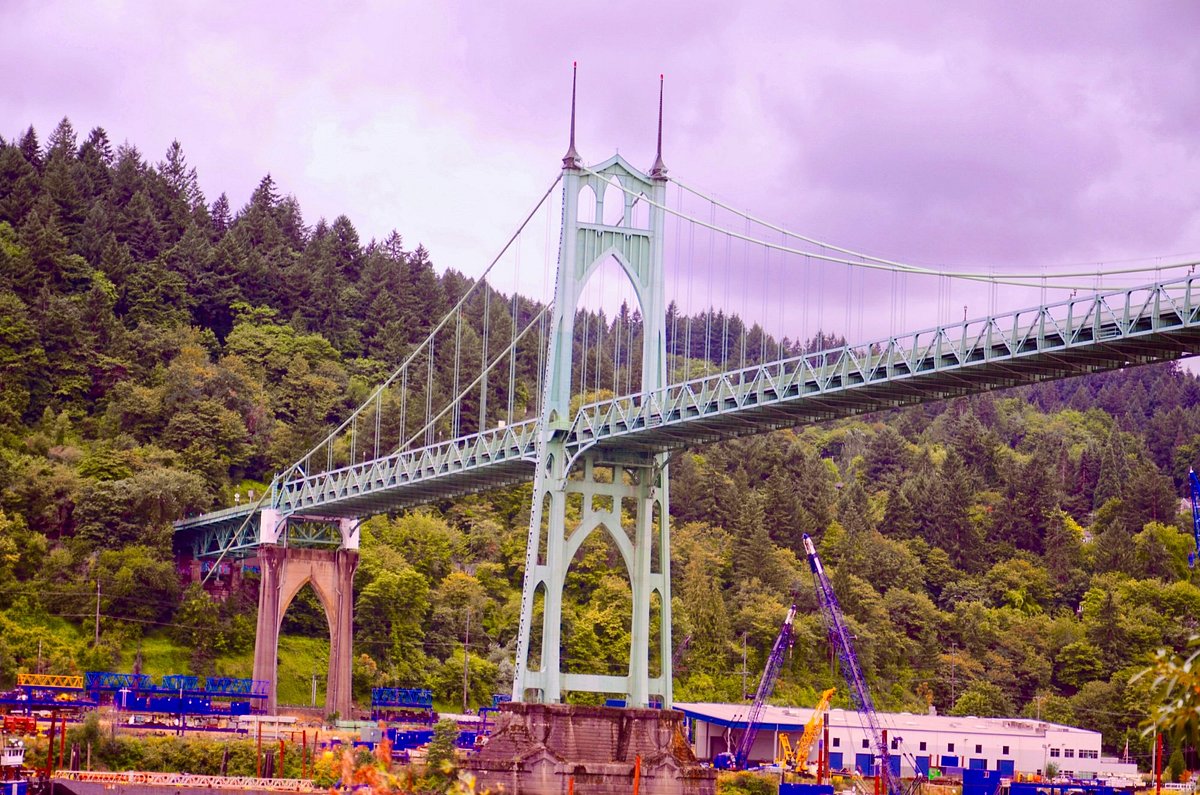
The magnificent St. Johns Bridge spanning the Willamette River

Iconic towers of the St. Johns Bridge (Wikipedia)
Bullards Bridge (1953, Coos Bay, Oregon): This concrete arch bridge over the Coos River, with its distinctive curved design, replaced an older ferry and exemplifies mid-century coastal engineering.

Bullards Bridge near Bandon, Oregon

View from Bullards Bridge (Wikipedia)
The Space Needle: A Modern Concrete Icon (1961–1962)
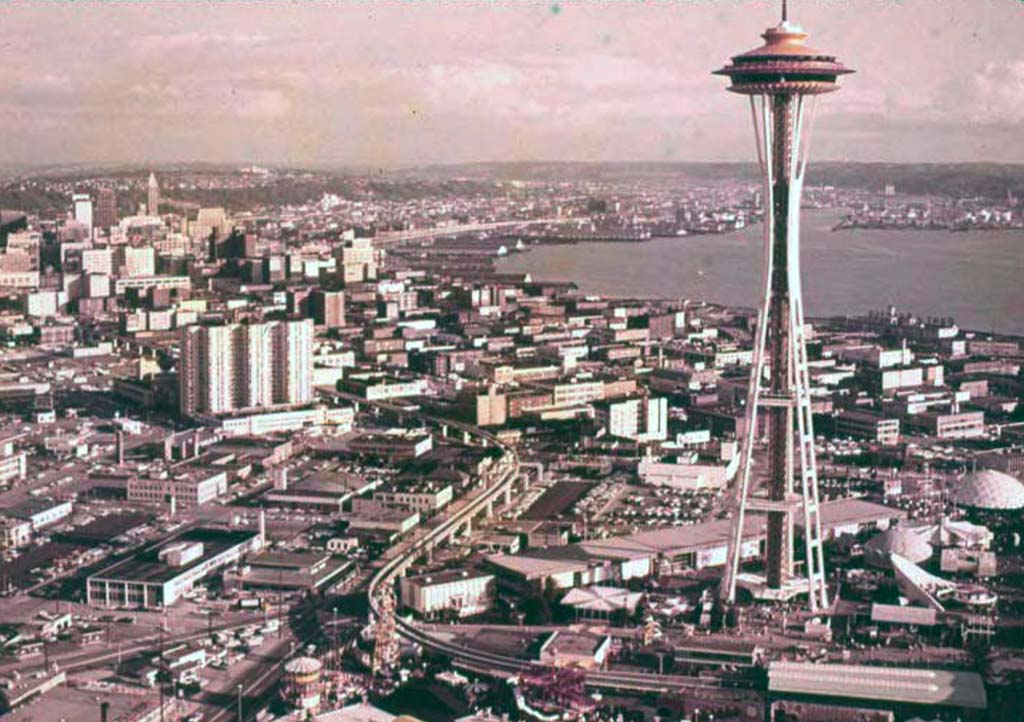
For the 1962 Seattle World’s Fair (Century 21 Exposition), the Space Needle showcased futuristic concrete use. Its foundation required a massive 30-foot-deep hole filled with 5,600 tons of concrete—the largest continuous pour in the West at the time. The slender legs and saucer top used reinforced concrete and steel, symbolizing the Space Age.
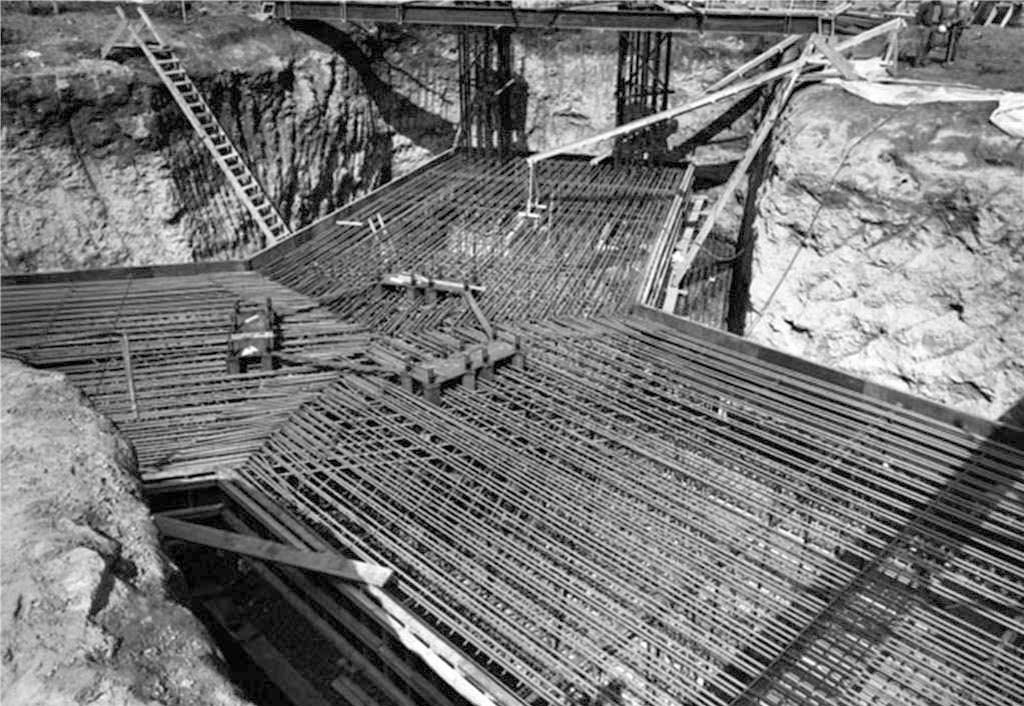
Underground construction of the Space Needle foundation, 1961 (HistoryLink.org)

Early stages of Space Needle construction (PBS)
The Rise of Ready-Mix Concrete in the PNW
Ready-mix concrete—batched off-site and delivered in trucks—transformed construction after WWII. Companies like Glacier Northwest (now CalPortland, roots in the 1890s Puget Sound gravel supply) expanded into ready-mix, becoming the region’s largest supplier. By the mid-20th century, ready-mix enabled rapid interstate highway builds, urban expansion in Seattle and Portland, and consistent quality for large projects.

Early 20th-century concrete plant construction scene (representative of PNW industry growth)
Today, firms like CalPortland and others operate dozens of plants across Washington, Oregon, and beyond, incorporating sustainable practices like recycled aggregates.
Conclusion
The post-war era cemented concrete’s role in the PNW’s identity—from powering growth via dams to defining skylines and coastlines. As the region grapples with aging infrastructure and climate resilience, concrete continues to evolve.
References and Further Reading (Part 3)
- Columbia River History – Northwest Power and Conservation Council
- John Day Dam – Wikipedia
- The Dalles Dam – Wikipedia
- St. Johns Bridge – Wikipedia
- Bullards Bridge – Wikipedia
- Space Needle Construction – HistoryLink.org
- CalPortland History
- Bureau of Reclamation PNW Dams
- Image sources: University of Idaho Library, U.S. Army Corps of Engineers, Tripadvisor, Wikipedia, HistoryLink.org, and others.
See Part 1 (early history, mega-dams, bridges) and Part 2 (Skagit Project) for the full series.
History of Concrete in the Pacific Northwest
A 6-Part Series by Volume Concrete LLC