History of Concrete in the Pacific Northwest – Part 4: Art Deco Elegance and Mid-Century Mastery – Iconic Bridges and Architectural Landmarks
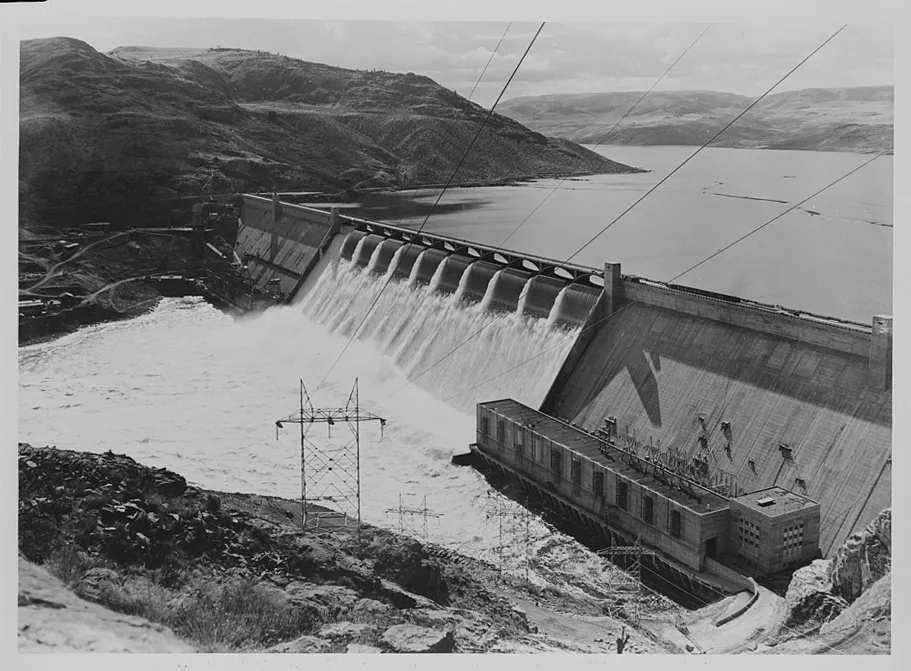
While massive dams dominated the 1930s–1950s, the Pacific Northwest also excelled in graceful, innovative bridge design and emerging modernist architecture using reinforced concrete. Oregon’s state bridge engineer Conde B. McCullough created a series of Art Deco masterpieces along Highway 101, blending engineering necessity with aesthetic beauty during the Great Depression. Washington contributed dramatic spans like Deception Pass, while cities embraced concrete for bold mid-century and Brutalist structures.
Conde B. McCullough’s Oregon Coast Bridges: Depression-Era Masterpieces
From 1919 to 1947, Conde B. McCullough (1887–1946) designed over 600 bridges as Oregon’s state bridge engineer, with his crowning achievements being the five major spans built in the 1930s along the Oregon Coast Highway (U.S. 101) using federal Public Works Administration funds. These reinforced-concrete structures feature elegant Art Deco/Gothic pylons, arches, and obelisks, turning functional crossings into scenic landmarks that helped complete the coastal route and boost tourism.
Coos Bay Bridge (Conde B. McCullough Memorial Bridge, 1936, North Bend/Coos Bay): The longest of the series at 5,305 feet, this cantilevered through-truss with tied-arch approach spans was the most expensive PWA project in Oregon. Its steel main span (replaced in kind during 2019–2022 rehabilitation) rests on graceful concrete piers with Art Deco detailing.
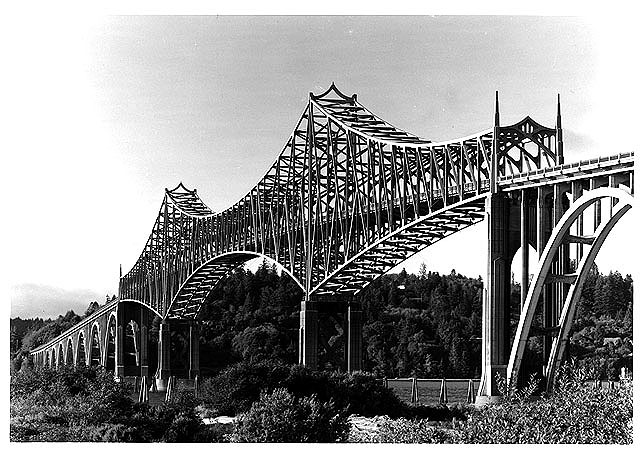
Conde B. McCullough Memorial Bridge (Coos Bay Bridge), a 1990 HAER photo showing its elegant concrete piers

Art Deco detailing on the Coos Bay Bridge approach spans
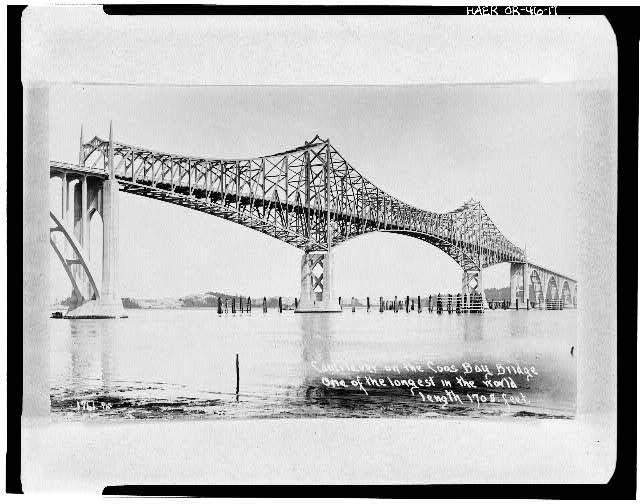
Construction of the Coos Bay Bridge, circa 1936
Yaquina Bay Bridge (1936, Newport): This steel through-arch with concrete deck-arch approaches is renowned for its sweeping lines and pedestrian plazas on the piers. McCullough’s signature obelisks and fluted pylons add elegance.

The iconic Yaquina Bay Bridge spanning Newport’s harbor
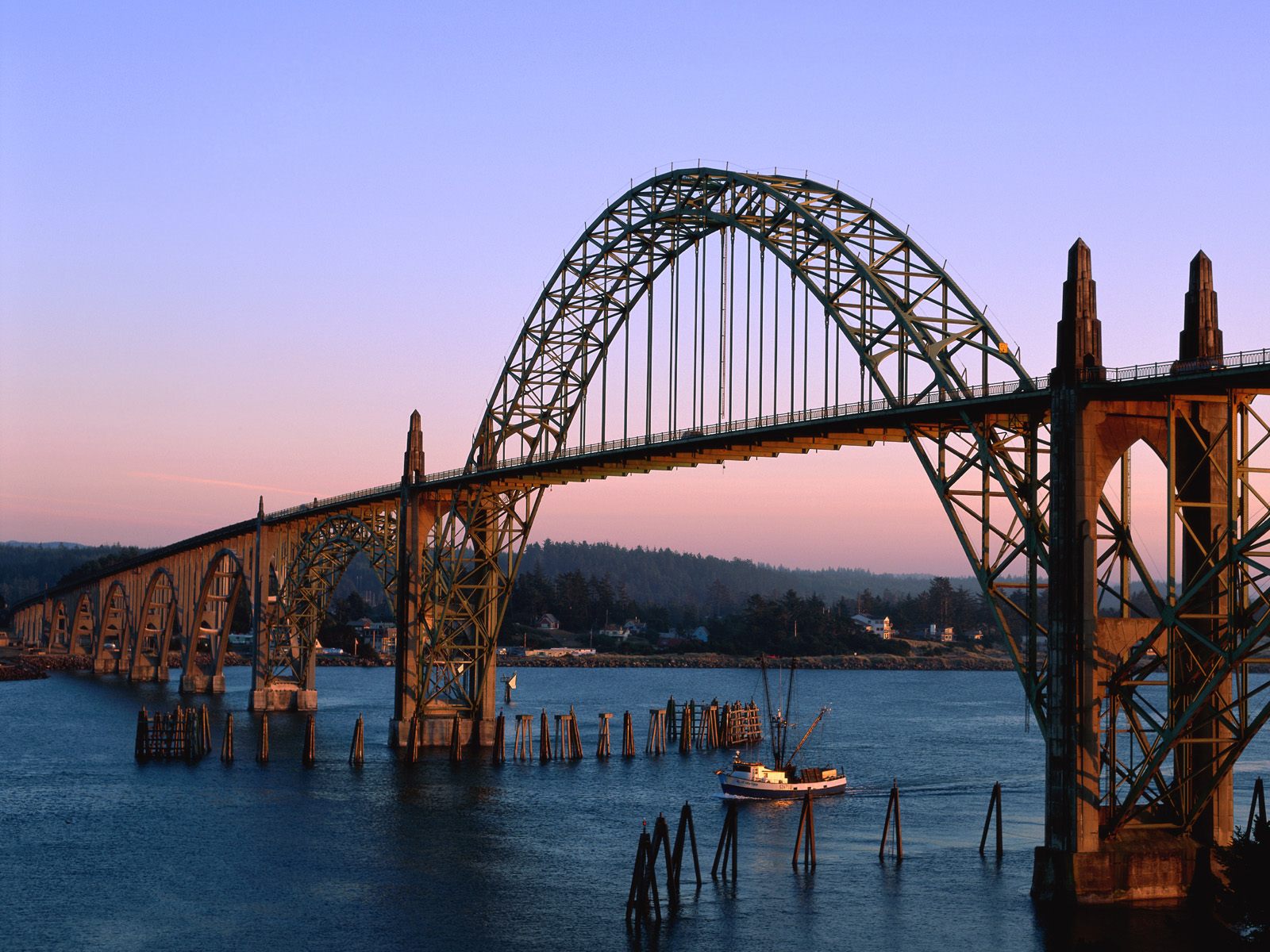
View highlighting the Art Deco pylons of the Yaquina Bay Bridge
Cape Creek Bridge (1932, near Heceta Head): A 619-foot deck arch with a dramatic 220-foot main span, this bridge curves gracefully over a rugged coastal canyon, framed by old-growth forest and ocean views.
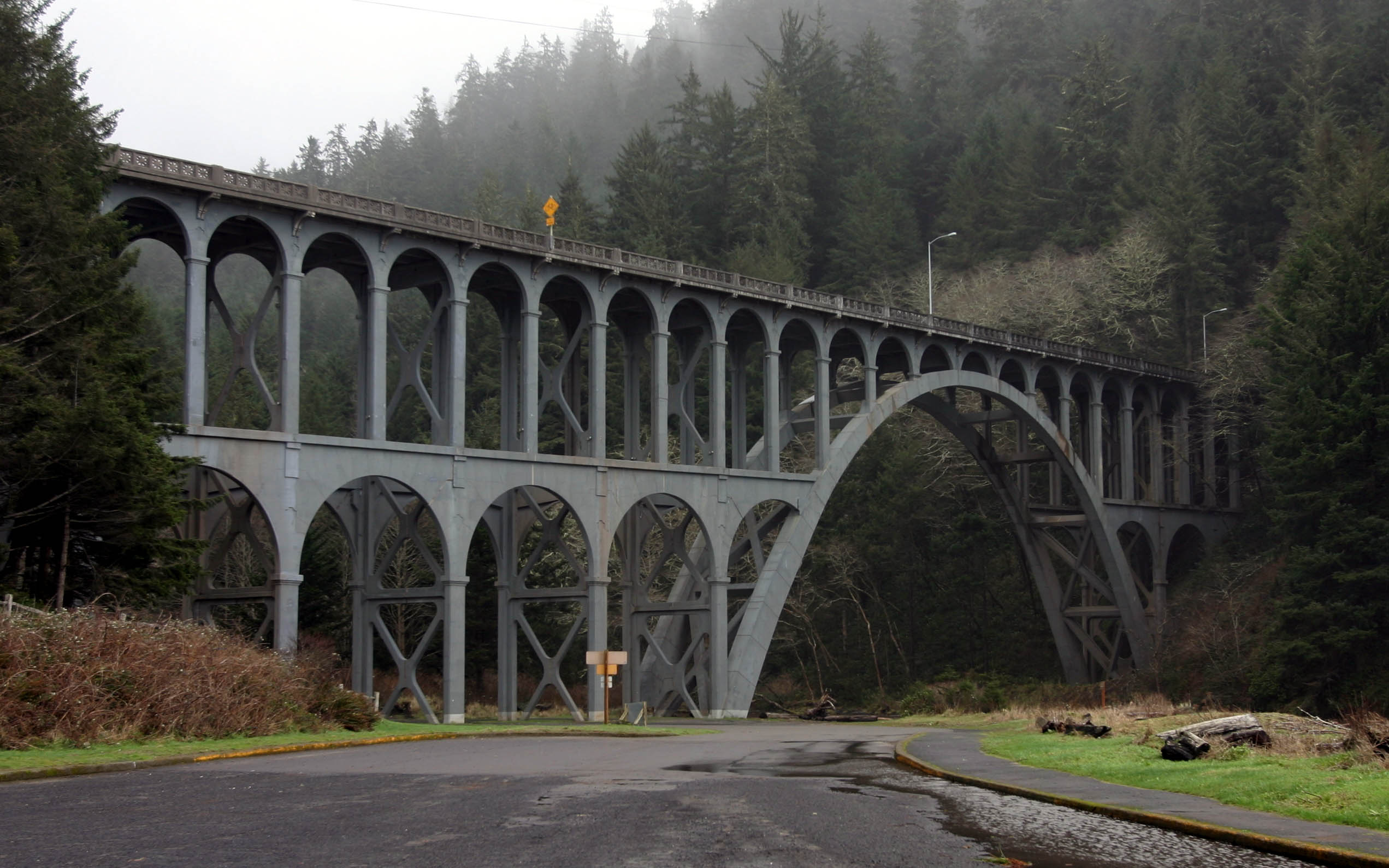
Cape Creek Bridge curving over the coastal canyon
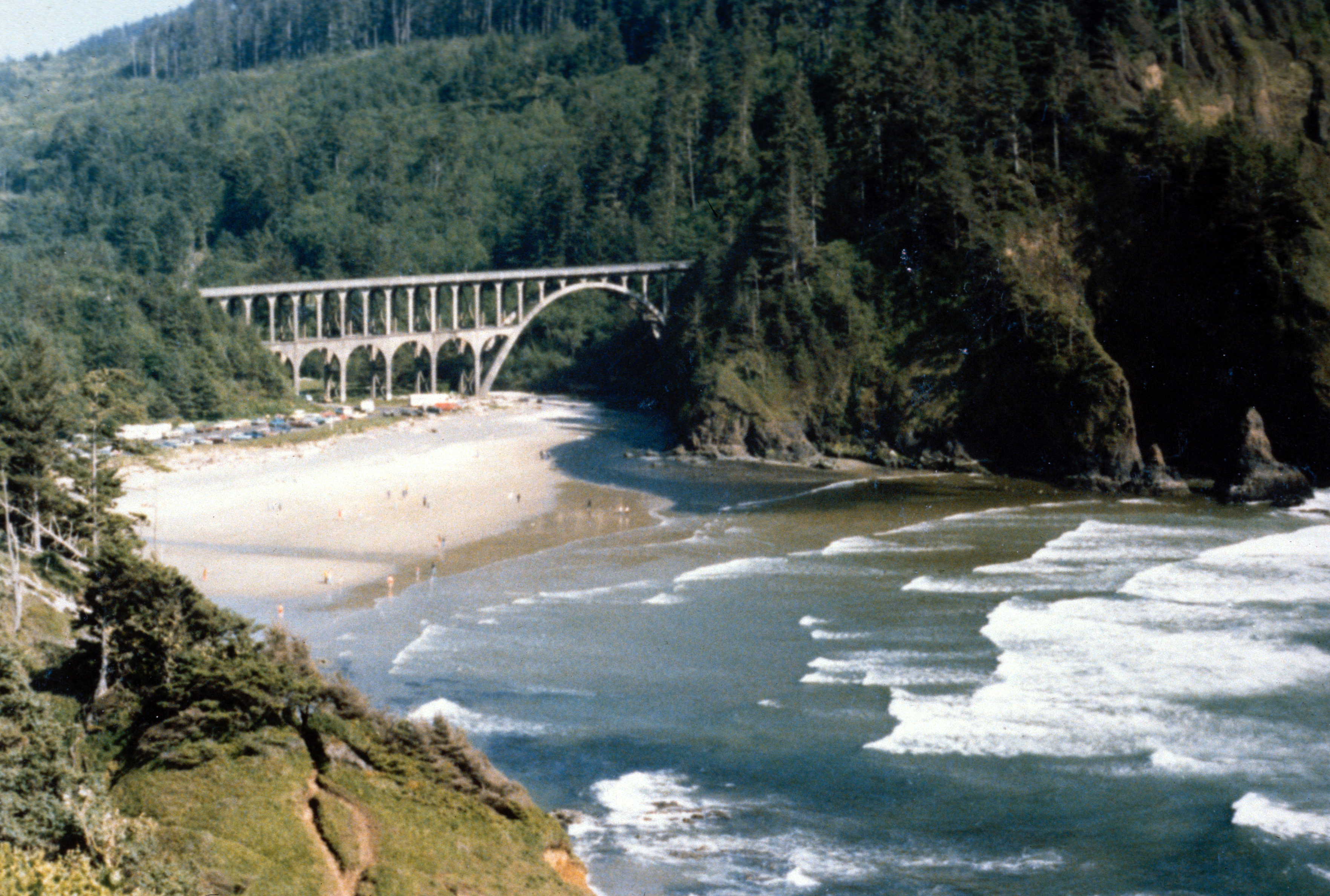
Scenic view of Cape Creek Bridge along the Oregon Coast
Deception Pass Bridge: Washington’s Dramatic Span
Completed in 1935, the Deception Pass Bridge connects Whidbey and Fidalgo Islands with two steel cantilever spans supported by towering reinforced-concrete piers. At 180 feet above the swirling tidal waters, it was the only road link north until the 1950s and remains Washington’s most photographed bridge.

Deception Pass Bridge spanning the dramatic strait

Iconic view from below the Deception Pass Bridge
Monroe Street Bridge: Spokane’s Early Concrete Arch
Opened in 1911, the Monroe Street Bridge over the Spokane River was—at 1,377 feet with a 281-foot main span—the largest concrete arch bridge in the U.S. at the time. Its open-spandrel design, ornate railings, and Art Nouveau lamps make it a Spokane landmark.

Monroe Street Bridge spanning the Spokane River gorge

Early 20th-century view of the Monroe Street Bridge
Mid-Century Concrete Architecture: Brutalism and Beyond
Post-war, the PNW embraced raw, exposed concrete in Brutalist and modernist designs. Seattle’s Freeway Park (1976, Lawrence Halprin) caps I-5 with bold concrete forms, waterfalls, and greenery—an innovative “lid” park.
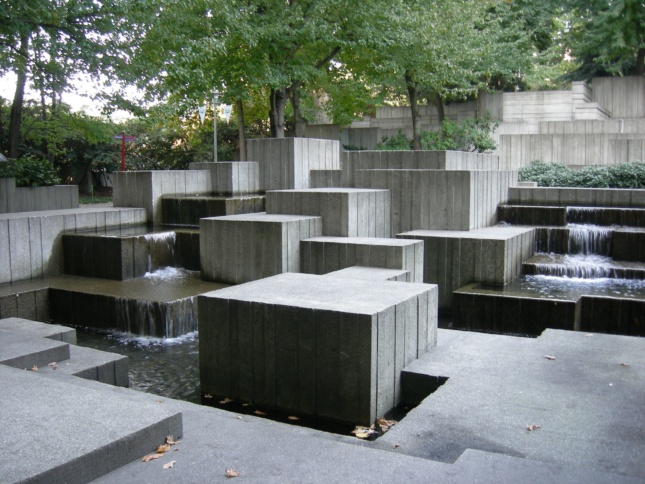
Brutalist concrete forms of Seattle’s Freeway Park

Waterfalls cascading through Freeway Park’s concrete structures
Other examples include Portland’s Keller Auditorium and various university buildings showcasing béton brut (raw concrete) textures.
Conclusion
From McCullough’s poetic coastal spans to dramatic inland arches and bold mid-century forms, concrete in the PNW has proven both structurally daring and artistically expressive. These landmarks continue to define the region’s scenic and urban identity.
References and Further Reading (Part 4)
- Conde B. McCullough – The Oregon Encyclopedia
- Oregon Coast Bridges (McCullough series) – Wikipedia
- Historic Bridges of Oregon
- Deception Pass Bridge – Wikipedia
- Monroe Street Bridge – Wikipedia
- Seattle’s Freeway Park – The Architect’s Newspaper
- Image sources: Oregon Encyclopedia, HistoricBridges.org, Wikimedia Commons, U.S. Federal Highway Administration, and others.
See previous parts for early cement history, mega-dams, Skagit Project, and post-war expansion. Part 5 coming soon on modern innovations!
History of Concrete in the Pacific Northwest
A 6-Part Series by Volume Concrete LLC