
History of Concrete in the Pacific Northwest – Part 5: The Space Age Boom – Century 21 Exposition, Ready-Mix Revolution, and Interstate Expansion
The early 1960s marked a futuristic pinnacle for concrete in the Pacific Northwest, epitomized by Seattle’s 1962 Century 21 Exposition (Seattle World’s Fair). This “Space Age” showcase featured groundbreaking concrete engineering, including the iconic Space Needle and elevated monorail. Simultaneously, the ready-mix concrete industry exploded, fueling the massive Interstate Highway System builds across Washington and Oregon, transforming regional connectivity and urban landscapes.
Century 21 Exposition: Concrete Meets the Future
The 1962 World’s Fair, themed “Man in the Space Age,” attracted over 10 million visitors and left enduring concrete legacies at Seattle Center. Innovative structural designs pushed reinforced concrete to new limits, blending form, function, and optimism.
The Space Needle (1961–1962): The fair’s centerpiece required an unprecedented foundation: a 30-foot-deep hole filled with 5,580 tons of concrete in a single continuous pour—the largest in the West at the time. The slender tripod legs and flying-saucer top used high-strength concrete and steel, rising 605 feet in just 400 days.
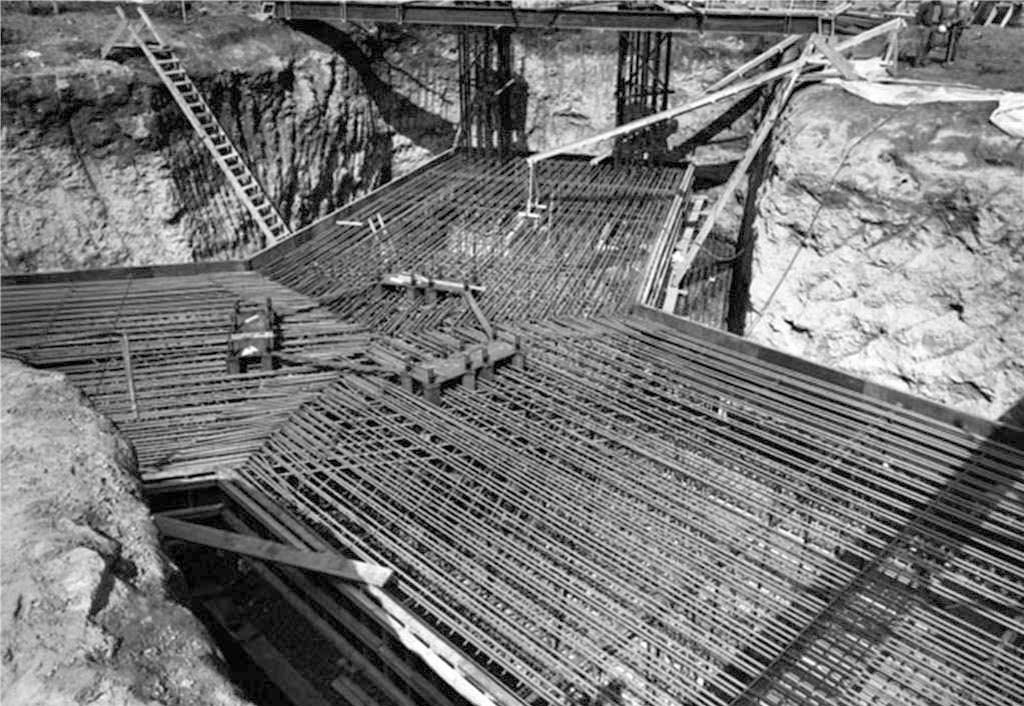
Massive underground concrete foundation pour for the Space Needle, 1961 (Courtesy HistoryLink.org)
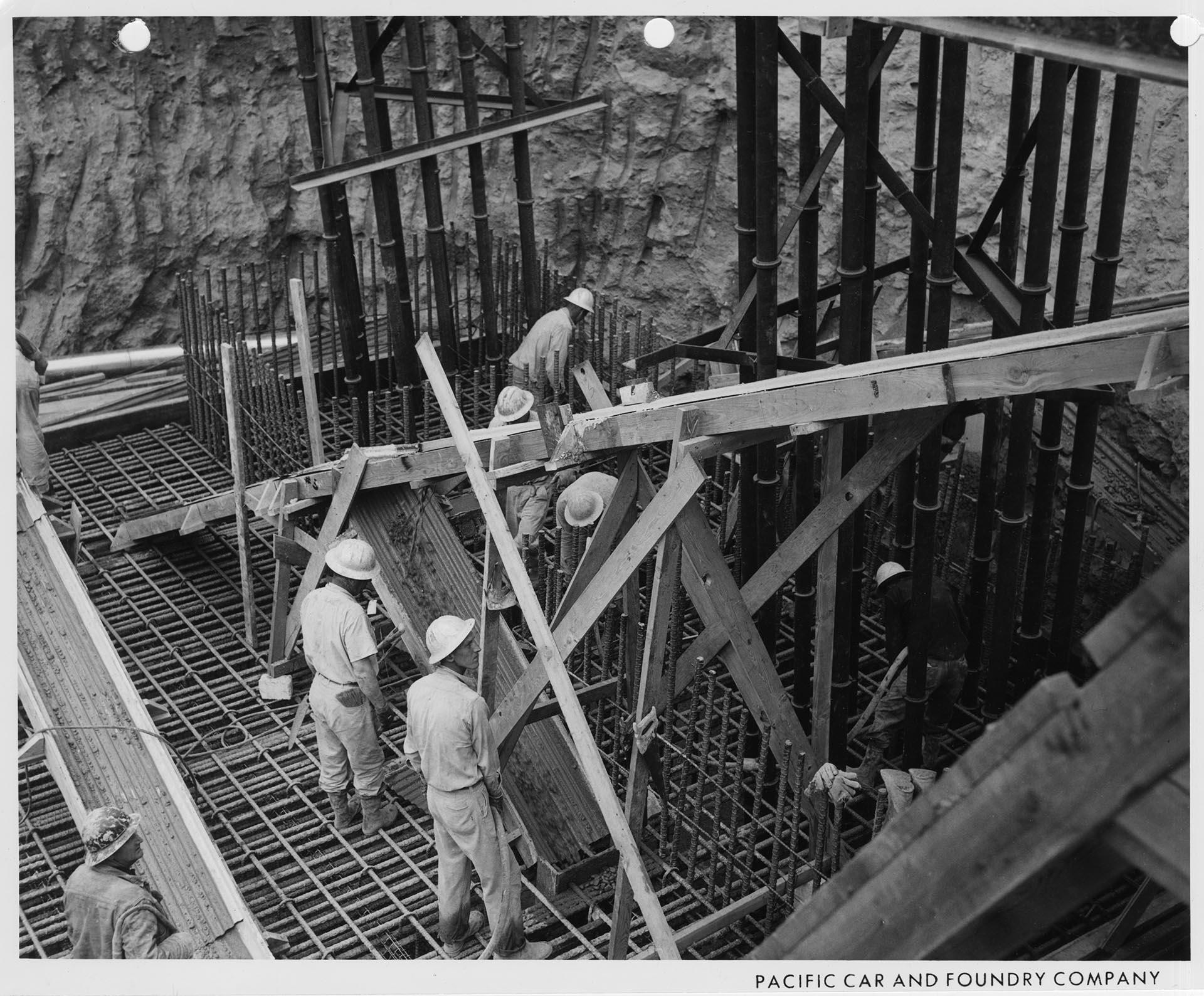
Workers and equipment during the record-breaking Space Needle foundation pour (MOHAI)

The Space Needle’s concrete-and-steel legs taking shape, 1961
Seattle Monorail (1961–1962): The Alweg Monorail, built in under a year, featured 94 elevated concrete support beams along its 1.2-mile route from downtown to the fairgrounds. This rapid-transit prototype showcased precast and prestressed concrete efficiency.

Monorail construction showing concrete beam supports at the fair site, 1961 (Courtesy HistoryLink.org)
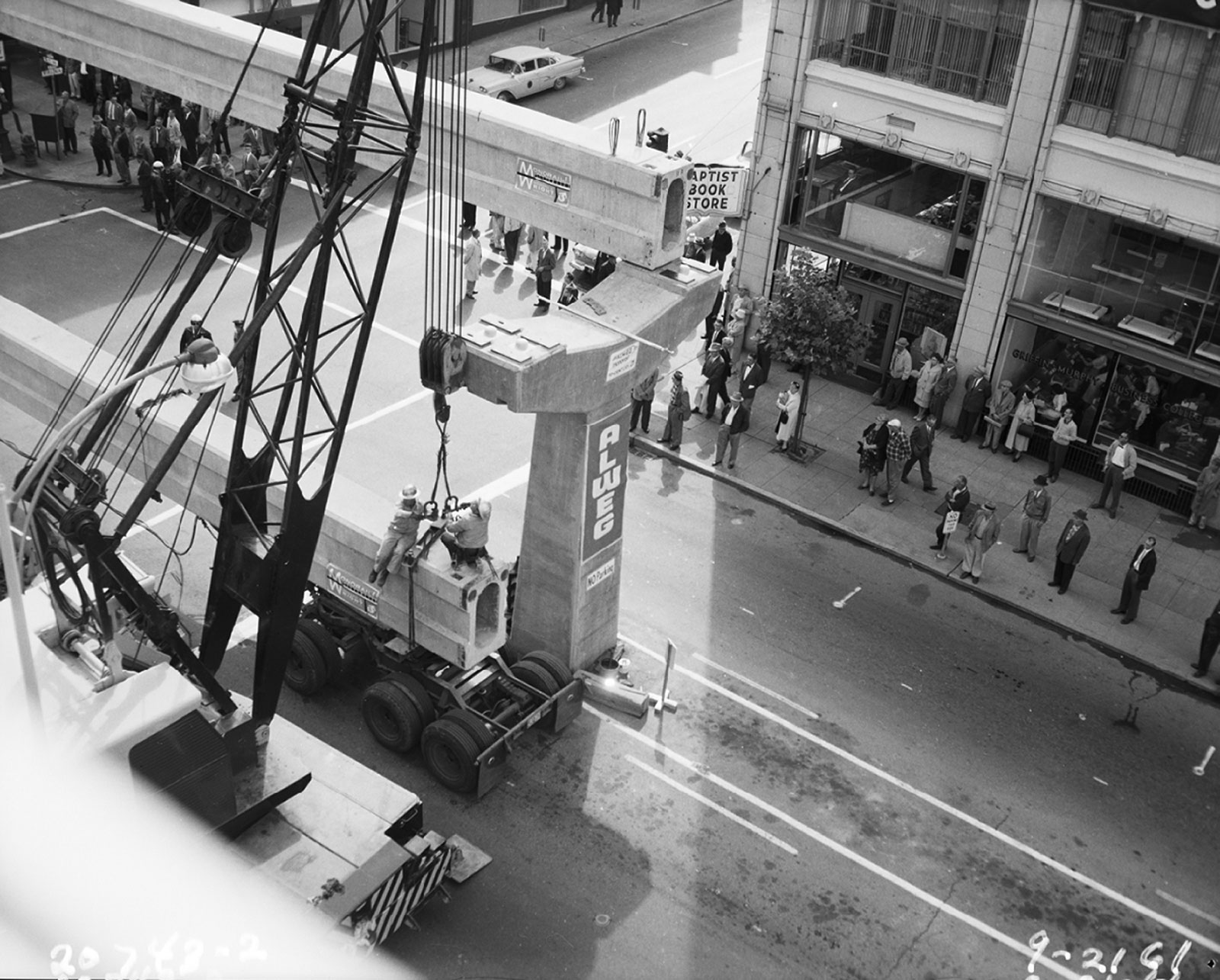
Precast concrete beams being installed for the Seattle Monorail
Other fair structures, like the hyperbolic paraboloid Washington State Pavilion (now Climate Pledge Arena) and the concrete-ribbed Opera House, highlighted thin-shell and exposed concrete techniques.
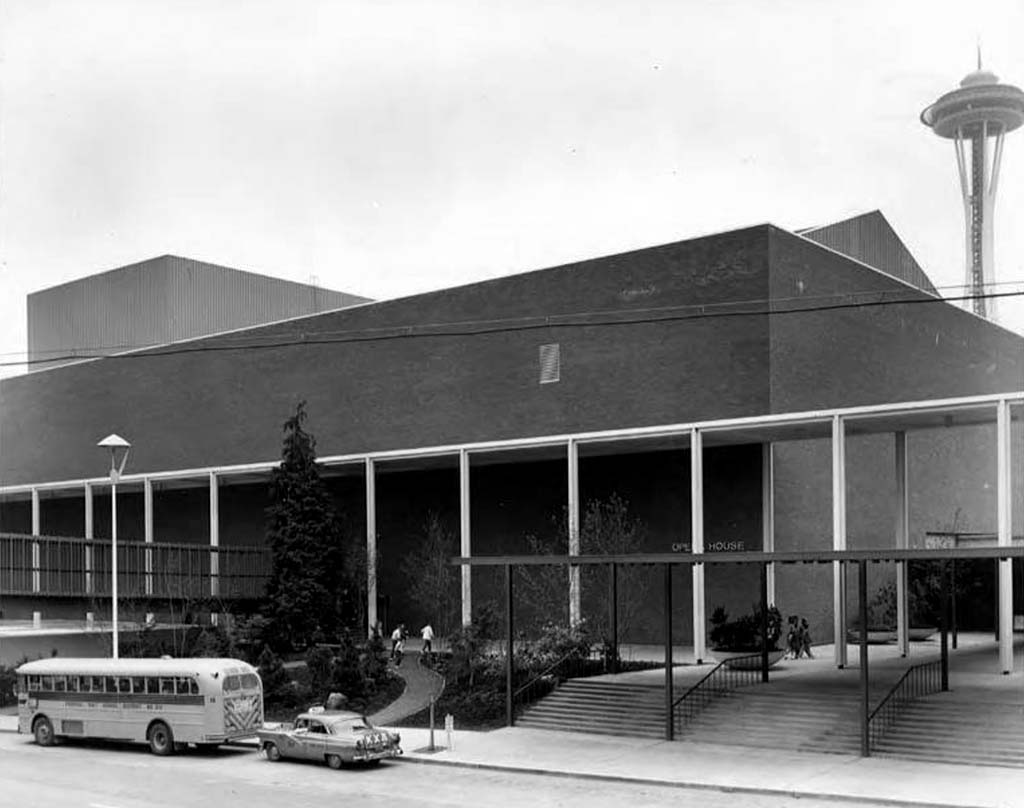
The concrete-ribbed Opera House during the 1962 World’s Fair (Courtesy HistoryLink.org)
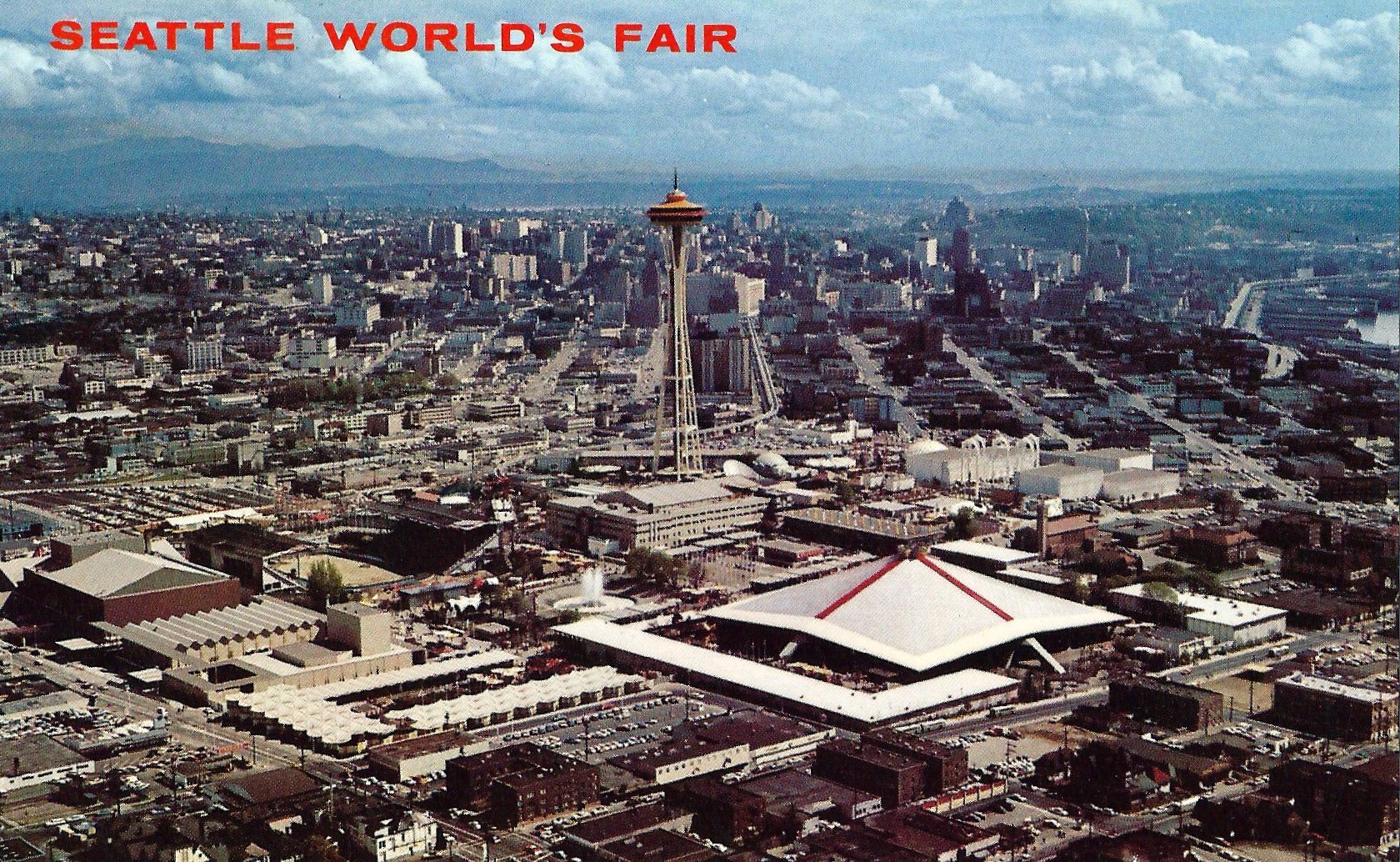
Aerial view of the Century 21 Exposition grounds showcasing multiple concrete structures (ASCE)
The Ready-Mix Revolution and Major Suppliers
Post-WWII, ready-mix concrete—pre-mixed at plants and delivered in revolving-drum trucks—became dominant, enabling faster, higher-quality pours for large projects. In the PNW, companies like Glacier Northwest (founded in gravel supply in the 1890s, expanded into ready-mix post-war) grew into the region’s powerhouse, later becoming part of CalPortland. By the 1960s, dozens of plants dotted Washington and Oregon, supplying everything from highways to high-rises.
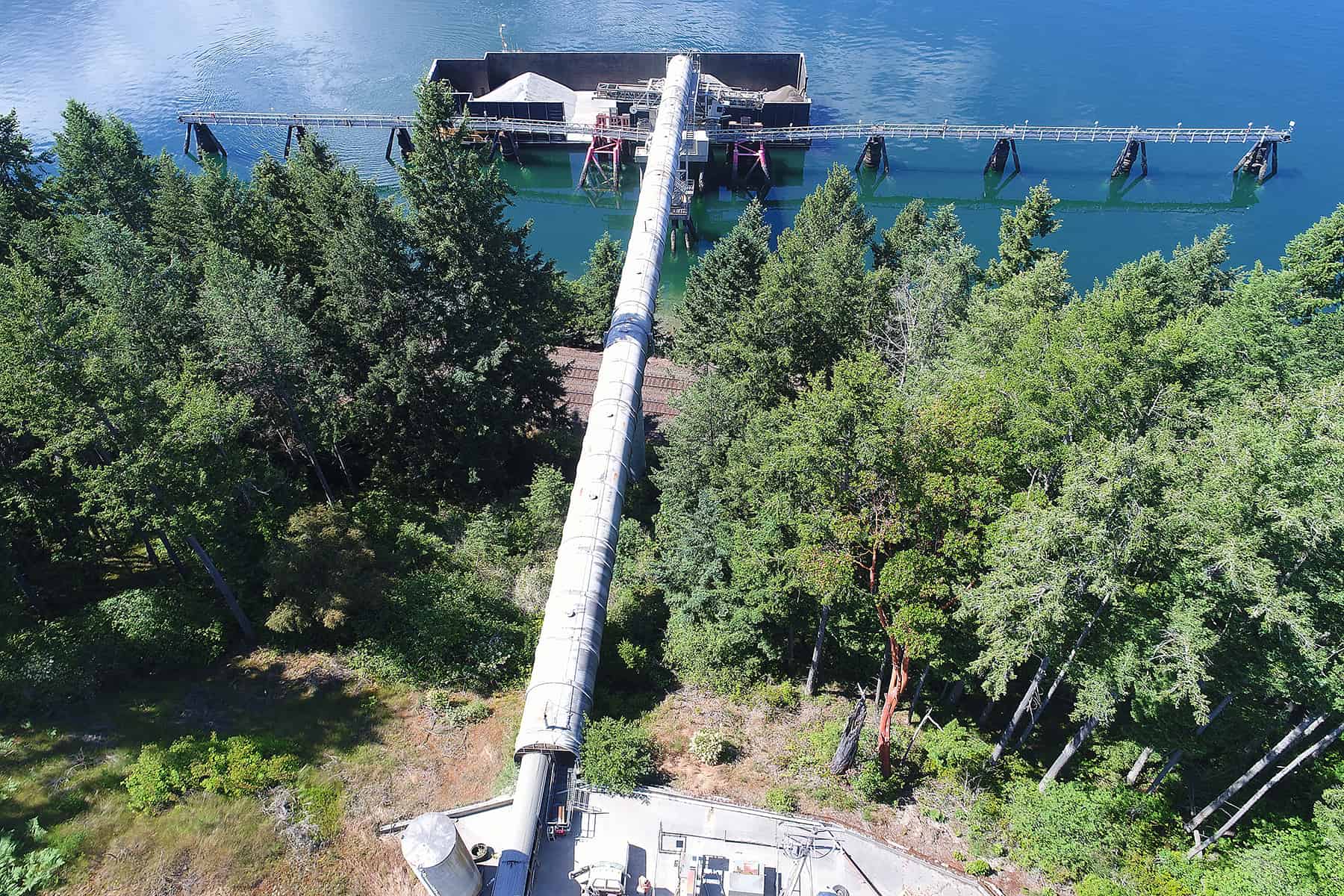
DuPont Ready Mix and Pioneer Aggregate Plant – representative of CalPortland’s modern legacy operations

1960s-era ready-mix concrete truck in action, emblematic of the PNW industry’s growth
Interstate Highway System: Concrete on a Grand Scale
The 1956 Federal-Aid Highway Act launched massive interstate construction, with concrete paving miles of I-5, I-90, and I-84 through Washington and Oregon in the 1950s–1970s. Ready-mix supplied the durable slabs that withstood heavy rain and traffic, reshaping commerce and suburbs.

Concrete paving during I-5 construction in Washington state, 1960s (WSDOT Archives)

Early interstate highway concrete pour in Oregon (FHWA Archives)
Conclusion
The 1960s Space Age optimism, combined with ready-mix innovation and federal funding, propelled concrete into a new era of scale and spectacle in the PNW. These advancements set the stage for today’s sustainable focus, explored in the final part.
References and Further Reading (Part 5)
- Century 21 World’s Fair Structural Engineering – HistoryLink.org
- Space Needle History
- Seattle Monorail History
- CalPortland History
- Seattle Monorail – HistoryLink.org
- Seattle World’s Fair – ASCE
- Image sources: HistoryLink.org, MOHAI, CalPortland, WSDOT, FHWA, and historical archives.
See previous parts for early history, dams, bridges, and architectural landmarks. Part 6 (final) on modern sustainable innovations coming soon!