Author: Volume Concrete

  • Volume Concrete: Leading Experts in Cellular Grout and Concrete in the Pacific Northwest

    Volume Concrete: Leading Experts in Cellular Grout and Concrete in the Pacific Northwest

    Volume Concrete: Experts in Cellular Grout and Concrete Solutions in the Pacific Northwest
    American Flag

    Volume Concrete: Pioneering Cellular Grout and Concrete in the Pacific Northwest

    Introduction to Volume Concrete

    Based in the heart of the Pacific Northwest, Volume Concrete (volumeconcrete.com) is your trusted partner for innovative concrete solutions. Specializing in cellular grout and cellular concrete, we deliver high-quality materials and services tailored to meet the diverse needs of construction projects across the region. As a locally owned business, we’re committed to excellence, sustainability, and community-focused operations.

    Our Expertise and Services

    With years of hands-on experience in handling cellular concrete, grout, Controlled Density Fill (CDF), Controlled Low Strength Material (CLSM), and traditional concrete, Volume Concrete stands out for its versatility and reliability. We offer a full spectrum of densities, from lightweight 27 pounds per cubic foot (pcf) all the way up to high-strength concrete formulations—and everything in between.

    • Cellular Grout and Concrete: Ideal for applications requiring lightweight, flowable materials with excellent insulation and load-bearing properties.
    • CLSM Solutions: We provide CLSM that meets stringent state specifications, including ODOT standards, ensuring compliance and performance for your projects.
    • Specialized Applications: Our team has successfully completed numerous jobs, including underground decommissioning and tank abandonment, where precision and safety are paramount.

    Advanced Equipment for Safer, Efficient Jobsites

    At Volume Concrete, we prioritize health, safety, and environmental responsibility. Our clean fleet of equipment is all Tier 4 compliant, minimizing emissions and supporting sustainable practices. We maintain a robust fleet of pumps that allow us to deliver materials directly via hose, reducing the need for heavy equipment on-site. This approach not only enhances jobsite safety but also streamlines operations, making your project more efficient and cost-effective.

    Commitment to Quality and Compliance

    As a locally owned company, we understand the unique demands of the Pacific Northwest’s construction landscape. Our certified payroll ensures seamless handling of prevailing wage jobs, providing transparency and reliability for public and private sector clients alike. Over the years, we’ve built a reputation for delivering successful outcomes on complex projects, backed by our deep expertise and customer-centric approach.

    Why Choose Volume Concrete?

    Whether you’re tackling infrastructure upgrades, environmental remediation, or new builds, Volume Concrete is equipped to handle it all. Our dedication to innovation, quality, and local service makes us the go-to choice for cellular grout and concrete needs in the Pacific Northwest. Contact us today at volumeconcrete.com to discuss how we can support your next project.

    © 2026 Volume Concrete. All rights reserved. | Proudly Locally Owned in the Pacific Northwest, USA

  • Class 8 Trucks for Ready Mix: Top US Models, Comparisons & Dependability Insights

    Class 8 Trucks for the Ready Mix Industry: Insights and Comparisons

    Class 8 Trucks for the Ready Mix Industry: What’s Sold in America

    In the ready mix concrete industry, Class 8 trucks form the backbone of operations, hauling heavy loads of cement, aggregates, and water across job sites. These heavy-duty vehicles, with a Gross Vehicle Weight Rating (GVWR) exceeding 33,000 pounds, are engineered for durability, power, and efficiency in demanding vocational applications. This post explores the key Class 8 trucks available in the United States, provides comparisons, and offers thoughtful insights into their performance, with a focus on dependability in the large truck arena.

    History and Evolution of Class 8 Trucks in Ready Mix

    Class 8 trucks have evolved significantly since their inception in the mid-20th century. Initially designed for over-the-road hauling, they adapted to vocational uses like ready mix in the 1970s with stronger frames and higher torque engines to handle the weight of concrete mixers. Today, with advancements in emissions technology and electrification, these trucks are more efficient and environmentally friendly than ever. Brands like Mack have been pioneers, with the Granite model tracing roots back to robust construction vehicles of the 1980s.

    Major Class 8 Trucks Sold in the US for Ready Mix

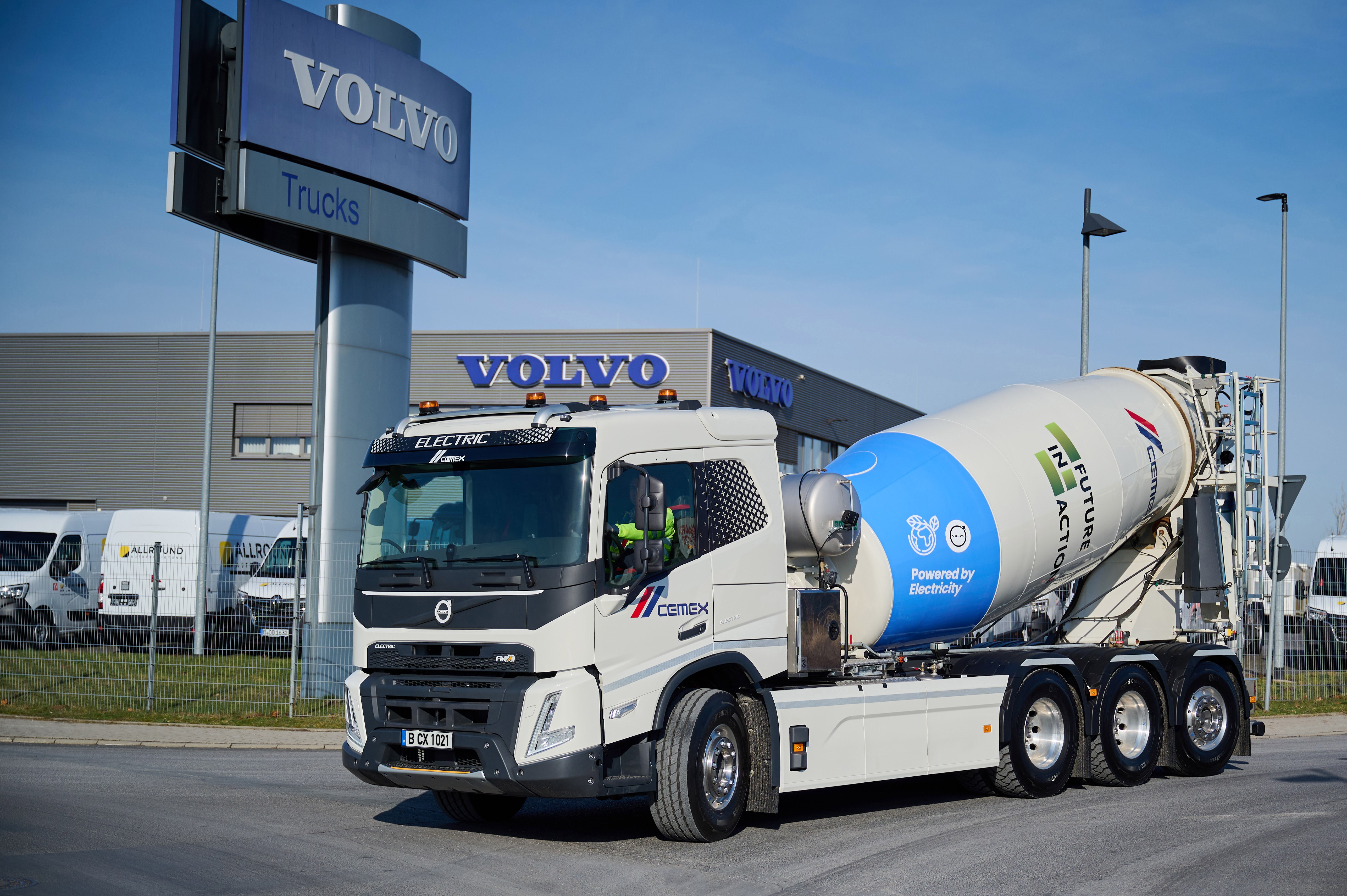
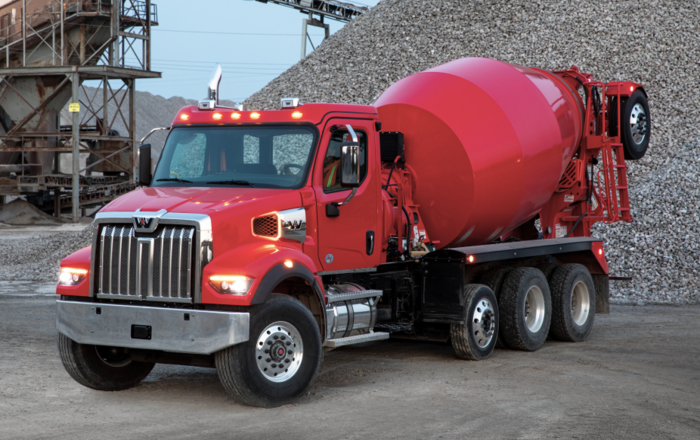
    The US market features several prominent manufacturers offering Class 8 chassis suitable for mounting concrete mixer bodies. These include models from Mack, Kenworth, Peterbilt, Freightliner, International, Volvo, and Western Star. Each brand tailors its trucks to handle the rigors of ready mix, such as frequent stops, off-road maneuvering, and heavy payloads up to 10-11 cubic yards of concrete. Below are key models with visual examples:

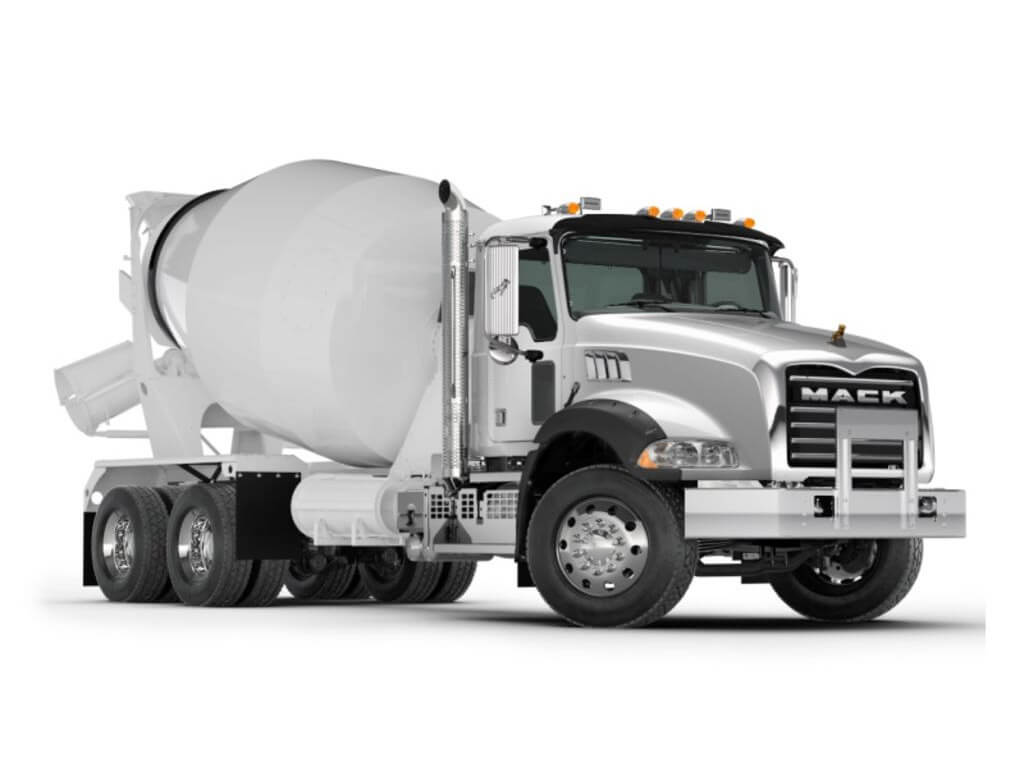
    • Mack Granite: A staple in construction, known for its rugged build and integrated powertrain. It’s designed for severe-duty applications like concrete mixing, with options for high torque engines.Mack Granite ready mix truck
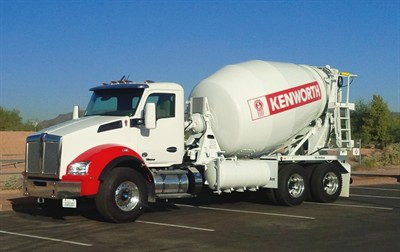
    • Kenworth T880: Versatile vocational truck with customizable configurations, PACCAR engines for efficiency, and features like enhanced visibility and driver comfort for long hauls in ready mix operations.Kenworth T880 concrete mixer
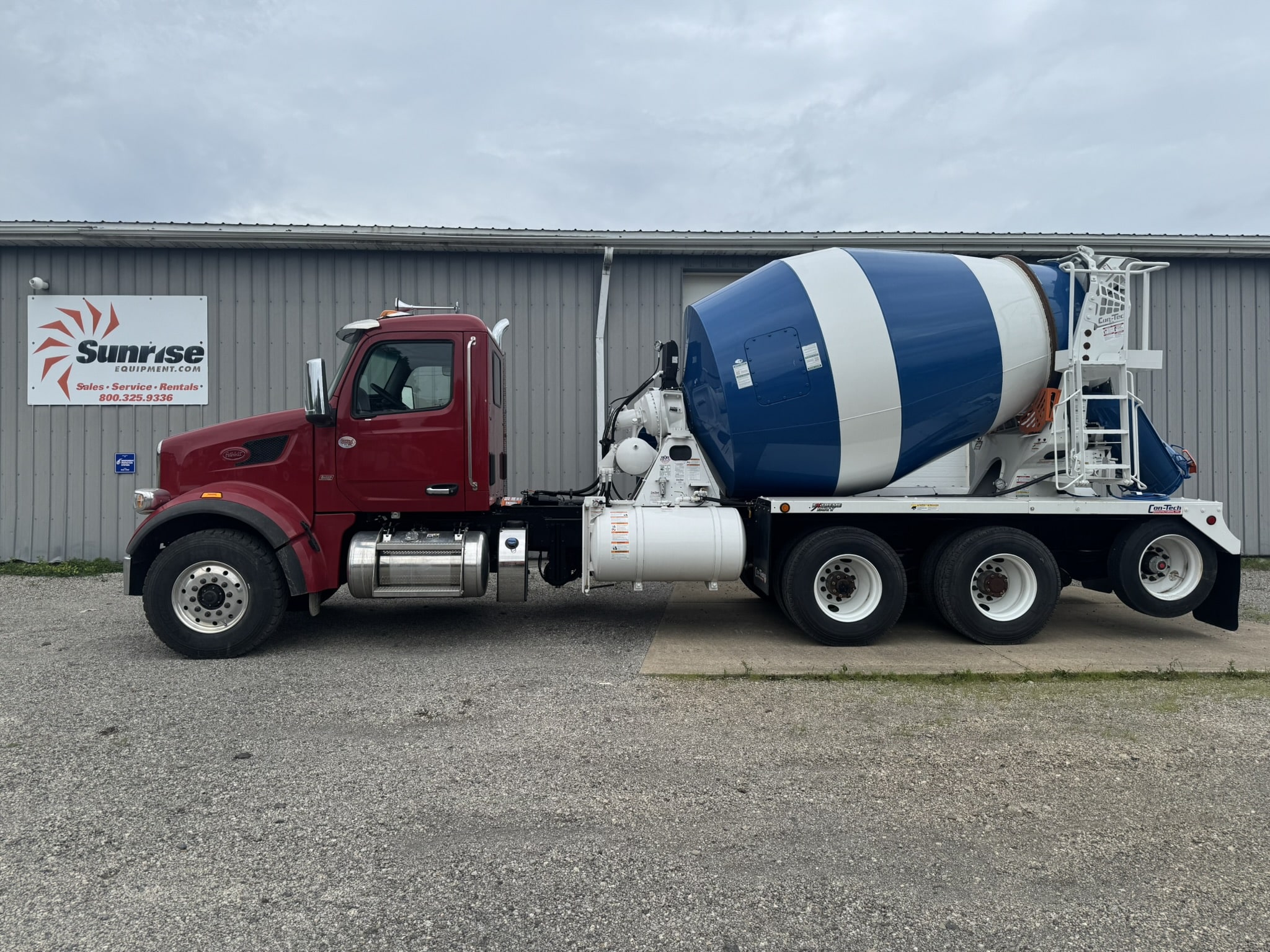
    • Peterbilt 567: Built for heavy-duty tasks, offering up to 510 hp, automated transmissions, and safety features like digital vision systems. Ideal for concrete mixers due to its durable frame and high GVWR.Peterbilt 567 ready mix truck
    • Freightliner 114SD: Cost-effective with Detroit engines for fuel savings, suitable for mixer applications with robust chassis and ergonomic cabs.Freightliner 114SD concrete truck
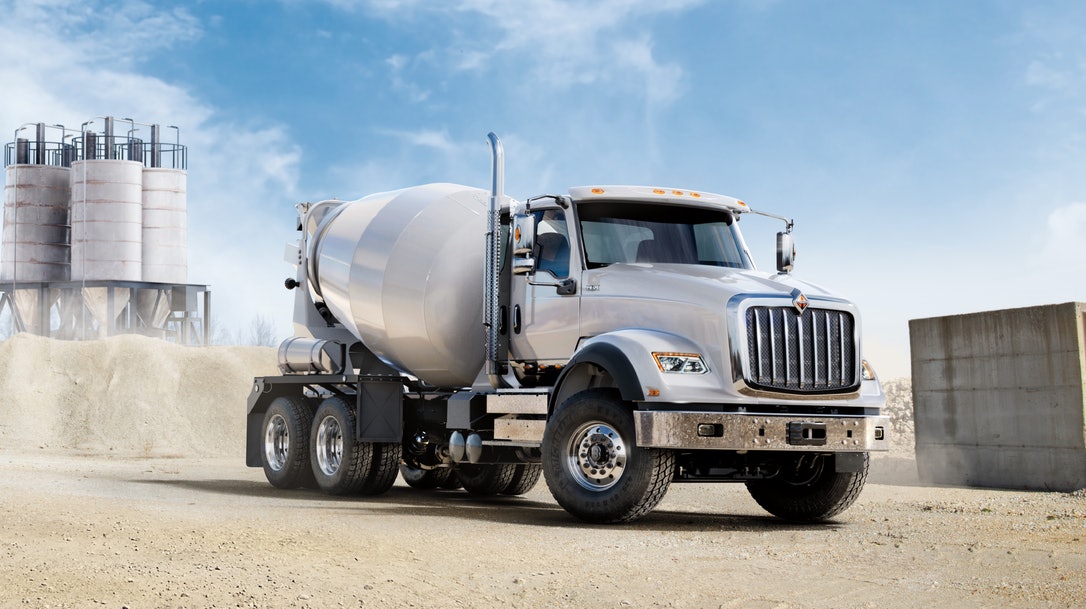
    • International HX Series: Engineered for vocational use, with Cummins engines and features for tough environments, providing good value in the ready mix sector.International HX Series mixer truck
    • Volvo VHD: Focuses on safety and efficiency, with up to 500 hp, I-Shift transmissions, and connectivity tools for fleet management in concrete delivery.Volvo VHD ready mix truck
    • Western Star 49X: Extreme-duty model for harsh conditions, with high-strength frames and customizable options for mixer bodies.Western Star 49X concrete mixer

    Comparisons of Key Models

    To help ready mix operators choose, here’s a comparison table of select models based on engine options, fuel efficiency, payload capacity, and typical pricing (estimates as of 2026; actual prices vary).

    Brand/Model Engine Options Horsepower/Torque Fuel Efficiency (MPG) Payload Capacity Base Price Range
    Mack Granite Mack MP7/MP8, Cummins 325-505 hp / up to 1860 lb-ft 6-8 MPG Up to 80,000 lbs GVWR $150,000-$200,000
    Kenworth T880 PACCAR MX-13/MX-11, Cummins X15 405-510 hp / up to 1850 lb-ft 7-9 MPG Up to 100,000 lbs GVWR $160,000-$220,000
    Peterbilt 567 PACCAR MX-13, Cummins X15 405-510 hp / up to 1850 lb-ft 7-9 MPG Up to 100,000 lbs GVWR $165,000-$230,000
    Freightliner 114SD Detroit DD13/DD15, Cummins 350-505 hp / up to 1850 lb-ft 7-10 MPG Up to 92,000 lbs GVWR $140,000-$190,000
    Volvo VHD Volvo D11/D13 325-500 hp / up to 1850 lb-ft 7-9 MPG Up to 80,000 lbs GVWR $155,000-$210,000

    Data sourced from manufacturer sites and industry reports.

    Fuel Efficiency Comparison Chart

    Market Trends in 2026

    The Class 8 truck market in 2026 is projected to grow from USD 272.6 billion, driven by infrastructure investments and demand in construction. However, challenges like soft freight demand, economic uncertainty, and tariffs may temper sales. Freightliner continues to lead with around 33-37% market share in heavy-duty segments, followed by competitors like International and PACCAR brands (Kenworth/Peterbilt). There’s also a shift toward zero-emission vehicles, with the medium- and heavy-duty market seeing a 12% contraction in Q1 2025 but potential rebound in eco-friendly models.

    Thoughtful Insights

    When selecting a Class 8 truck for ready mix, consider factors beyond specs: fuel costs account for 25-30% of operating expenses, so efficient engines like those from PACCAR or Detroit can yield significant savings. Safety features, such as Volvo’s active driver assist or Peterbilt’s digital mirrors, reduce accidents in congested job sites. Customization is key—brands like Kenworth and Peterbilt excel in tailoring trucks to specific mixer setups. With the push toward sustainability, look for models compatible with natural gas or electric options, though diesel remains dominant in 2026. Additionally, resale value is strong for top brands, with Freightliner leading in market share for easier parts availability. Environmental regulations are pushing for lower emissions, and electric mixers like Volvo’s offerings are gaining traction for urban operations.

    Who is the Most Dependable in the Large Truck Arena?

    In the Class 8 segment, dependability is measured by uptime, low maintenance costs, and longevity in harsh conditions. Based on industry feedback, sales data, and historical performance, Kenworth stands out as the most dependable brand for vocational use. Its trucks, like the T880, are praised for robust construction, reliable PACCAR powertrains, and fewer breakdowns, making them a favorite among ready mix fleets. Mack and Peterbilt are close contenders, but Kenworth’s balance of innovation and proven durability edges it ahead.

    For more on ready mix solutions, visit Volume Concrete.

  • Top 5 Roller Coasters in America 2026 – don’t argue lol

    Top 5 Roller Coasters in America: Thrills That’ll Rock Your World! – Volume Concrete Insights

    Top 5 Roller Coasters in America: Thrills That’ll Rock Your World! (2026 Edition)

    Posted on January 7, 2026 | By the Adrenaline Junkies at Volume Concrete LLC

    Hey thrill-seekers! At Volume Concrete, we pour rock-solid foundations that can handle anything – even the insane G-forces of America’s wildest roller coasters. These beasts aren’t just about screams and speed; they’re engineering marvels built on concrete that’s tougher than your ex’s heart. Buckle up as we dive into the top 5 coasters that’ll flip your world upside down, based on 2025 rankings from Golden Ticket Awards and USA Today. Let’s ride!

    1. Steel Vengeance at Cedar Point, Ohio: The Hybrid Hellraiser!

    Steel Vengeance roller coaster screaming through twists at Cedar Point

    Hold onto your hats – or lose ’em! This bad boy plummets 200 feet at a sheer 90 degrees, hits 74 mph, and dishes out over 27 seconds of gut-wrenching airtime. It’s a wood-steel mashup that’s pure chaos, anchored by our kind of unshakeable concrete foundations. Ranked #3 in GTA steel and #3 in USA Today.

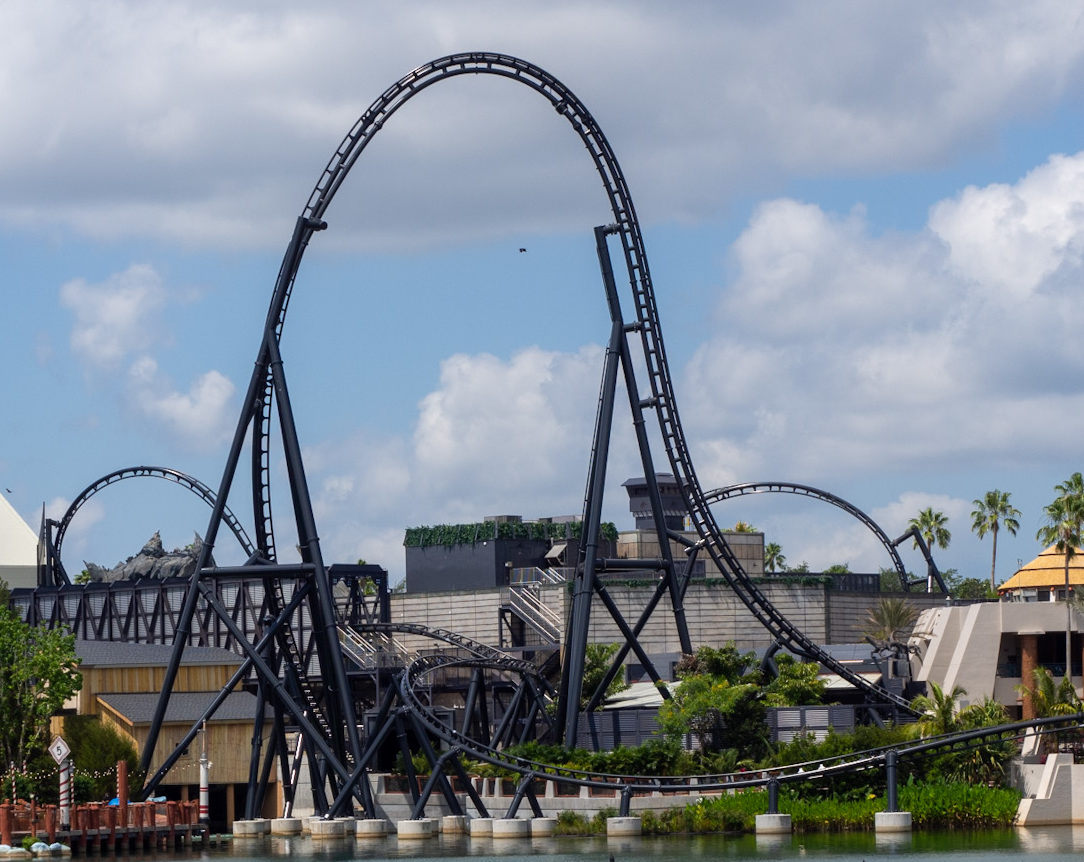
    2. Jurassic World VelociCoaster at Universal’s Islands of Adventure, Florida: Dino Dash of Doom!

    VelociCoaster launching riders into Jurassic thrills at Universal

    Rawr! Blast off to 70 mph with dual launches, flipping through four inversions while raptors eye you like lunch. This Jurassic juggernaut’s concrete supports laugh at high-speed mayhem. #2 in GTA steel.

    3. Iron Gwazi at Busch Gardens Tampa, Florida: The Crocodile Crusher!

    Iron Gwazi dropping steeply at Busch Gardens Tampa

    Snap! Dive 206 feet at a terrifying 91 degrees, roaring to 76 mph with croc-like ferocity. This hybrid hunter twists through three inversions on a track that’s smoother than silk – thanks to bulletproof concrete footings. #4 in GTA steel and #7 in USA Today.

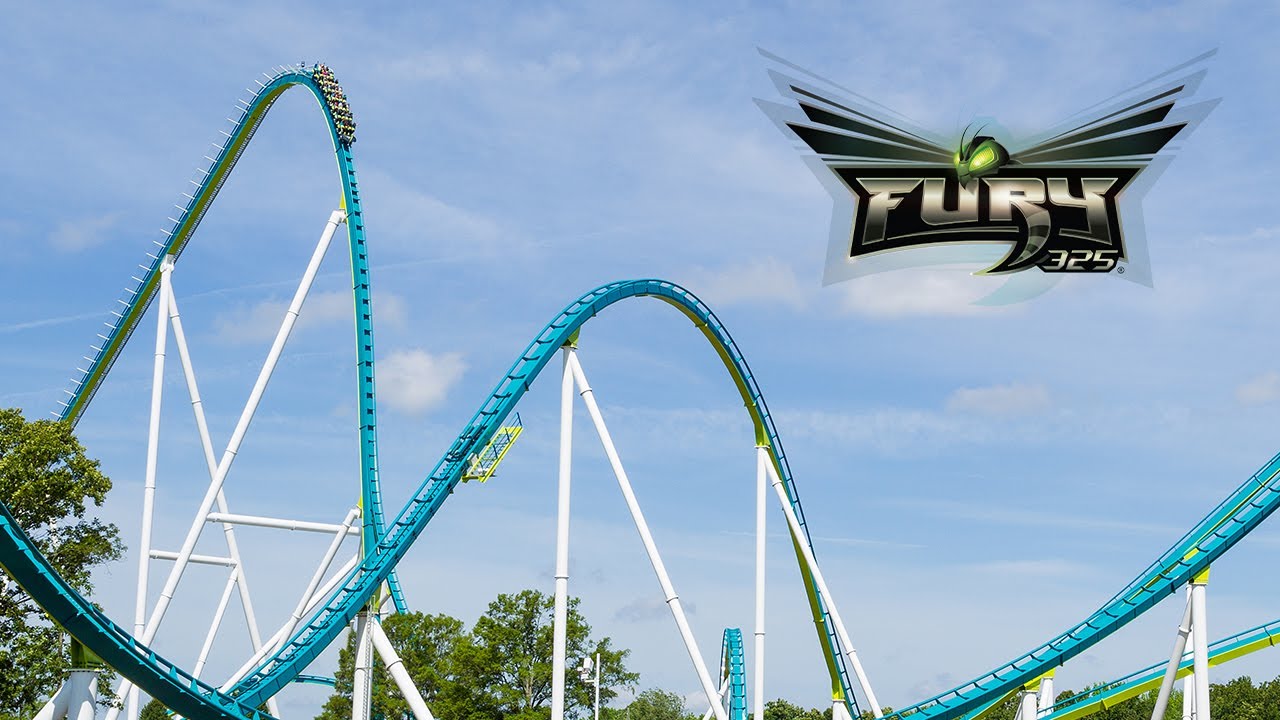
    4. Fury 325 at Carowinds, North Carolina: The Giga Goliath!

    Fury 325 towering high at Carowinds

    Feel the fury! Soar 325 feet tall – that’s a skyscraper drop – blasting to 95 mph over state lines. No inversions, just pure, unrelenting speed and turns that’ll pin you to your seat. Built on mega-strong concrete mixes (wink, that’s our specialty), this giant’s a force of nature! #1 in GTA steel.

    5. Phoenix at Knoebels, Pennsylvania: The Wooden Wonder Reborn!

    Phoenix roller coaster rising like a legend at Knoebels

    Rise from the ashes! This classic woodie hurls you down a 78-foot drop at 45 mph, delivering airtime that’ll have you floating like a feather. Restored with modern concrete muscle, it’s a timeless terror that’s all heart-pounding hills and zero mercy. #1 in GTA wood and #2 in USA Today.

    Coaster Clash: Specs Showdown!

    Want the nitty-gritty? Check this table – it’s like a battle royale of beastly stats!

    Coaster Type Height (ft) Speed (mph) Track Length (ft) Drop (ft) Inversions Airtime (sec) Park Location
    Steel Vengeance Hybrid 205 74 5,740 200 4 27.2 Cedar Point, OH
    VelociCoaster Steel 155 70 4,700 155 4 N/A Islands of Adventure, FL
    Iron Gwazi Hybrid 206 76 4,075 206 3 N/A Busch Gardens Tampa, FL
    Fury 325 Steel 325 95 6,602 320 0 N/A Carowinds, NC
    Phoenix Wood 78 45 3,200 78 0 N/A Knoebels, PA

    Why Concrete is the Unsung Hero of These Thrill Machines

    These coasters aren’t messing around – they slam riders with forces that could crumble lesser builds. That’s where Volume Concrete shines! Our high-PSI mixes (think 4,000-5,000 PSI beasts) form the unbreakable footings, piers, and slabs that keep everything steady. For Fury 325 alone, we’re talking thousands of cubic yards of concrete battling wind, vibes, and sheer insanity. Without it, these rides would be grounded – literally!

    Craving Your Own Rock-Solid Adventure?

    Whether you’re building a backyard thrill or a commercial colossus, Volume Concrete’s got the mix to make it epic! Call us at (971) 219-8604 for lightning-fast ready-mix delivery in Portland. Let’s pour some excitement into your next project!

  • Laser Guided Screeding for Flat Concrete Floors

    Laser-Guided Screeding Deep Dive: Precision Leveling in 2026 – Volume Concrete

    Laser-Guided Screeding in 2026

    Precision leveling technology that’s redefining flat, durable concrete floors

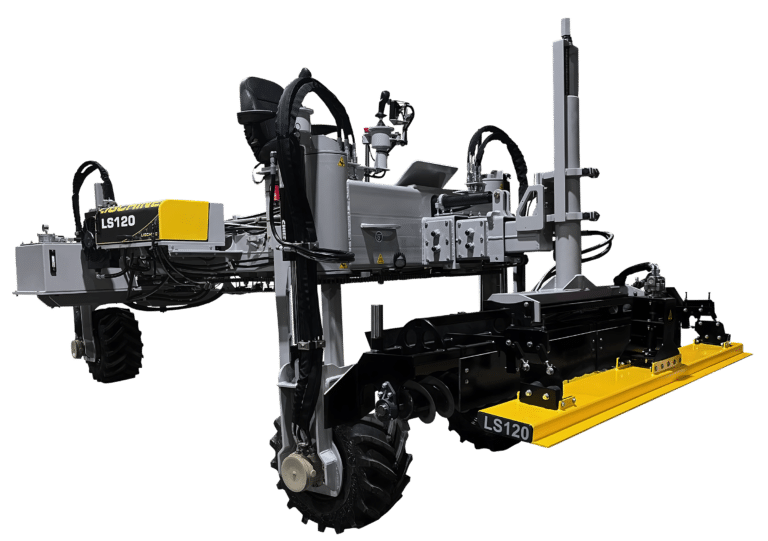
    January 1, 2026 – Laser-guided screeding has matured into a must-have for high-tolerance floors. Boom-operated beasts from Somero & Ligchine, electric zero-emission models, and compact drive-in units deliver sub-millimeter accuracy on massive pours. Here’s the deep dive.

    How Laser-Guided Screeding Works

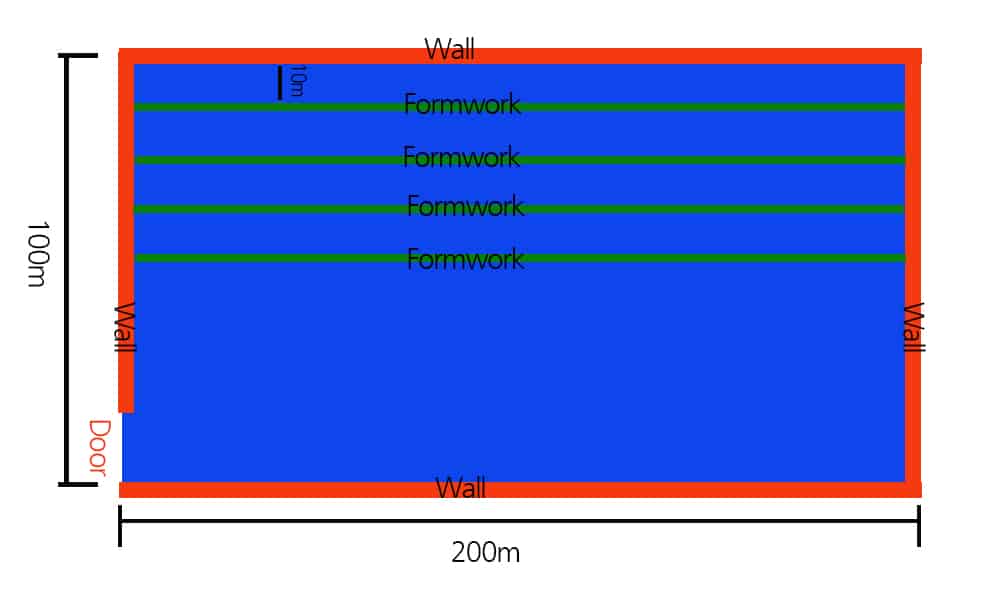
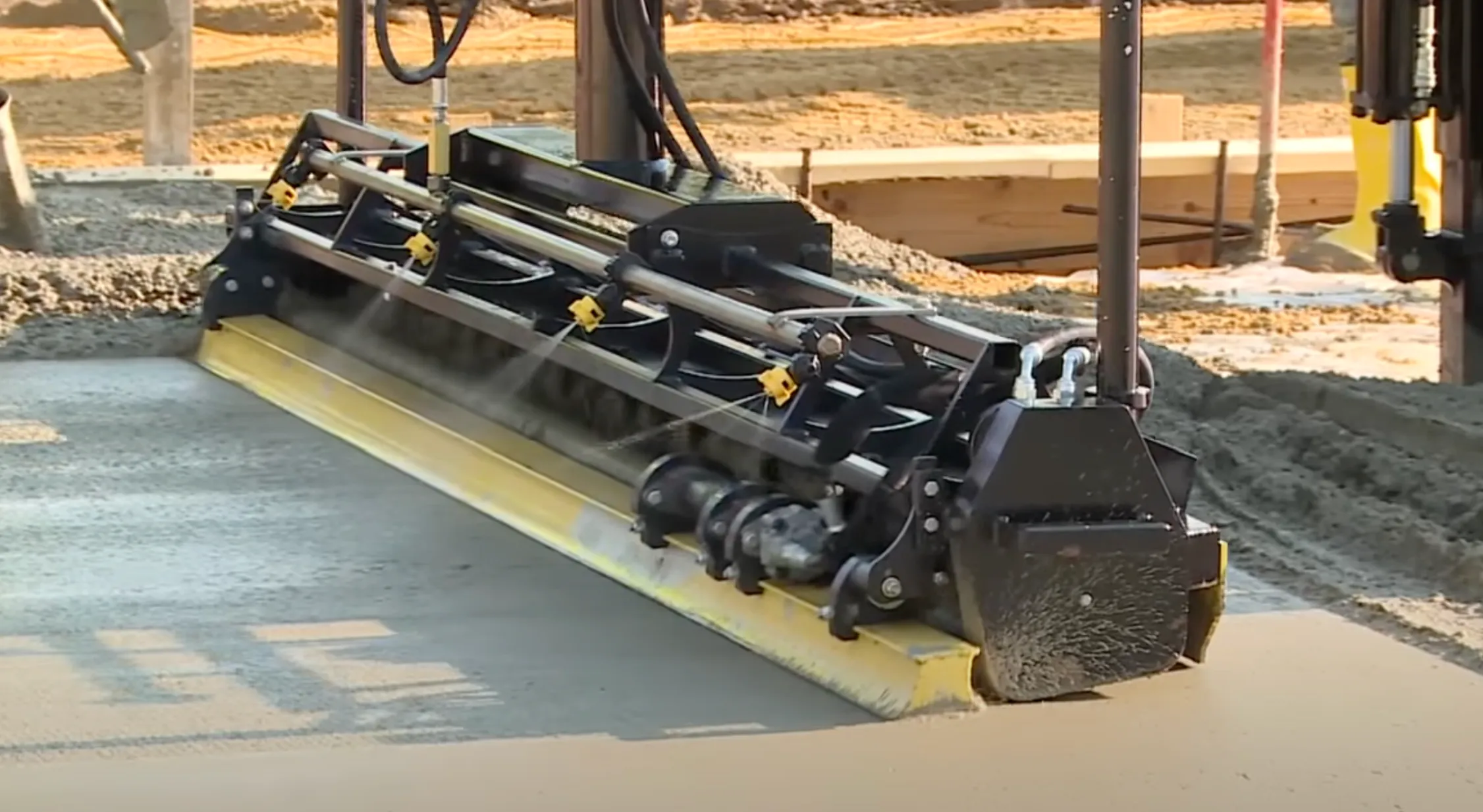
    A rotating laser transmitter creates a reference plane across the site. Receivers on the screed head detect deviations 5–10 times per second. Hydraulic actuators instantly adjust the screed to match the plane—spreading, vibrating, and leveling concrete automatically.

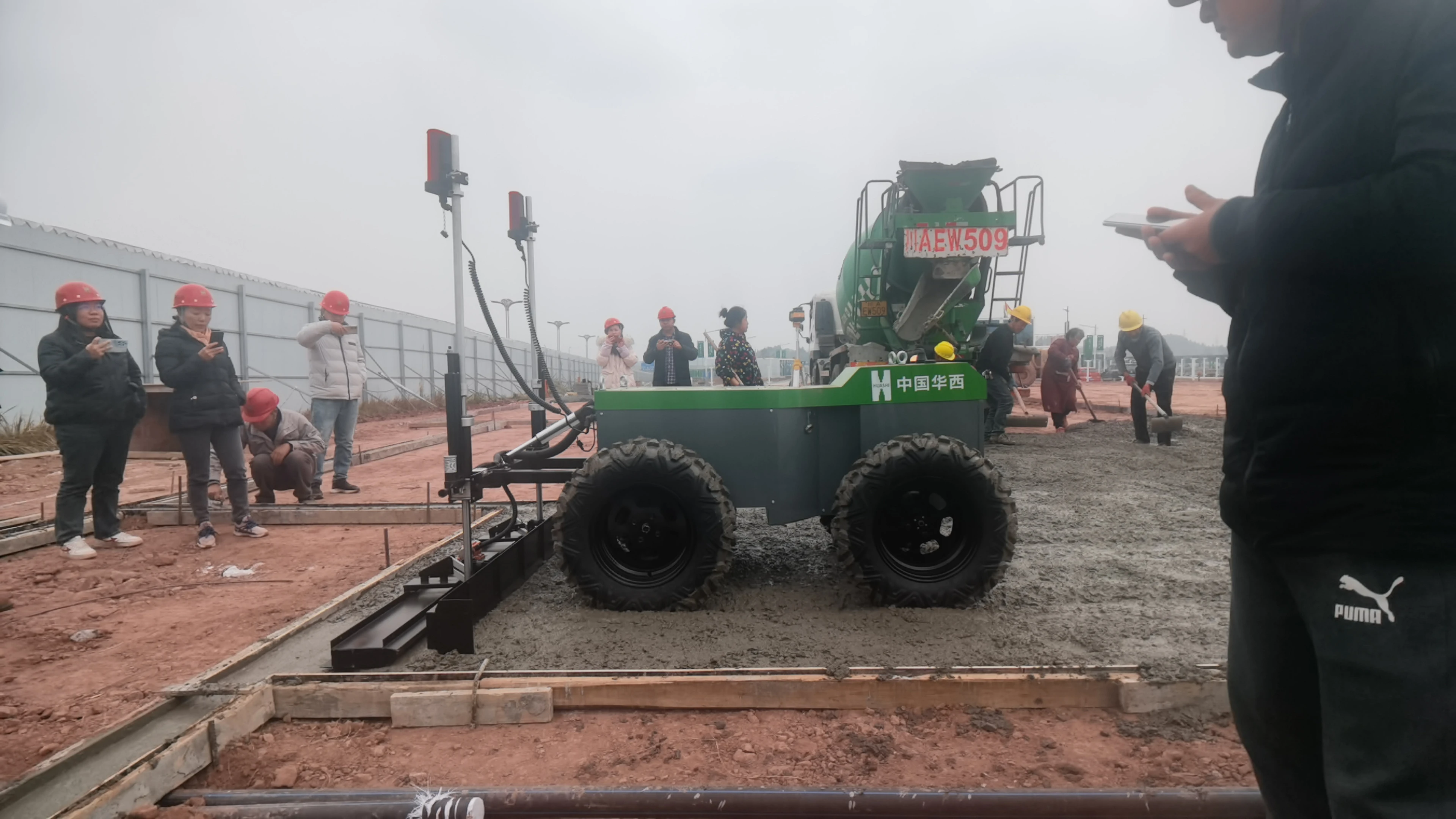
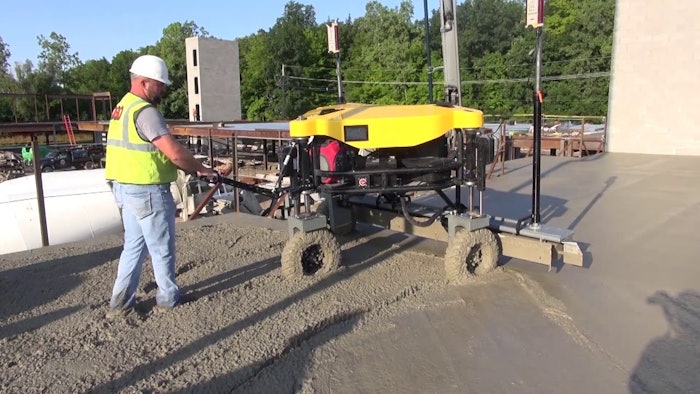
    Diagram of laser screed working principle Laser screed machine in action on site

    Key 2026 Advancements

    • Electric & Zero-Emission Models — Ekin Conscreed E1800 and Somero S-940e run on lithium-ion batteries → no fumes, quiet operation, perfect for indoor/urban sites.
    • Compact Drive-In Units — Ligchine SPIDERSCREED handles upper decks & tight spaces with patented leveling for superior compaction.
    • Robotic Integration — LPS (robotic) control compatibility on Ligchine & Somero machines for fully autonomous operation.
    • High-Performance Booms — 20–25 ft telescopic reach, 10–14 ft heads, achieving F-min tolerances on industrial floors.
    Modern laser screeds achieve tolerances up to ±1.5 mm vertically, reduce labor by 50%+, and boost productivity 200–300% on large pours compared to manual methods.

    Interactive: See the Efficiency Impact

    Compare Manual vs Laser-Guided Screeding

    Slide to see how laser tech changes time, labor & flatness on a 50,000 sq ft industrial floor

    Manual (Traditional) Laser-Guided (2026 Tech)
    Time: 5 days
    Labor: 12 workers
    Flatness Tolerance: ±8 mm
    Boom laser screed leveling large concrete floor Ligchine SPIDERSCREED on metal deck pour Laser screed achieving precise flatness

    In 2026, laser-guided screeding isn’t optional for serious flatwork—it’s the standard for speed, safety, and unmatched floor quality.

    Precision isn’t a luxury—it’s built in.

    © 2026 VolumeConcrete.com | Leveling the Future – Laser Sharp

  • Robotic Revolution in Concrete Placement

    Robotics Revolution in Concrete Placement: 2026 Breakthroughs – Volume Concrete

    Robotics in Concrete Placement 2026

    Autonomous pouring, laser-guided finishing & AI precision transforming job sites forever

    January 1, 2026 – The concrete placement game has changed. Robots are now pouring, screeding, and finishing with superhuman accuracy, slashing labor needs, boosting safety, and delivering flawless results. Here’s what’s hitting sites right now in 2026.

    1. Autonomous Robotic Arms: Precision Pouring Redefined

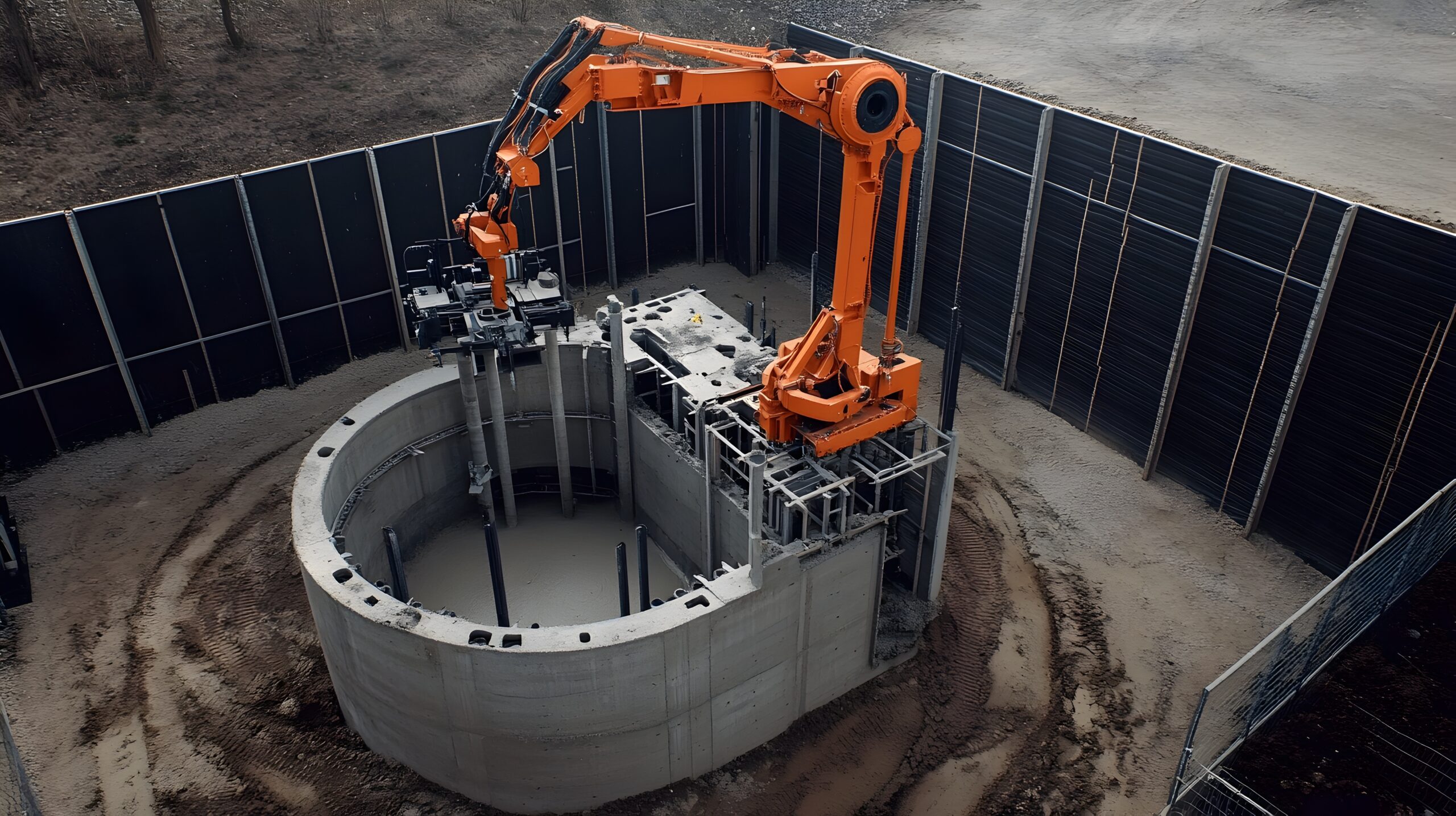
    Cantilever and mobile robotic arms are taking over concrete distribution. These AI-guided systems pump and place concrete with millimeter accuracy, adapting in real-time to obstacles and site conditions.

    2026 systems achieve 99% placement accuracy, reduce rework by up to 50%, and enable safer operation in hazardous areas—no more manual hose dragging!
    Robotic arm pouring concrete on construction site Advanced robotic concrete placement system 3D concrete printing robotic arm in action

    2. Laser-Guided Screeding & Finishing Robots: Flawless Flatwork

    Autonomous screeders and troweling robots use 3D laser guidance and GPS for ultra-precise leveling. They handle massive pours without fatigue, creating high-tolerance slabs faster than ever.

    Robotic screeding boosts efficiency by 300%+ on large floors, minimizes material waste, and delivers F-numbers (flatness) that manual methods can’t match consistently.
    Autonomous screed robot on large concrete pour Laser-guided boom screed robot Concrete finishing robot in operation

    3. Integrated 3D Printing & Robotic Placement: Building the Future Layer by Layer

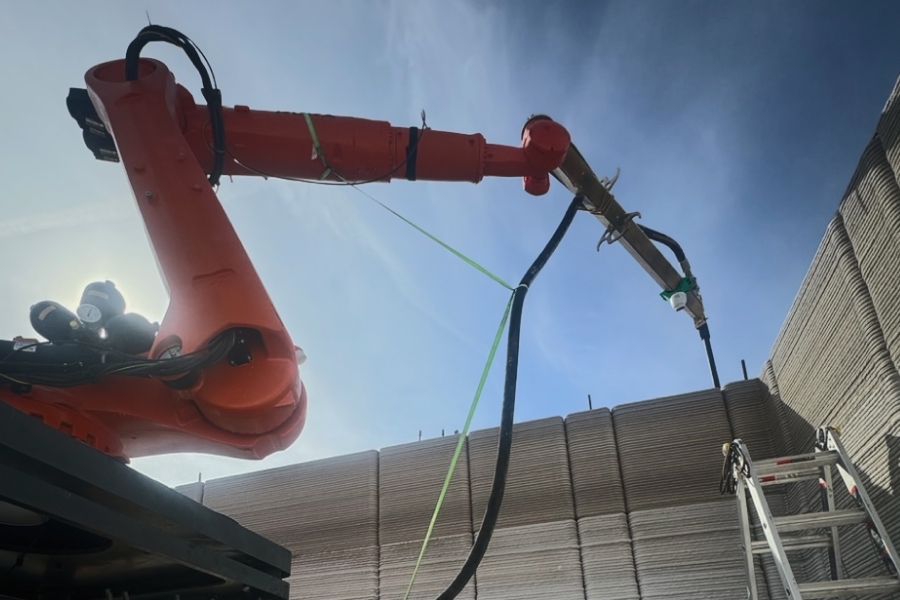
    Track-mounted and gantry 3D concrete printers are scaling up in 2026, combining pouring with precise extrusion for complex structures—walls, homes, even bridges—in days, not weeks.

    On-site robotic 3D printing cuts waste by 30–60%, accelerates builds dramatically, and integrates seamlessly with traditional placement for hybrid projects.
    Track-mounted 3D concrete printing robot Vertico robotic concrete printer on site

    4. The Big Picture: Safety, Speed & Sustainability

    With labor shortages biting hard, these robots aren’t replacing workers—they’re making sites safer (less heavy lifting, fewer injuries) and more productive. AI integration predicts issues, optimizes flows, and even enables 24/7 operation.

    Mind-Blowing 2026 Stat

    Click to reveal how much faster robotic placement is!

    Robots assisting in modern concrete construction

    2026 marks the tipping point: Robotics in concrete placement is no longer experimental—it’s essential for competitive, safe, and sustainable construction.

    At Volume Concrete, we’re deploying these technologies on projects today. The robot revolution is here—let’s build smarter.

    © 2026 VolumeConcrete.com | Pouring the Future – Precisely

  • The Future of Concrete for 2026

    The Future of Concrete: Game-Changing Breakthroughs in 2026 – Volume Concrete

    The Future of Concrete in 2026

    Revolutionary breakthroughs making concrete smarter, greener, and stronger than ever

    Happy New Year 2026! The concrete world has exploded with mind-blowing innovations this year. From concrete that heals itself like living tissue to buildings printed in days while capturing CO₂ – here’s what’s actually happening right now and why it’s game-changing.

    1. Self-Healing Concrete – Living Buildings That Fix Themselves

    2026 has seen bacterial and fungal self-healing concrete move from labs to real projects. Microbes embedded in the mix produce minerals to seal cracks autonomously – no human intervention needed.

    Texas A&M’s synthetic lichen system (fungi + cyanobacteria) creates fully autonomous healing without external nutrients. Structures last decades longer with massive maintenance savings.
    Self-healing concrete demonstration Microscopic view of self-healing in concrete Bacterial self-healing process

    2. Carbon-Negative Concrete – Buildings That Eat CO₂

    We’re flipping the script: concrete that’s not just low-carbon, but actively removes CO₂ from the atmosphere. Enzymatic structural materials and seawater + electricity processes turn emissions into strength.

    New enzymatic materials sequester over 6 kg CO₂ per cubic meter while setting fast and being fully recyclable. Northwestern’s seawater-CO₂ tech stores over 500 kg CO₂ per ton of material!
    Carbon capture in cement production diagram Low-carbon concrete visualization

    3. 3D-Printed Concrete – From Vision to Massive Reality

    2026 is the year 3D concrete printing goes structural. Houses, bridges, military bunkers – all printed faster, with less waste, and now with advanced reinforcement for real load-bearing power.

    Interlocking interfaces boost strength dramatically. On-site robotic arms print complex forms in seismic zones and border defenses. Entire communities are being 3D-printed in record time.
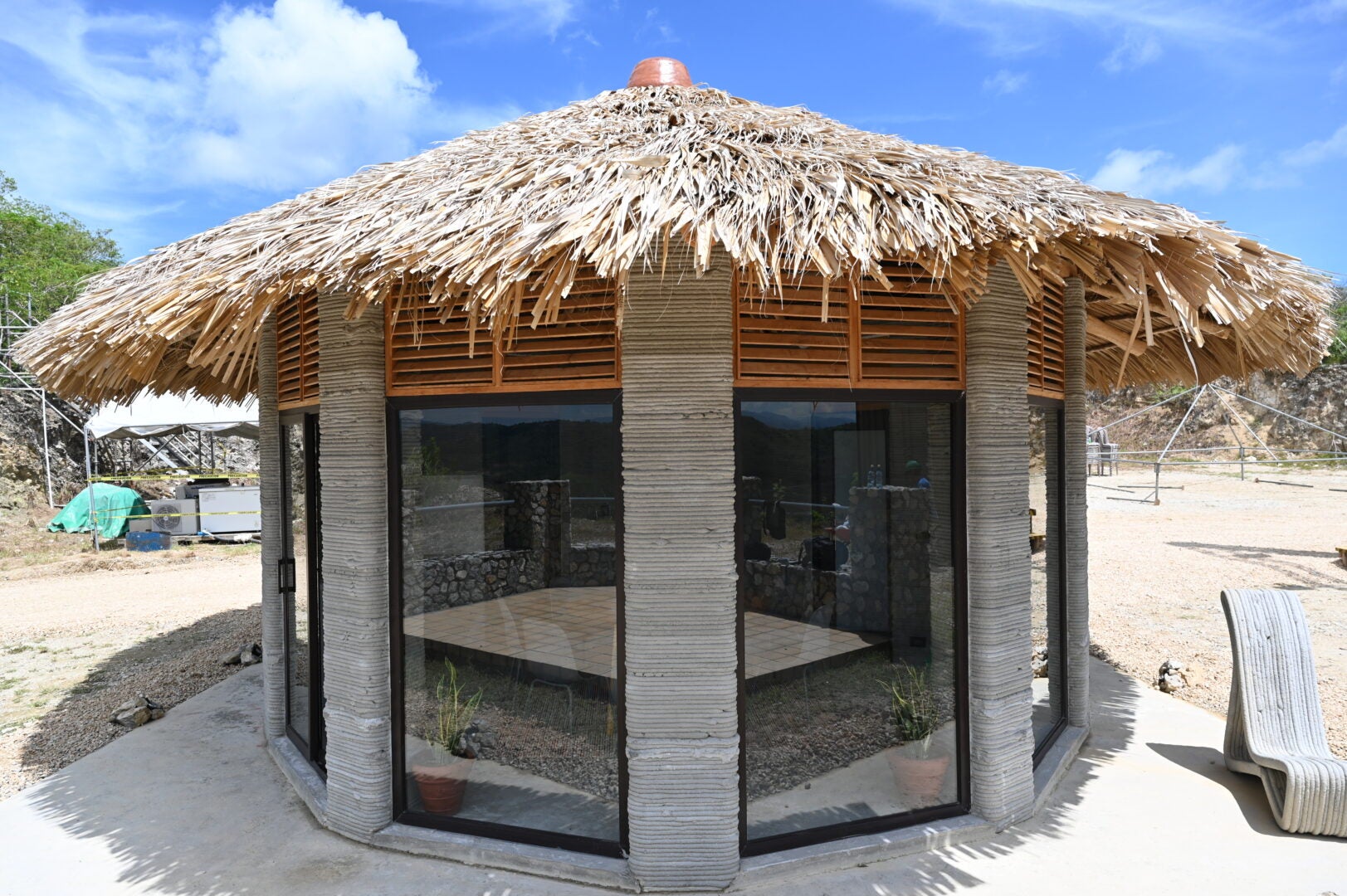
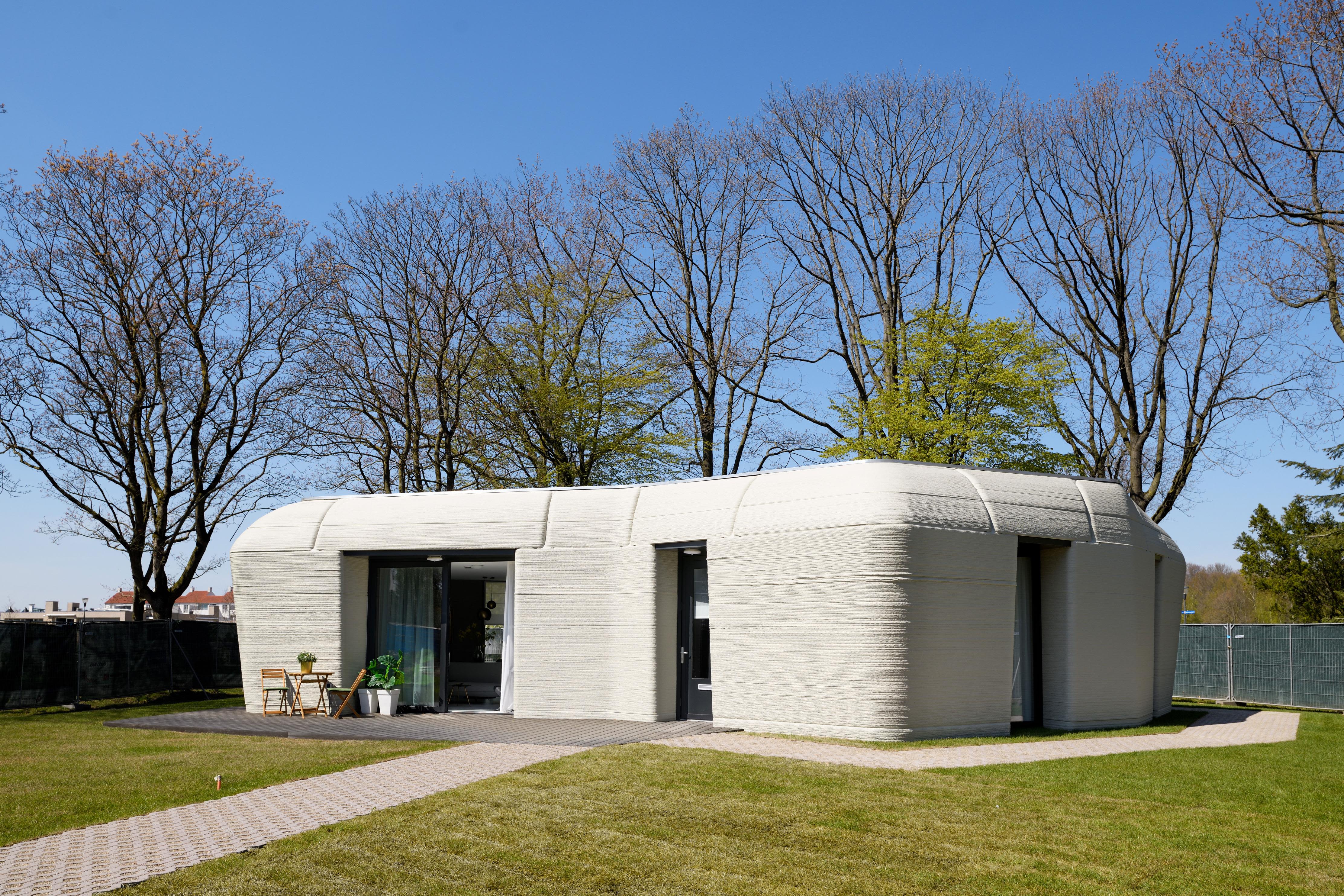
    3D printed building in Guatemala 3D printed concrete home interior Modern 3D printed house exterior

    4. Smart Concrete – Buildings That Think and Talk

    Embedded sensors turn concrete into a living network. Real-time monitoring of stress, cracks, temperature – predictive maintenance before problems even start.

    Quick Fact Check: How Smart Is Modern Concrete?

    Click below for a mind-blowing stat!

    Futuristic smart concrete building

    2026 isn’t just evolution – it’s a revolution. Concrete is no longer passive; it’s adaptive, sustainable, and intelligent. At Volume Concrete, we’re anticipating these breakthroughs on real jobsites.

    The future isn’t coming. It’s here.

    © 2026 VolumeConcrete.com | Building Tomorrow – Today

  • The Thurston-Weeks Mechanism

    The Thurston-Weeks Mechanism: Harnessing Chaos in a Simple Machine | Volume Concrete

    The Thurston-Weeks Mechanism

    Harnessing Chaos in a Simple Machine to Generate True Randomness

    What is the Thurston-Weeks Mechanism?

    The Thurston-Weeks mechanism, also called the triple linkage, is a deceptively simple mechanical system consisting of three rigid rods connected by hinges, with their outer ends fixed to pivots. Introduced in the 1980s by renowned mathematicians William P. Thurston and Jeffrey R. Weeks, it serves as a profound example of how basic geometry can produce extraordinarily complex and chaotic motion.

    When constructed with precise rod-length ratios and allowed to move without friction, the linkage exhibits Anosov flow—a mathematically proven form of uniform hyperbolicity. This means that even minuscule differences in initial conditions amplify exponentially, leading to genuinely unpredictable behavior over time.

    William Thurston

    William P. Thurston
    (1946–2012)
    Fields Medalist, pioneer in low-dimensional topology

    Jeffrey Weeks

    Jeffrey R. Weeks
    Mathematician and cosmologist, known for work in hyperbolic geometry

    Visualizing the Mechanism

    A Mechanical True Random Number Generator

    In 2022, researchers demonstrated that this linkage could form the basis for the world’s first mathematically proven purely mechanical true random number generator (TRNG). By sampling the position or angle of the linkage during its chaotic motion, high-quality random bits can be extracted—passing rigorous NIST statistical tests—without any electronic or quantum components.

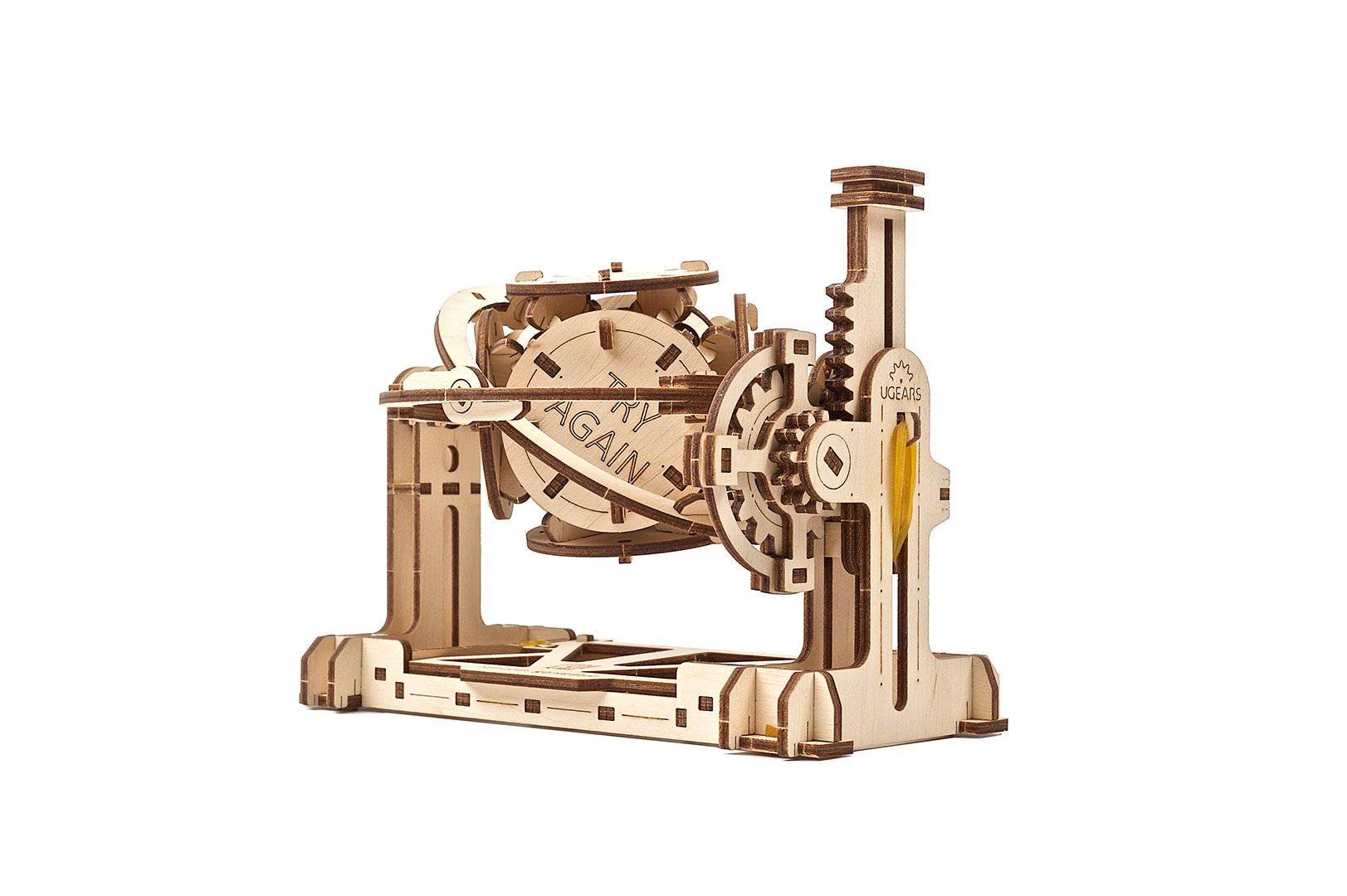
    While practical mechanical TRNGs (like the UGears STEM Lab model below) are great educational tools, the Thurston-Weeks design elevates the concept to provable cryptographic-grade randomness through pure classical chaos.

    Video Narration Transcript

    Imagine a simple mechanical device made of just three rigid rods connected by hinges, with their ends fixed to pivots—like a triangular chain that can twist and fold in complex ways. This is the Thurston-Weeks mechanism, also known as the triple linkage, first described in the 1980s by mathematicians William Thurston and Jeffrey Weeks.

    At first glance, it looks unremarkable. But when set in motion without friction and with specific rod length ratios, something extraordinary happens: the system enters a state of uniform chaos. Tiny differences in starting position or speed explode exponentially over time, making future behavior completely unpredictable. Mathematically, this is called an Anosov flow—a rare, provably hyperbolic chaotic dynamic proven in 2003 by researchers Hunt and MacKay.

    In 2022, scientists proposed using this mechanism as the world’s first mathematically proven purely mechanical true random number generator. By sampling the linkage’s positions during its chaotic motion, you extract genuinely random bits that pass rigorous statistical tests—no electronics or quantum effects needed.

    This elegant blend of geometry, chaos theory, and engineering shows how a humble set of rods can produce true unpredictability, bridging abstract math with real-world applications like secure cryptography.

    © 2025 Volume Concrete LLC | Exploring the intersection of mathematics, mechanics, and wonder.

    Why Does This Matter Today?

    In an era dominated by electronic and quantum random number generators, the Thurston-Weeks mechanism stands out for its purely mechanical elegance. It reminds us that true randomness doesn’t always require high-tech components—it can emerge from carefully designed classical systems governed by the laws of chaos theory.

    Potential real-world implications include:

    • Cryptographic security in low-tech environments – Imagine secure randomness in remote or resource-limited settings without relying on electricity or semiconductors.
    • Transparent public lotteries and audits – A visible, tamper-resistant mechanical device could restore public trust in random drawings.
    • Educational and philosophical insight – It beautifully illustrates how order (simple geometry) can give rise to profound unpredictability, bridging mathematics, physics, and engineering.
    • Inspiration for new designs – Researchers continue to explore hyperbolic mechanisms for robust, noise-tolerant randomness sources.

    While practical cryptographic TRNGs today rely on faster electronic or quantum entropy sources, the Thurston-Weeks mechanism proves a profound point: true unpredictability can be engineered with nothing more than rods, hinges, and precise mathematics.

    At Volume Concrete, we’re fascinated by ideas that connect abstract mathematics to tangible mechanics. The Thurston-Weeks mechanism is a perfect example of how deep theory can inspire wonder in the physical world.

  • The History of Concrete in the Pacific Northwest Part 6 of 6 Series – Today’s Innovations and the Future of Sustainable Concrete

    The History of Concrete in the Pacific Northwest Part 6 of 6 Series – Today’s Innovations and the Future of Sustainable Concrete

    History of Concrete in the Pacific Northwest – Part 6 (Final)

    History of Concrete in the Pacific Northwest – Part 6 (Final): Toward a Sustainable Future – Low-Carbon Innovations and Reconciling Legacy Impacts

    As the Pacific Northwest confronts climate change and the long-term environmental costs of its concrete-intensive past, the industry is pivoting toward groundbreaking low- and zero-carbon technologies. From new regional manufacturing hubs to cement-free binders and carbon-sequestering mixes, innovators are reducing concrete’s massive carbon footprint—responsible for about 8% of global CO₂ emissions—while addressing the ecological legacy of historic mega-dams through unprecedented removal projects.

    Regional Leadership in Low-Carbon Cement Production

    In July 2025, Eco Material Technologies opened its Lakeview Plant in southern Oregon, the company’s first sustainably built manufacturing hub in the Pacific Northwest. This facility produces up to 300,000 tons annually of supplementary cementitious materials (SCMs) and proprietary green cement blends using local resources like perlite. By replacing 25–100% of traditional Portland cement, these alternatives can cut the carbon footprint of concrete’s cement portion by up to 80%.

    Eco Material Technologies Lakeview Plant exterior

    Exterior view of the new Eco Material Technologies Lakeview Plant in southern Oregon

    Eco Material Lakeview Plant operations

    Operations at the Lakeview Plant, producing low-carbon cement alternatives

    The plant creates local jobs and leverages rail for efficient distribution, marking a major step in domestic low-carbon material supply for PNW construction.

    Cement-Free and Carbon-Negative Breakthroughs

    Seattle-based C-Crete Technologies has pioneered cement-free concrete using natural minerals, industrial by-products, and novel binders like basalt and zeolite. Debuted in Seattle buildings since 2023, these mixes achieve full Portland cement replacement, preventing roughly 1 ton of CO₂ per ton of binder while meeting or exceeding ASTM standards for strength and durability.

    Sustainable concrete pouring on construction site

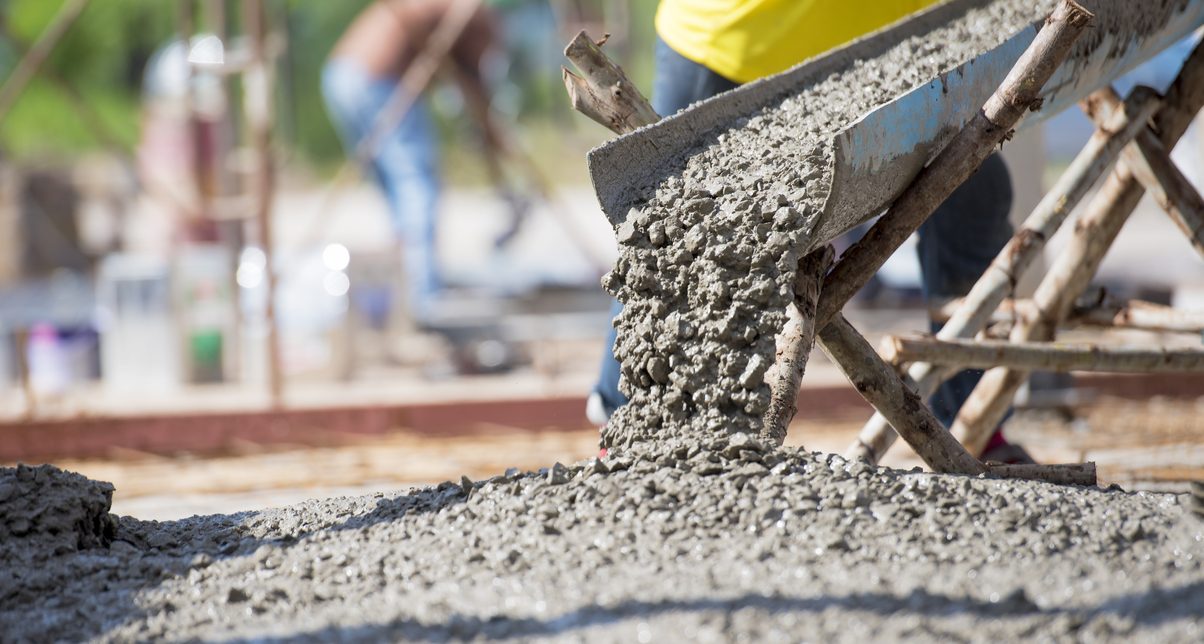
    Pouring low-carbon concrete at a construction site

    Sustainable concrete mixing

    Innovative sustainable concrete mix in production

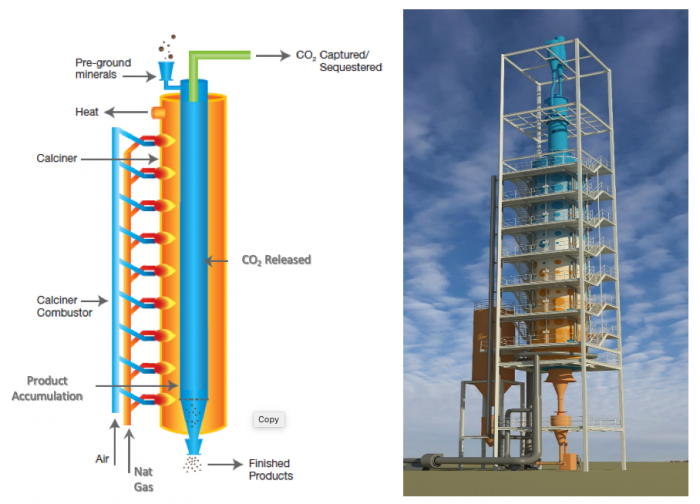
    Other advancements include carbon mineralization technologies that inject CO₂ into fresh concrete for permanent sequestration and strength gains, as well as emerging enzymatic and bio-inspired materials that turn concrete into a potential carbon sink.

    Carbon sequestration process in concrete

    Illustration of carbon sequestration in cementitious materials

    Carbon capture technology for concrete

    Carbon capture and utilization in cement production

    Reconciling the Legacy: Dam Removals and Ecosystem Restoration

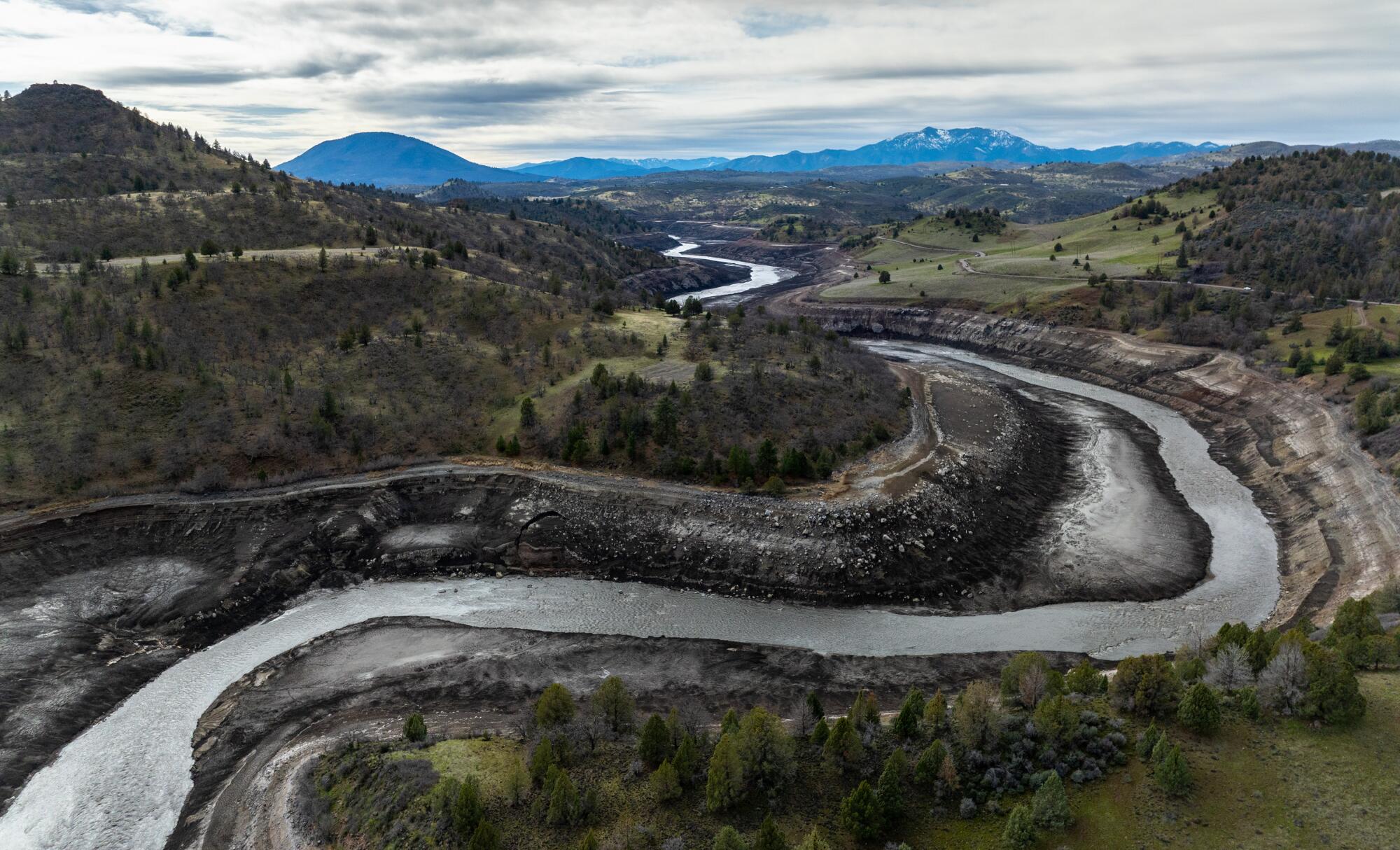
    The PNW’s concrete dam era brought power and growth but devastated salmon runs and tribal fisheries. Recent removals are reversing these impacts. The 2024–2025 Klamath River project—the largest dam removal in history—freed the river after dismantling four concrete dams, with rapid ecosystem recovery observed by late 2025.

    Klamath River dam removal site

    Site during Klamath River dam removal efforts

    Restored Klamath River flow

    Klamath River flowing freely post-dam removal

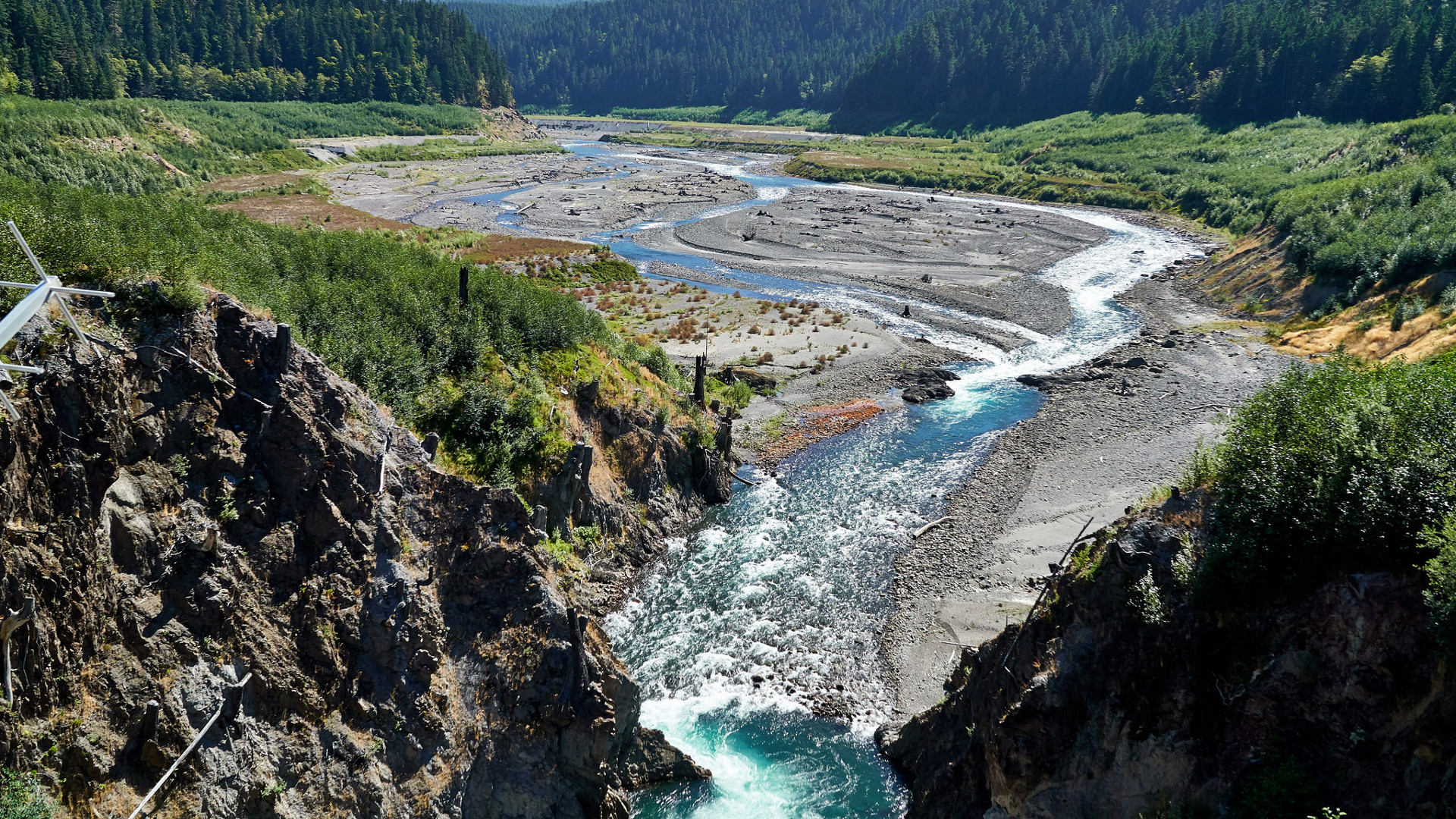
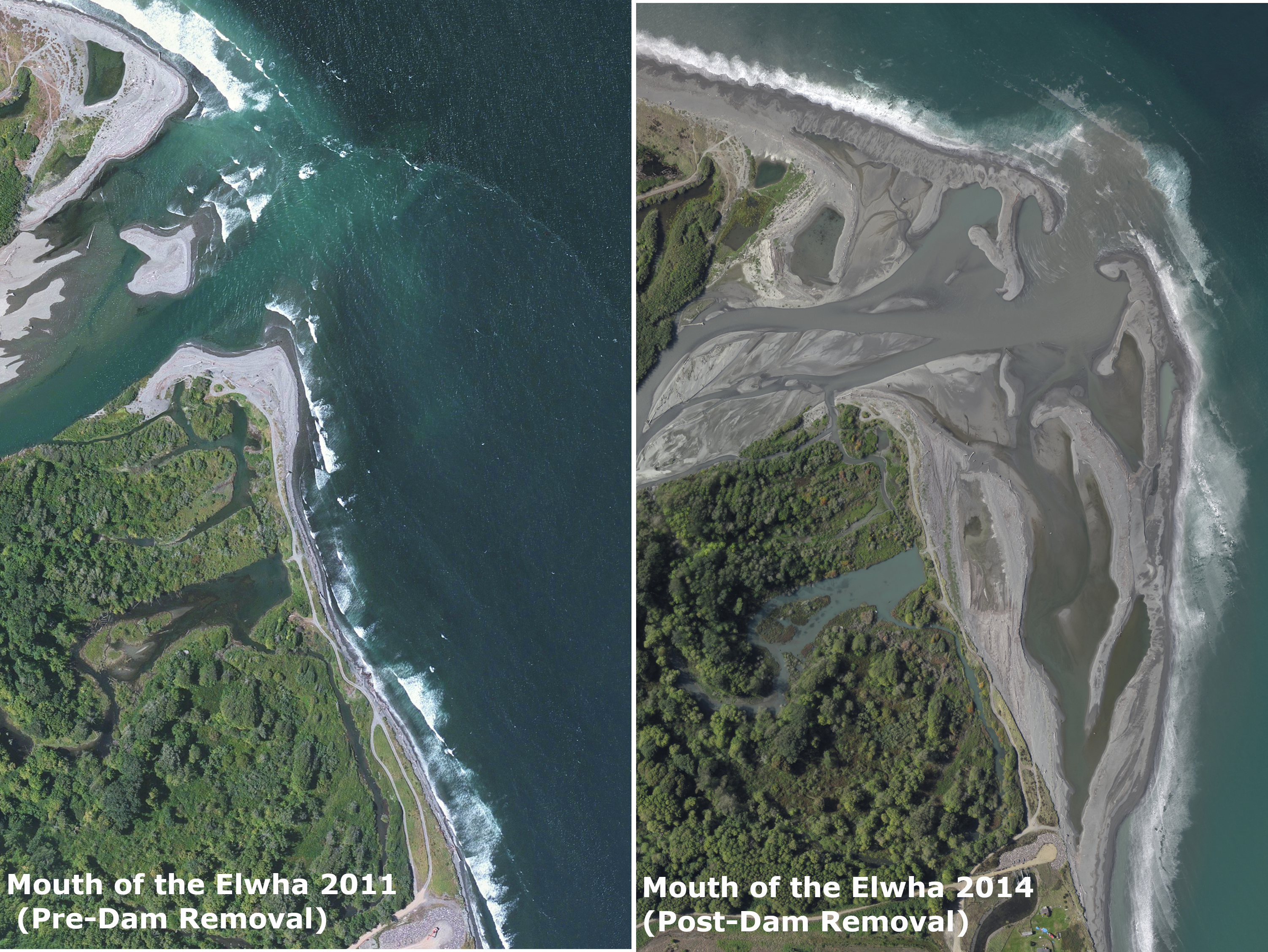
    Earlier successes like the Elwha River restoration (2011–2014) have seen salmon returns rebound dramatically, informing ongoing efforts.

    Elwha River dam remnants

    Remnants of Glines Canyon Dam on the Elwha River

    Elwha River mouth restoration

    Restored mouth of the Elwha River

    Conclusion: A Balanced Legacy

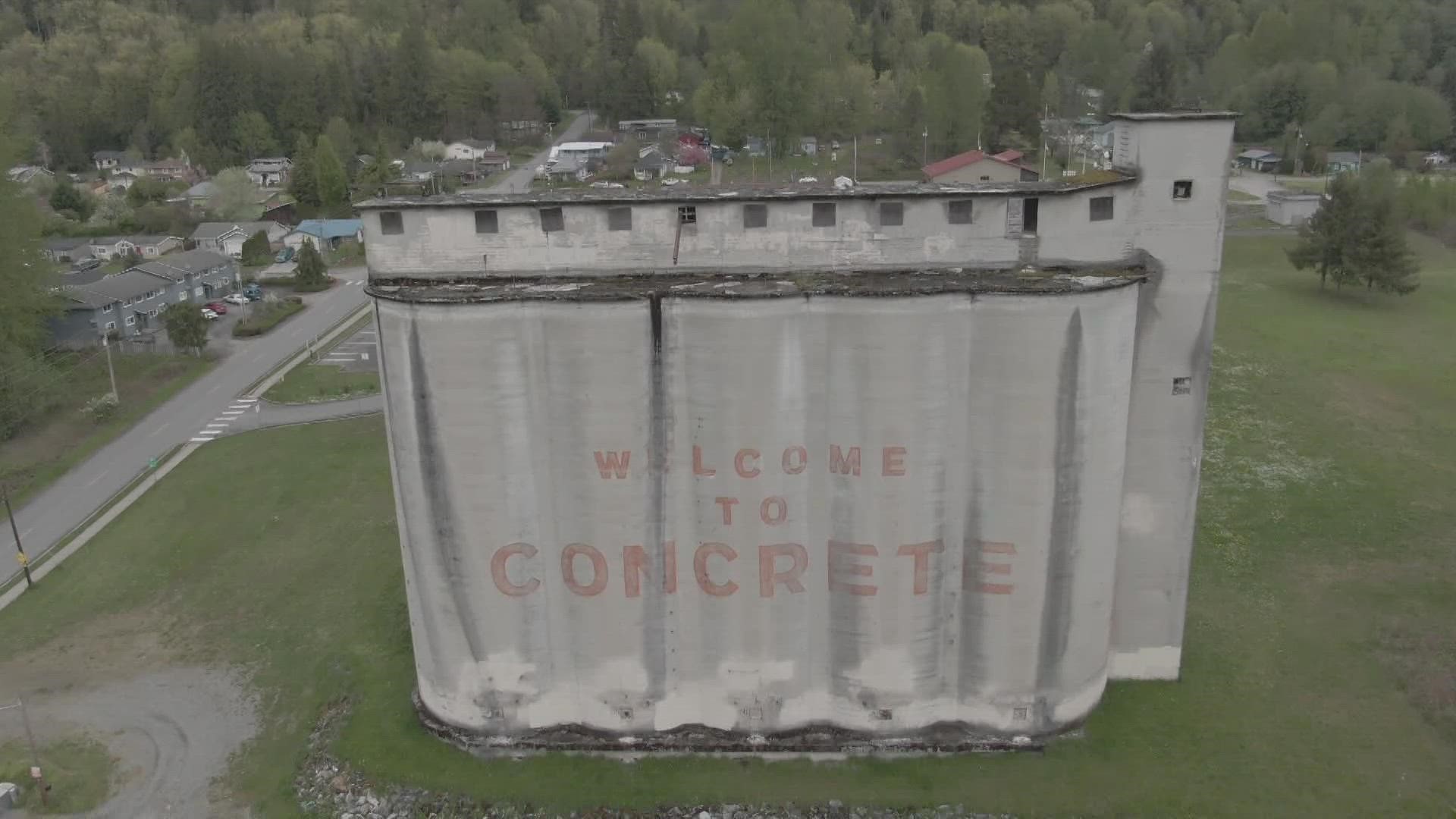
    From the cement booms of Concrete, Washington, to the mega-dams and iconic bridges that defined the 20th century, concrete built the modern Pacific Northwest. Today, as the region leads in low-carbon innovations and heals river ecosystems through dam removals, it charts a path toward resilient, sustainable infrastructure that honors both progress and the environment.

    References and Further Reading (Part 6)

    Thank you for following this 6-part series on the History of Concrete in the Pacific Northwest!

    History of Concrete in the Pacific Northwest Series
  • The History of Concrete in the Pacific Northwest Part 5 of 6 Series – The Modern Era – Ready-Mix Revolution, Companies, and Space-Age Icons

    The History of Concrete in the Pacific Northwest Part 5 of 6 Series – The Modern Era – Ready-Mix Revolution, Companies, and Space-Age Icons

    History of Concrete in the Pacific Northwest – Part 5

    History of Concrete in the Pacific Northwest – Part 5: The Space Age Boom – Century 21 Exposition, Ready-Mix Revolution, and Interstate Expansion

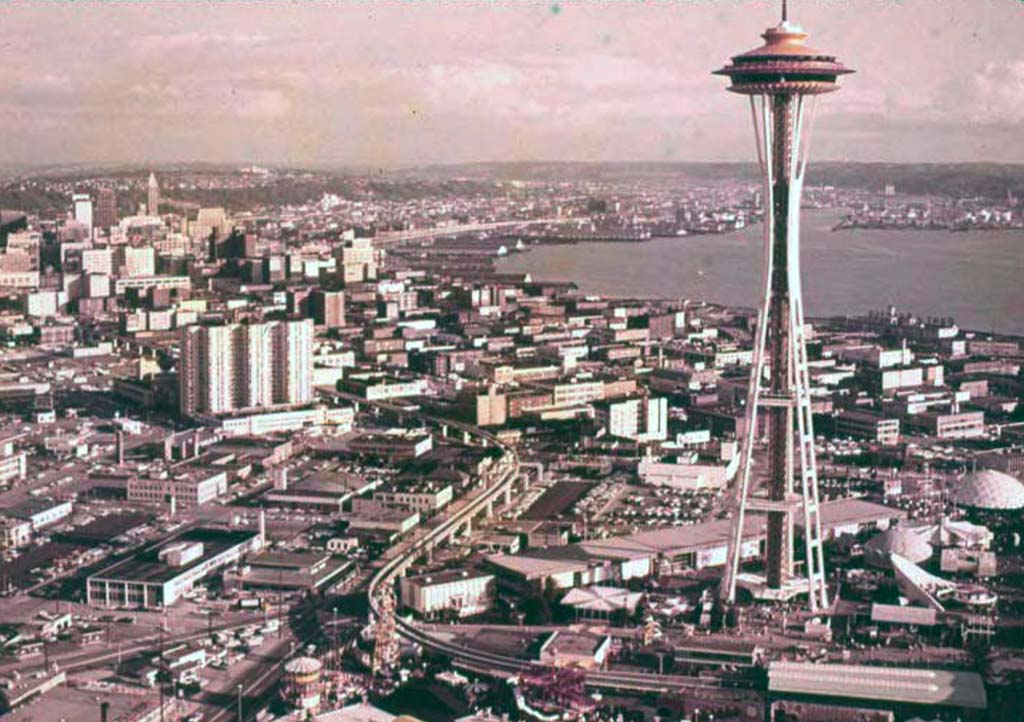
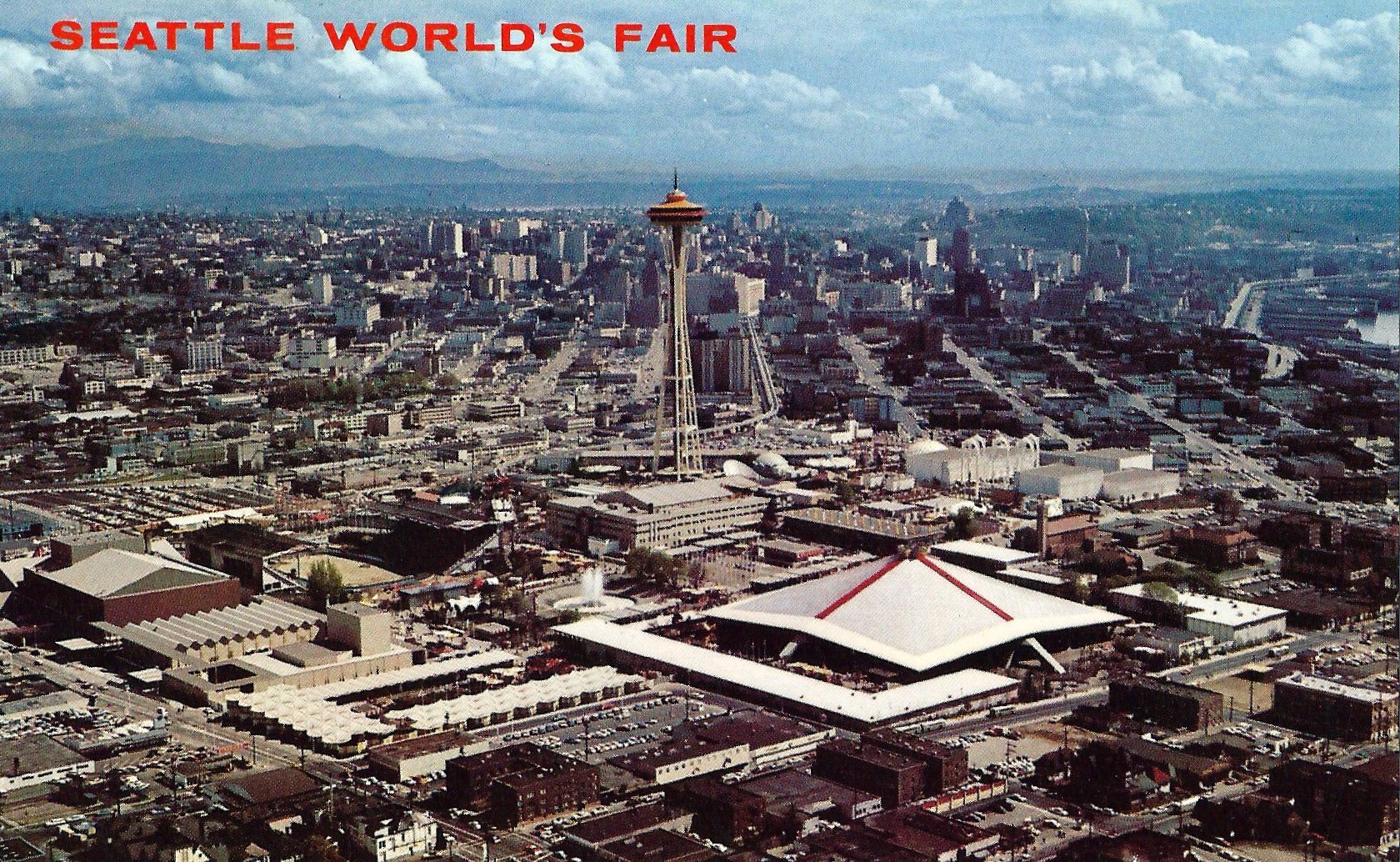
    The early 1960s marked a futuristic pinnacle for concrete in the Pacific Northwest, epitomized by Seattle’s 1962 Century 21 Exposition (Seattle World’s Fair). This “Space Age” showcase featured groundbreaking concrete engineering, including the iconic Space Needle and elevated monorail. Simultaneously, the ready-mix concrete industry exploded, fueling the massive Interstate Highway System builds across Washington and Oregon, transforming regional connectivity and urban landscapes.

    Century 21 Exposition: Concrete Meets the Future

    The 1962 World’s Fair, themed “Man in the Space Age,” attracted over 10 million visitors and left enduring concrete legacies at Seattle Center. Innovative structural designs pushed reinforced concrete to new limits, blending form, function, and optimism.

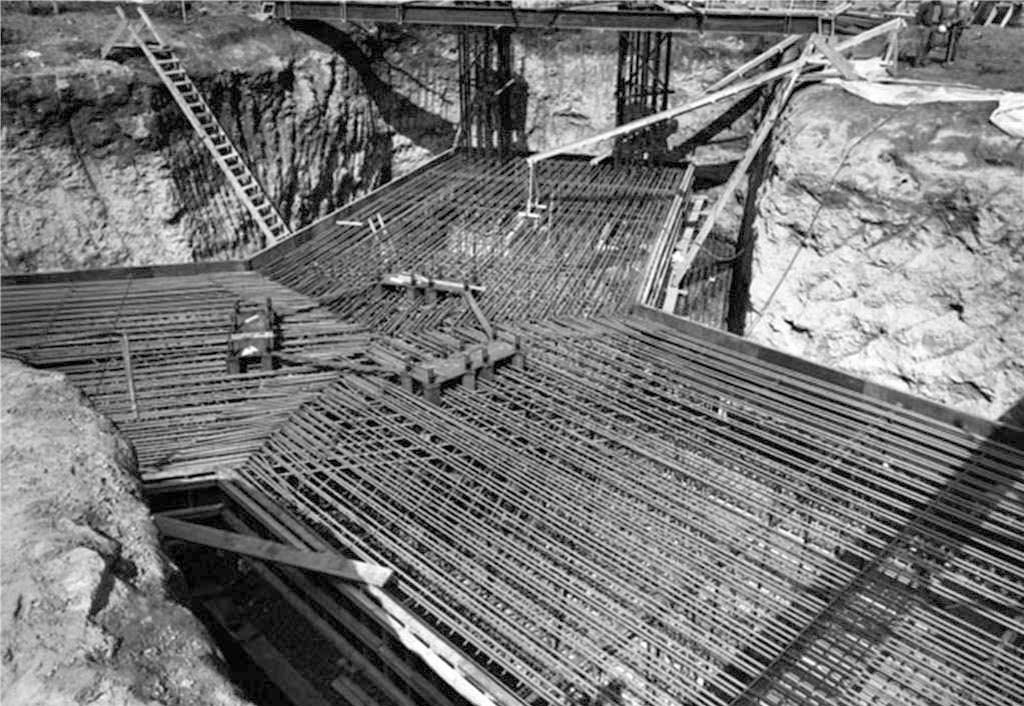
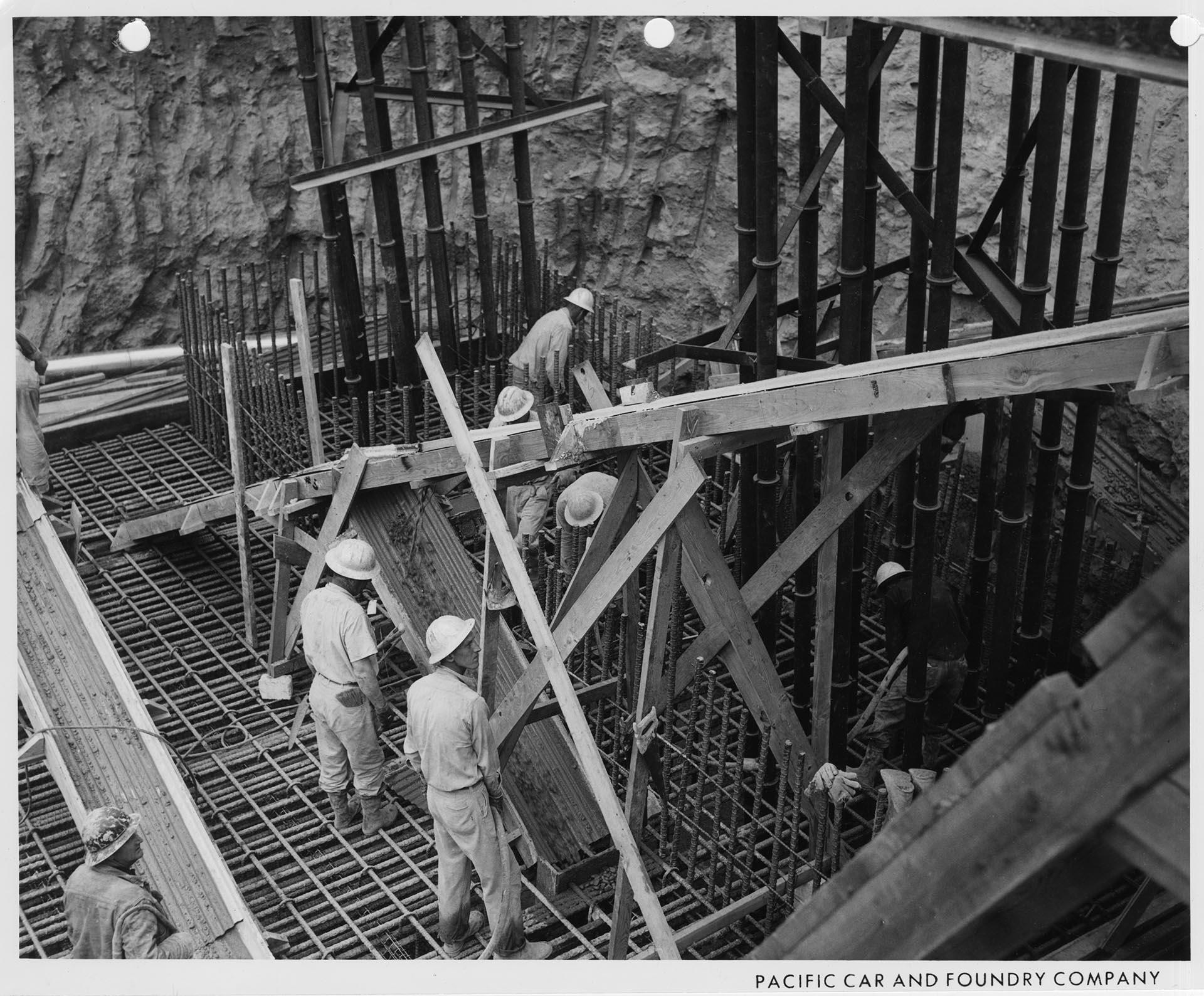
    The Space Needle (1961–1962): The fair’s centerpiece required an unprecedented foundation: a 30-foot-deep hole filled with 5,580 tons of concrete in a single continuous pour—the largest in the West at the time. The slender tripod legs and flying-saucer top used high-strength concrete and steel, rising 605 feet in just 400 days.

    Space Needle foundation construction, 1961

    Massive underground concrete foundation pour for the Space Needle, 1961 (Courtesy HistoryLink.org)

    Workers preparing Space Needle foundation pour

    Workers and equipment during the record-breaking Space Needle foundation pour (MOHAI)

    Space Needle legs rising during construction

    The Space Needle’s concrete-and-steel legs taking shape, 1961

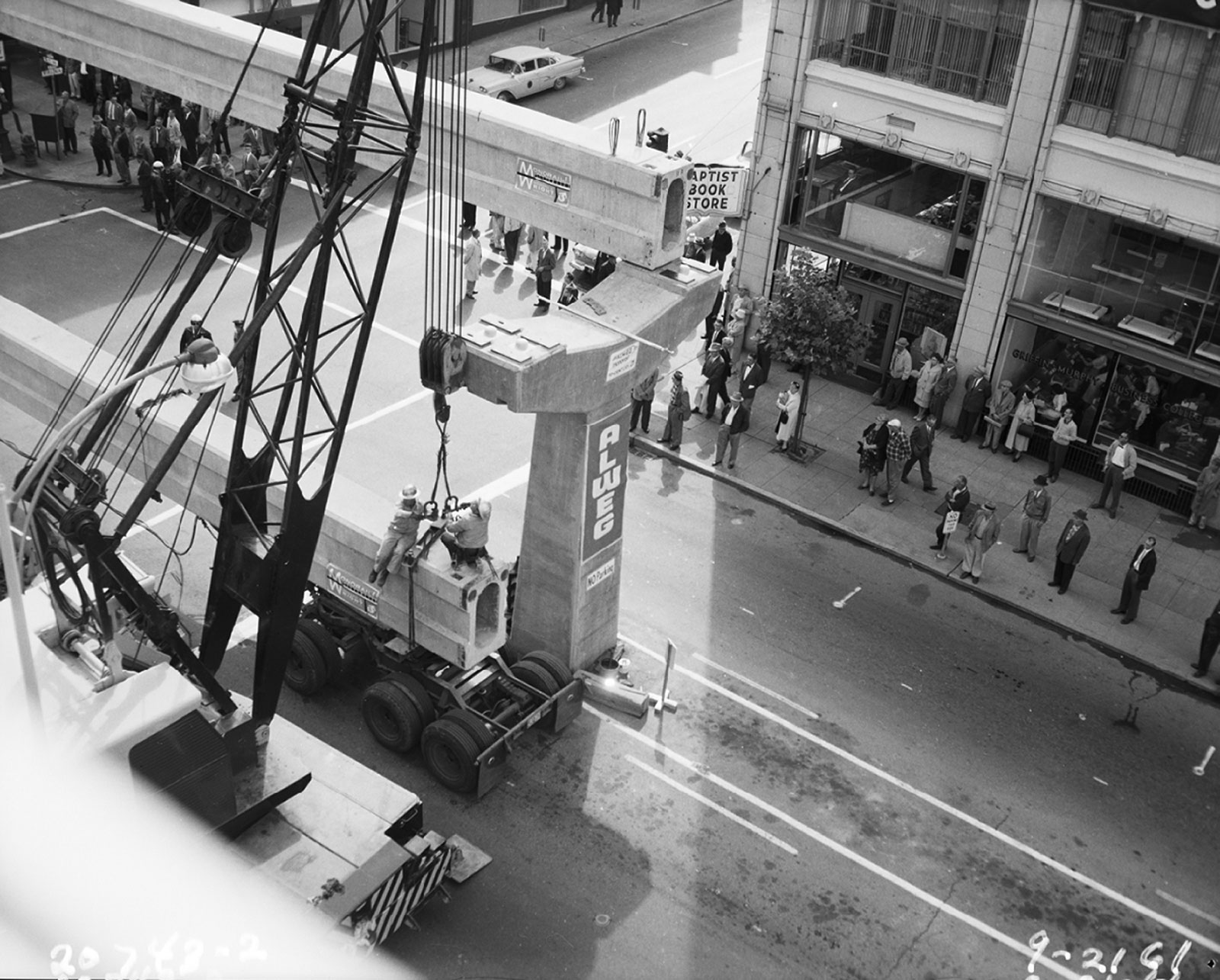
    Seattle Monorail (1961–1962): The Alweg Monorail, built in under a year, featured 94 elevated concrete support beams along its 1.2-mile route from downtown to the fairgrounds. This rapid-transit prototype showcased precast and prestressed concrete efficiency.

    Seattle Monorail construction, 1961

    Monorail construction showing concrete beam supports at the fair site, 1961 (Courtesy HistoryLink.org)

    Monorail concrete beams under construction

    Precast concrete beams being installed for the Seattle Monorail

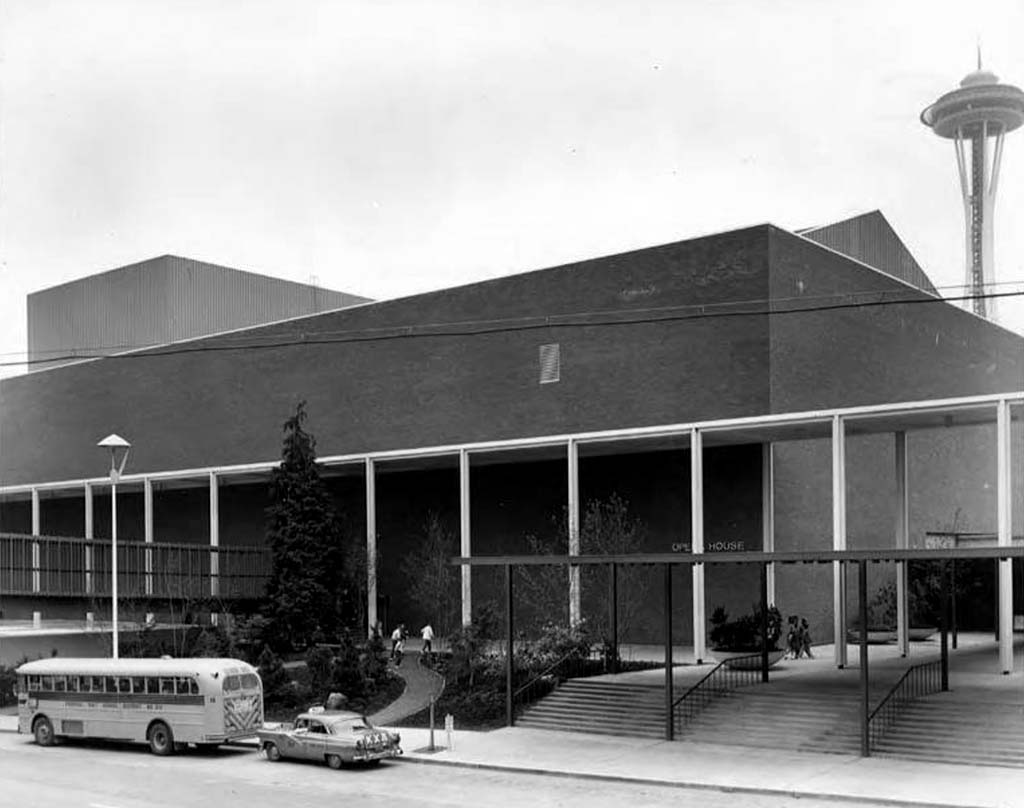
    Other fair structures, like the hyperbolic paraboloid Washington State Pavilion (now Climate Pledge Arena) and the concrete-ribbed Opera House, highlighted thin-shell and exposed concrete techniques.

    Opera House at Century 21 Exposition, 1962

    The concrete-ribbed Opera House during the 1962 World’s Fair (Courtesy HistoryLink.org)

    Aerial view of Century 21 Exposition grounds

    Aerial view of the Century 21 Exposition grounds showcasing multiple concrete structures (ASCE)

    The Ready-Mix Revolution and Major Suppliers

    Post-WWII, ready-mix concrete—pre-mixed at plants and delivered in revolving-drum trucks—became dominant, enabling faster, higher-quality pours for large projects. In the PNW, companies like Glacier Northwest (founded in gravel supply in the 1890s, expanded into ready-mix post-war) grew into the region’s powerhouse, later becoming part of CalPortland. By the 1960s, dozens of plants dotted Washington and Oregon, supplying everything from highways to high-rises.

    CalPortland DuPont Ready Mix Plant

    DuPont Ready Mix and Pioneer Aggregate Plant – representative of CalPortland’s modern legacy operations

    Vintage 1960s ready-mix truck

    1960s-era ready-mix concrete truck in action, emblematic of the PNW industry’s growth

    Interstate Highway System: Concrete on a Grand Scale

    The 1956 Federal-Aid Highway Act launched massive interstate construction, with concrete paving miles of I-5, I-90, and I-84 through Washington and Oregon in the 1950s–1970s. Ready-mix supplied the durable slabs that withstood heavy rain and traffic, reshaping commerce and suburbs.

    I-5 construction in Washington, 1960s

    Concrete paving during I-5 construction in Washington state, 1960s (WSDOT Archives)

    Interstate construction in Oregon, 1950s-1960s

    Early interstate highway concrete pour in Oregon (FHWA Archives)

    Conclusion

    The 1960s Space Age optimism, combined with ready-mix innovation and federal funding, propelled concrete into a new era of scale and spectacle in the PNW. These advancements set the stage for today’s sustainable focus, explored in the final part.

    References and Further Reading (Part 5)

    See previous parts for early history, dams, bridges, and architectural landmarks. Part 6 (final) on modern sustainable innovations coming soon!

  • The History of Concrete in the Pacific Northwest Part 4 of 6 Series – Iconic Bridges and Architectural Landmarks

    The History of Concrete in the Pacific Northwest Part 4 of 6 Series – Iconic Bridges and Architectural Landmarks

    History of Concrete in the Pacific Northwest – Part 4

    History of Concrete in the Pacific Northwest – Part 4: Art Deco Elegance and Mid-Century Mastery – Iconic Bridges and Architectural Landmarks

    While massive dams dominated the 1930s–1950s, the Pacific Northwest also excelled in graceful, innovative bridge design and emerging modernist architecture using reinforced concrete. Oregon’s state bridge engineer Conde B. McCullough created a series of Art Deco masterpieces along Highway 101, blending engineering necessity with aesthetic beauty during the Great Depression. Washington contributed dramatic spans like Deception Pass, while cities embraced concrete for bold mid-century and Brutalist structures.

    Conde B. McCullough’s Oregon Coast Bridges: Depression-Era Masterpieces

    From 1919 to 1947, Conde B. McCullough (1887–1946) designed over 600 bridges as Oregon’s state bridge engineer, with his crowning achievements being the five major spans built in the 1930s along the Oregon Coast Highway (U.S. 101) using federal Public Works Administration funds. These reinforced-concrete structures feature elegant Art Deco/Gothic pylons, arches, and obelisks, turning functional crossings into scenic landmarks that helped complete the coastal route and boost tourism.

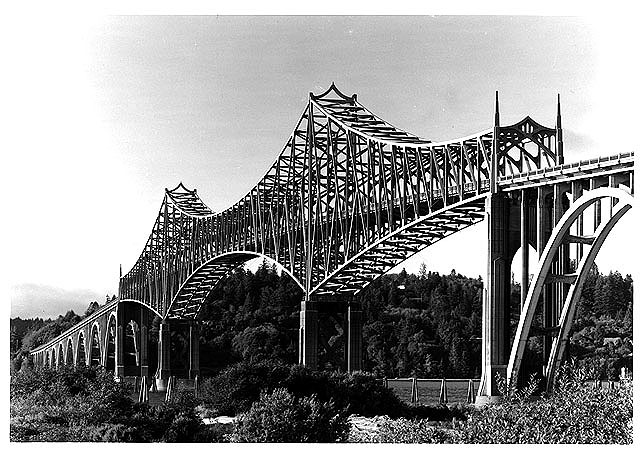
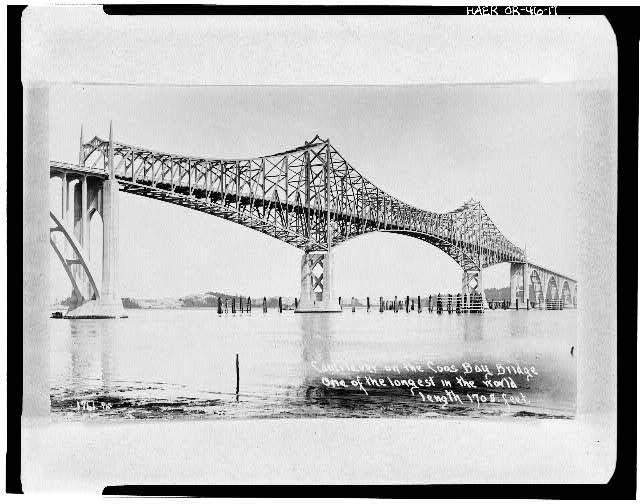
    Coos Bay Bridge (Conde B. McCullough Memorial Bridge, 1936, North Bend/Coos Bay): The longest of the series at 5,305 feet, this cantilevered through-truss with tied-arch approach spans was the most expensive PWA project in Oregon. Its steel main span (replaced in kind during 2019–2022 rehabilitation) rests on graceful concrete piers with Art Deco detailing.

    Coos Bay Bridge (McCullough Memorial Bridge)

    Conde B. McCullough Memorial Bridge (Coos Bay Bridge), a 1990 HAER photo showing its elegant concrete piers

    Coos Bay Bridge approach spans

    Art Deco detailing on the Coos Bay Bridge approach spans

    Coos Bay Bridge under construction, 1936

    Construction of the Coos Bay Bridge, circa 1936

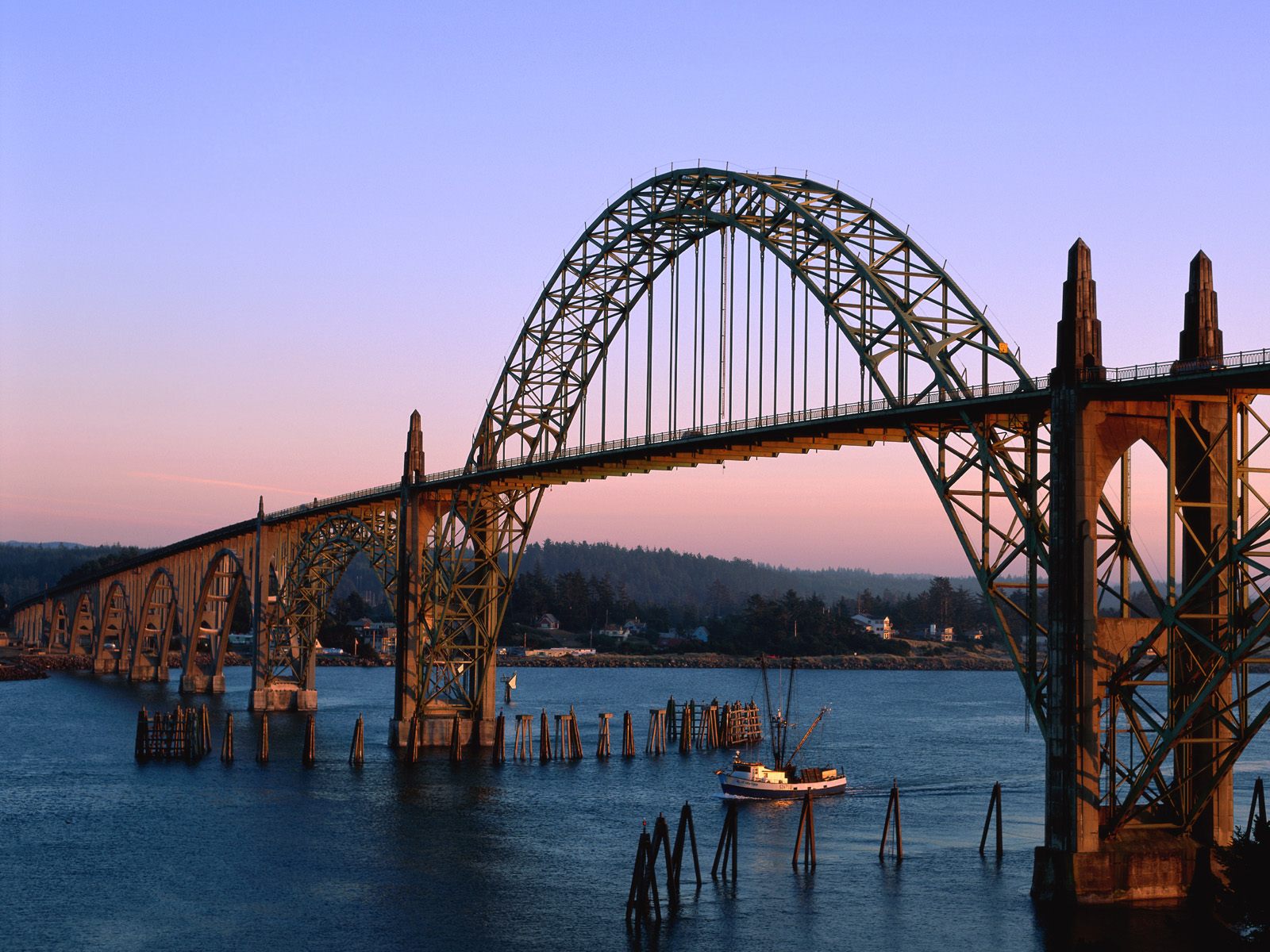
    Yaquina Bay Bridge (1936, Newport): This steel through-arch with concrete deck-arch approaches is renowned for its sweeping lines and pedestrian plazas on the piers. McCullough’s signature obelisks and fluted pylons add elegance.

    Yaquina Bay Bridge, Newport

    The iconic Yaquina Bay Bridge spanning Newport’s harbor

    Yaquina Bay Bridge from below

    View highlighting the Art Deco pylons of the Yaquina Bay Bridge

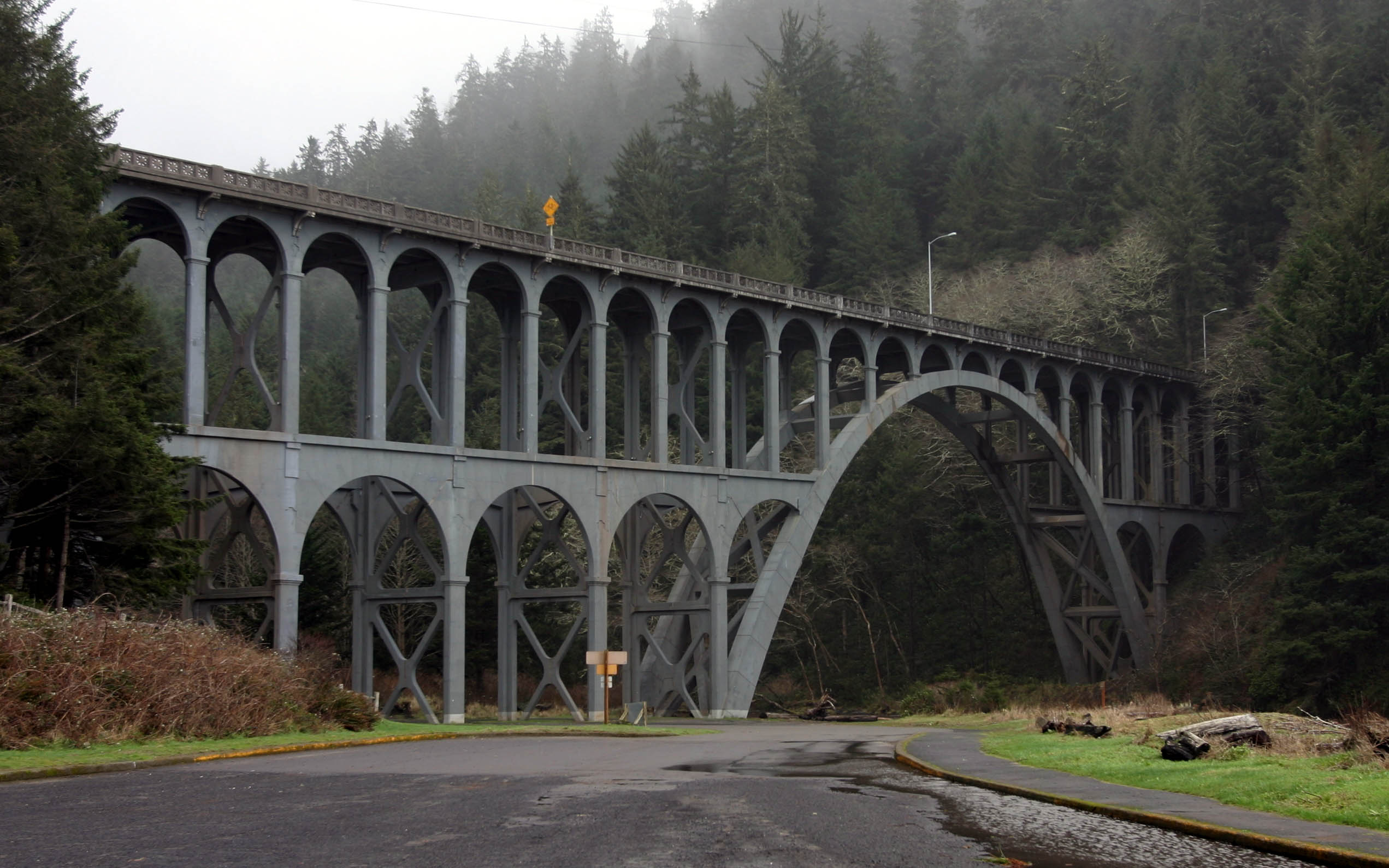
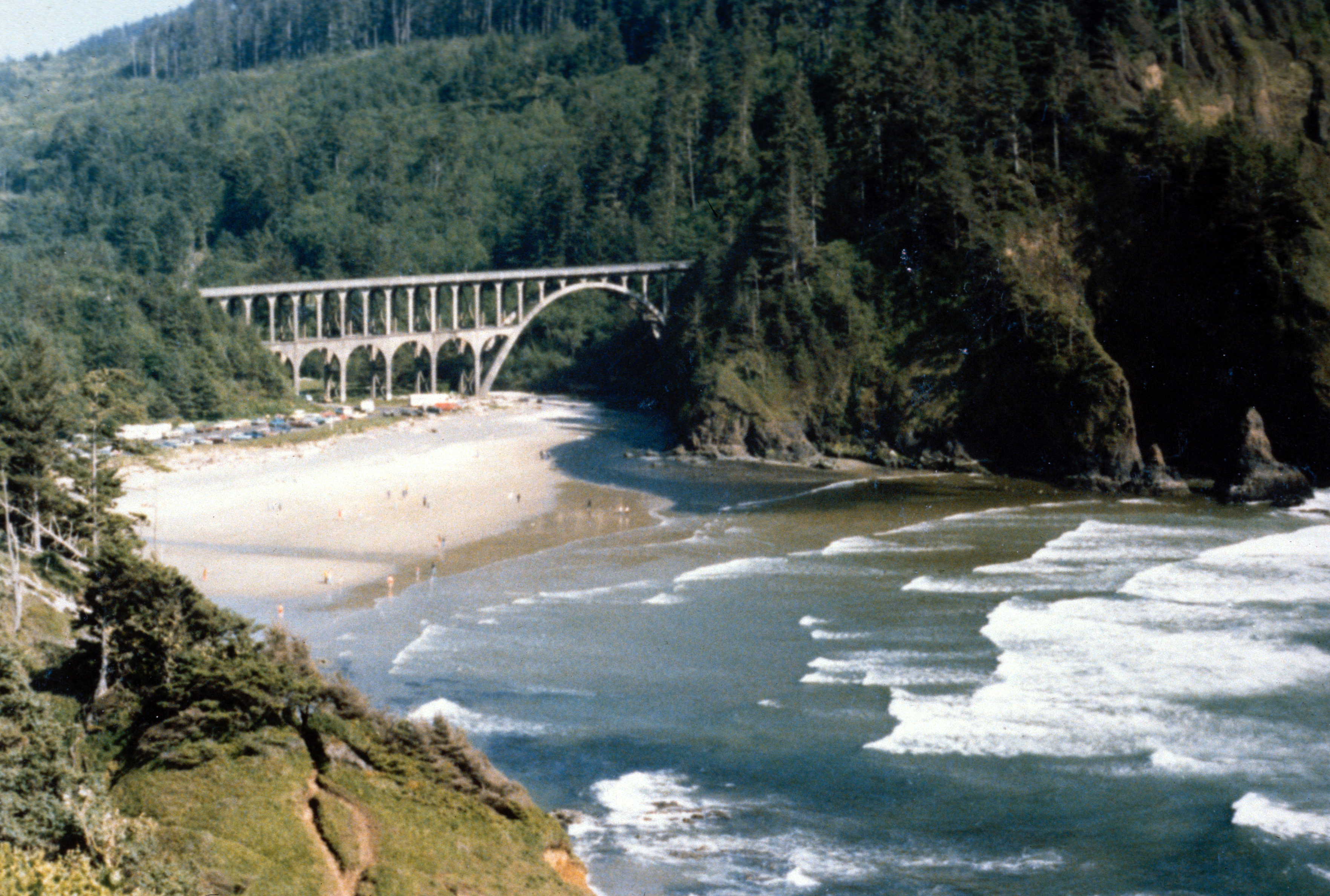
    Cape Creek Bridge (1932, near Heceta Head): A 619-foot deck arch with a dramatic 220-foot main span, this bridge curves gracefully over a rugged coastal canyon, framed by old-growth forest and ocean views.

    Cape Creek Bridge

    Cape Creek Bridge curving over the coastal canyon

    Cape Creek Bridge scenic view

    Scenic view of Cape Creek Bridge along the Oregon Coast

    Deception Pass Bridge: Washington’s Dramatic Span

    Completed in 1935, the Deception Pass Bridge connects Whidbey and Fidalgo Islands with two steel cantilever spans supported by towering reinforced-concrete piers. At 180 feet above the swirling tidal waters, it was the only road link north until the 1950s and remains Washington’s most photographed bridge.

    Deception Pass Bridge

    Deception Pass Bridge spanning the dramatic strait

    Modern view of Deception Pass Bridge

    Iconic view from below the Deception Pass Bridge

    Monroe Street Bridge: Spokane’s Early Concrete Arch

    Opened in 1911, the Monroe Street Bridge over the Spokane River was—at 1,377 feet with a 281-foot main span—the largest concrete arch bridge in the U.S. at the time. Its open-spandrel design, ornate railings, and Art Nouveau lamps make it a Spokane landmark.

    Monroe Street Bridge, Spokane

    Monroe Street Bridge spanning the Spokane River gorge

    Historic view of Monroe Street Bridge

    Early 20th-century view of the Monroe Street Bridge

    Mid-Century Concrete Architecture: Brutalism and Beyond

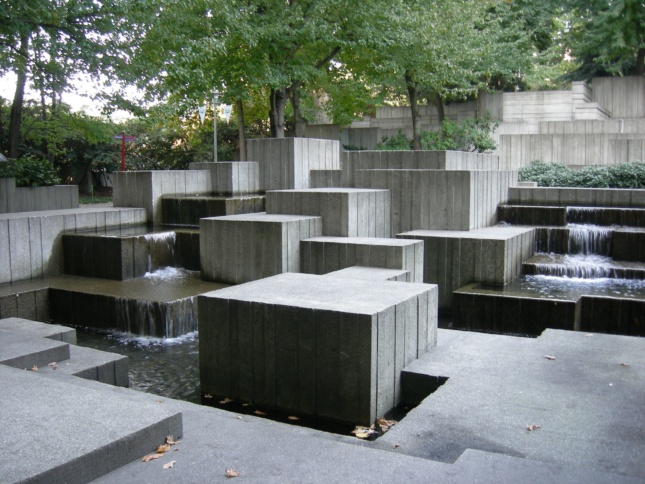
    Post-war, the PNW embraced raw, exposed concrete in Brutalist and modernist designs. Seattle’s Freeway Park (1976, Lawrence Halprin) caps I-5 with bold concrete forms, waterfalls, and greenery—an innovative “lid” park.

    Freeway Park, Seattle

    Brutalist concrete forms of Seattle’s Freeway Park

    Freeway Park waterfalls

    Waterfalls cascading through Freeway Park’s concrete structures

    Other examples include Portland’s Keller Auditorium and various university buildings showcasing béton brut (raw concrete) textures.

    Conclusion

    From McCullough’s poetic coastal spans to dramatic inland arches and bold mid-century forms, concrete in the PNW has proven both structurally daring and artistically expressive. These landmarks continue to define the region’s scenic and urban identity.

    References and Further Reading (Part 4)

    See previous parts for early cement history, mega-dams, Skagit Project, and post-war expansion. Part 5 coming soon on modern innovations!

    History of Concrete in the Pacific Northwest Series