History of Concrete in the Pacific Northwest – Part 1
The Pacific Northwest (PNW), encompassing Washington and Oregon, has a storied history with concrete, driven by its abundant natural resources like limestone, aggregates, and rivers. From early cement production booms to monumental public works projects during the Great Depression, concrete has shaped the region’s infrastructure, economy, and landscape. This article explores the evolution of concrete in the PNW, from its humble beginnings in the late 19th century to modern sustainable innovations, while also addressing the environmental impacts of large-scale concrete dams.
Pre-1900: Early Settlements and Resource Discovery
Concrete’s roots in the PNW trace back to the 1870s and 1880s, when homesteaders began settling along rivers like the Baker and Skagit. In 1871, pioneers near the Baker River established a community initially called “Minnehaha,” meaning “waterfall” in Dakota. By 1890, the town-site was platted by Magnus Miller, and a post office was set up, adopting the name “Baker.” Early settlers, including Amasa Everett who arrived in 1875, discovered clay and limestone deposits essential for cement production. These resources laid the foundation for the industry’s growth. Lumber mills and the arrival of the Great Northern Railway in 1901 spurred development, but it was the cement boom that truly transformed the area.
Early 20th Century: The Cement Production Boom and the Town of Concrete
The early 1900s marked the rise of cement manufacturing in the PNW, exemplified by the town of Concrete, Washington. In 1905, the Washington Portland Cement Company (WPCC) established the state’s first Portland cement plant on the east bank of the Baker River, producing cement by 1906 from local limestone quarries. This led to the formation of “Cement City.” In 1908, the Superior Portland Cement Company (SPCC) built a rival plant on the west bank in Baker, shipping its first cement that year. By 1909, the two communities merged and incorporated as Concrete, with a population of about 1,200. Daniel Dougal Dillard became the first mayor.
The plants employed hundreds, peaking at 160–200 workers, producing up to 5,200 barrels daily. Infrastructure followed: a county bridge in 1906, electric lights and water systems by SPCC in 1909-1910, and the Concrete District School in 1910. Fires in 1915 and the 1920s destroyed wooden structures, leading to concrete rebuilds for fire resistance. SPCC acquired WPCC in 1919, becoming the largest cement producer on the Pacific Coast. Production continued until 1969, when dust pollution, high costs, and air quality regulations forced closure. The stacks were demolished in 1973, and sites repurposed into parks like Silo Park.
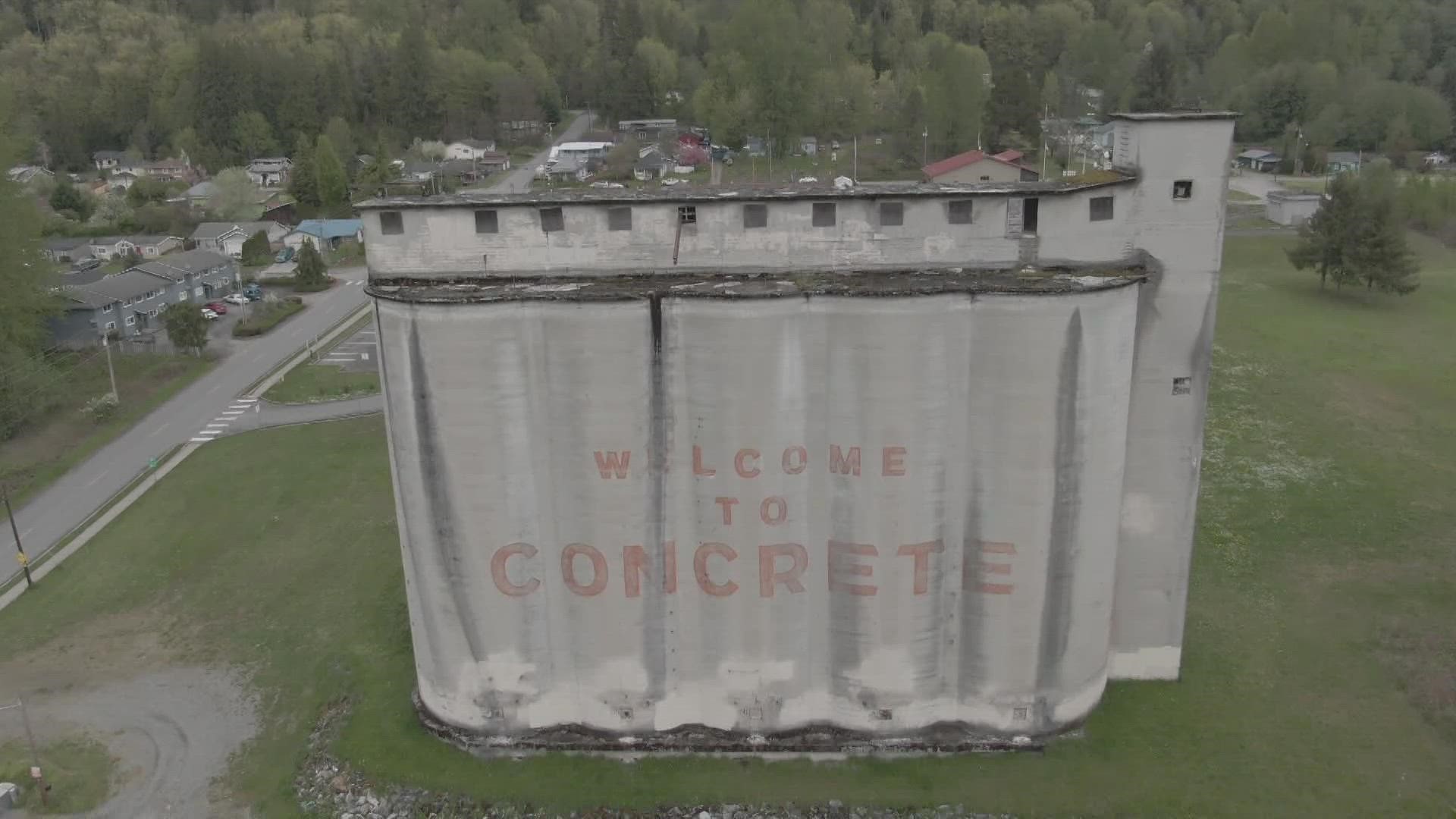
Population peaked at 1,200 in 1909 but declined post-industry to under 800 by 2020 (797 in the latest census). The town features historic structures like the Henry Thompson Bridge (1916-1918, once the world’s longest single-span concrete bridge), the Concrete Theatre (1923), and the old town hall (1908). The silos, painted “Welcome to Concrete” for the 1993 film This Boy’s Life, remain iconic.
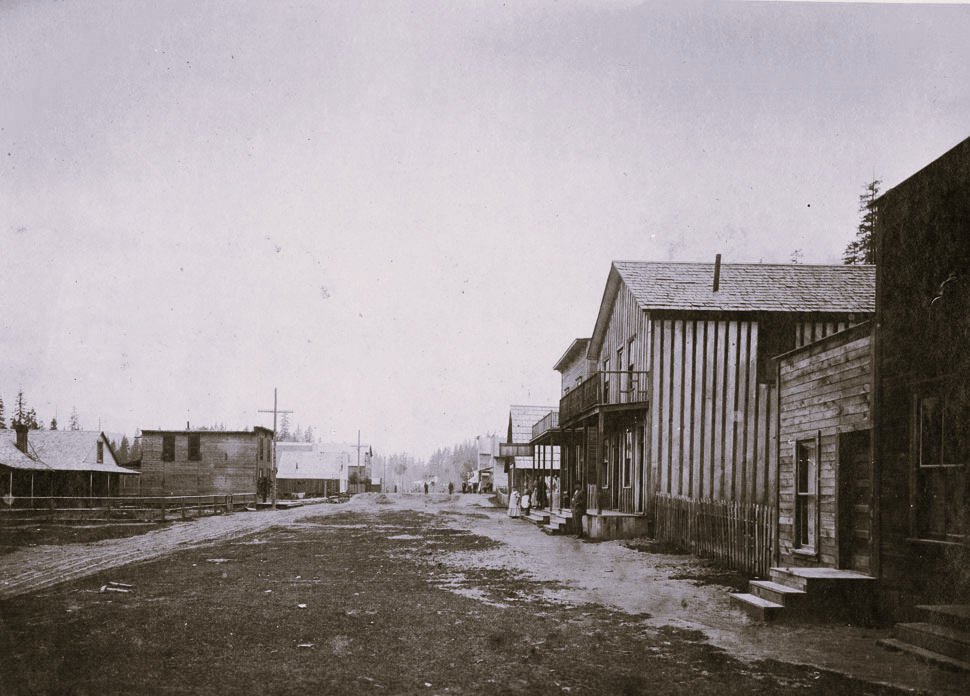
Main Street in Concrete, Washington, circa 1908 (Courtesy HistoryLink.org)
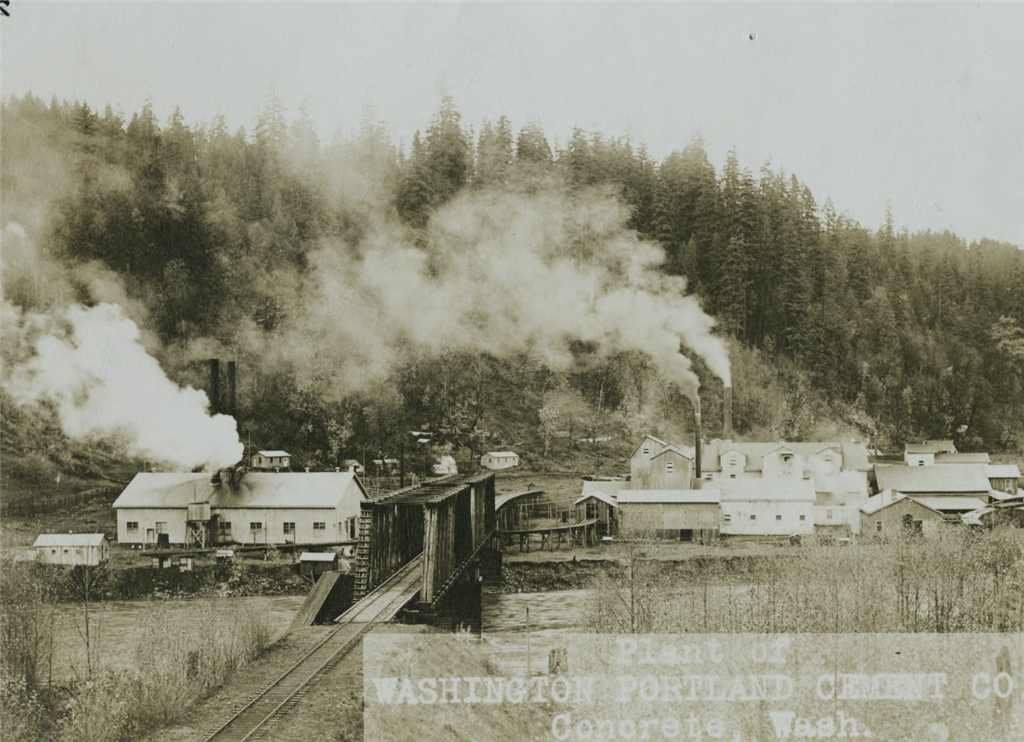
Early view of the Washington Portland Cement Plant in Concrete, Washington (Courtesy HistoryLink.org)
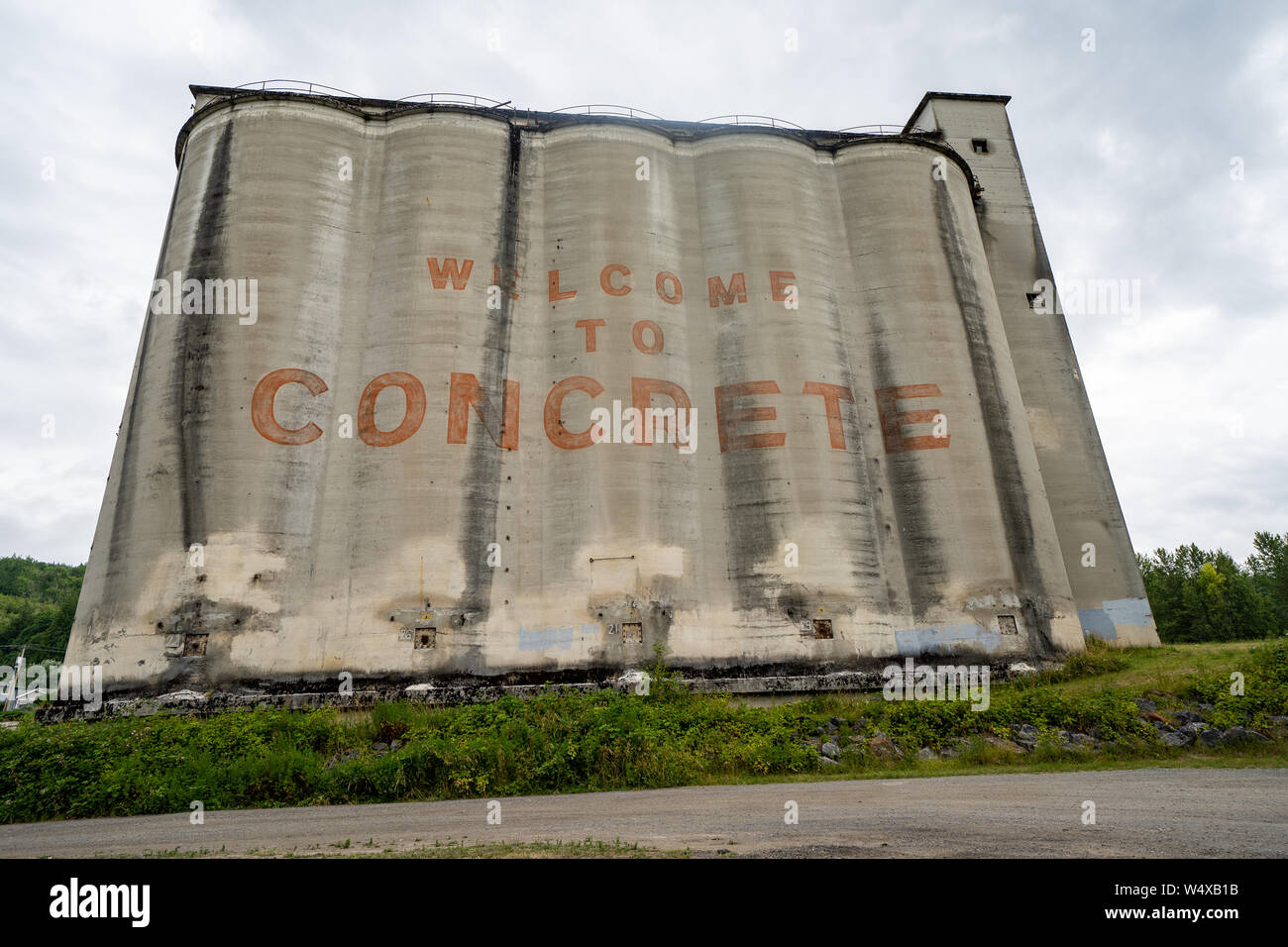
Iconic “Welcome to Concrete” silos, a landmark made from the town’s historic cement structures

Another view of the famous silo welcome sign in Concrete, Washington
1930s–1940s: The Era of Mega-Dams
The Great Depression catalyzed massive concrete projects under the New Deal, focusing on hydropower, flood control, and irrigation. These dams employed thousands and powered WWII industries like aluminum production.
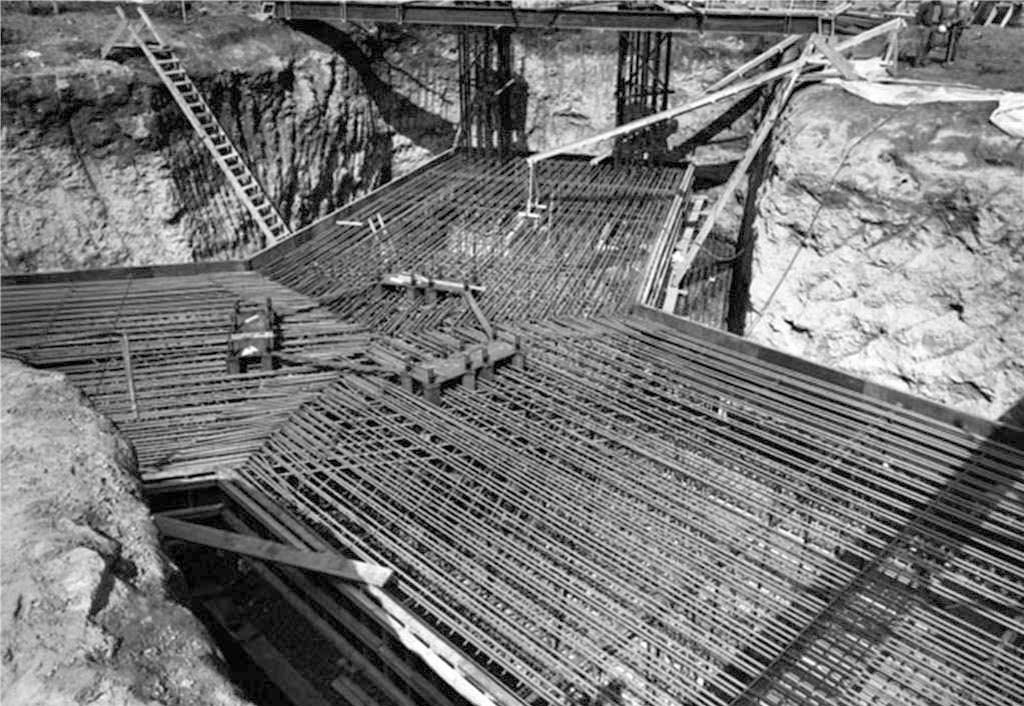
Grand Coulee Dam (1933–1942, Eastern Washington): The largest concrete structure in the U.S. upon completion, it used nearly 12 million cubic yards of concrete—three times that of Hoover Dam. Construction began in 1933, involving land clearing, town relocations, and WPA camps. Key innovations included cooling pipes to manage curing heat and on-site batching plants. It remains the nation’s top hydropower producer, generating about 1,000 average megawatts annually.
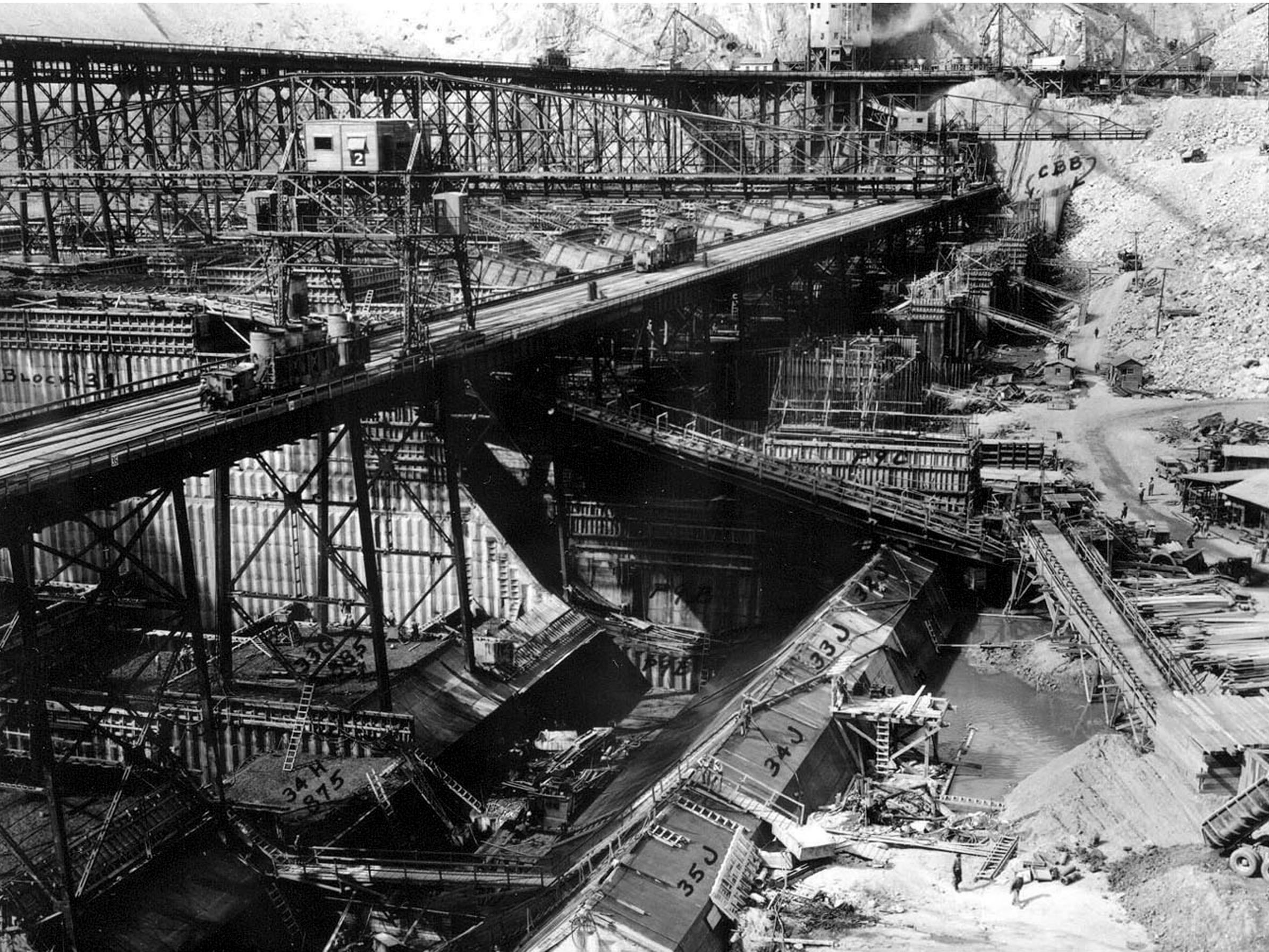
Workers and equipment during Grand Coulee Dam construction (Bureau of Reclamation)
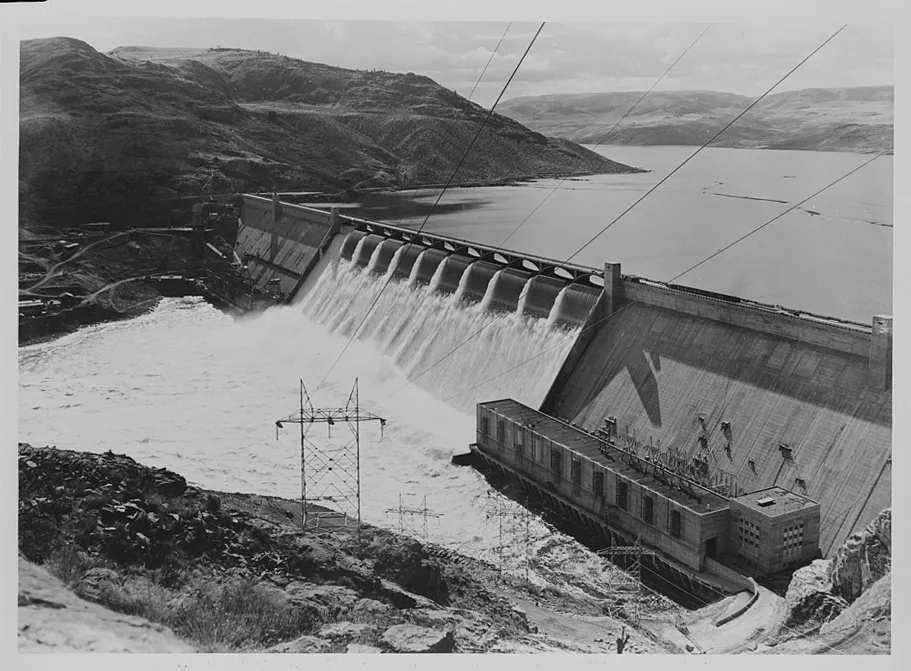
Massive scale of concrete pouring at Grand Coulee Dam (Smithsonian Magazine)
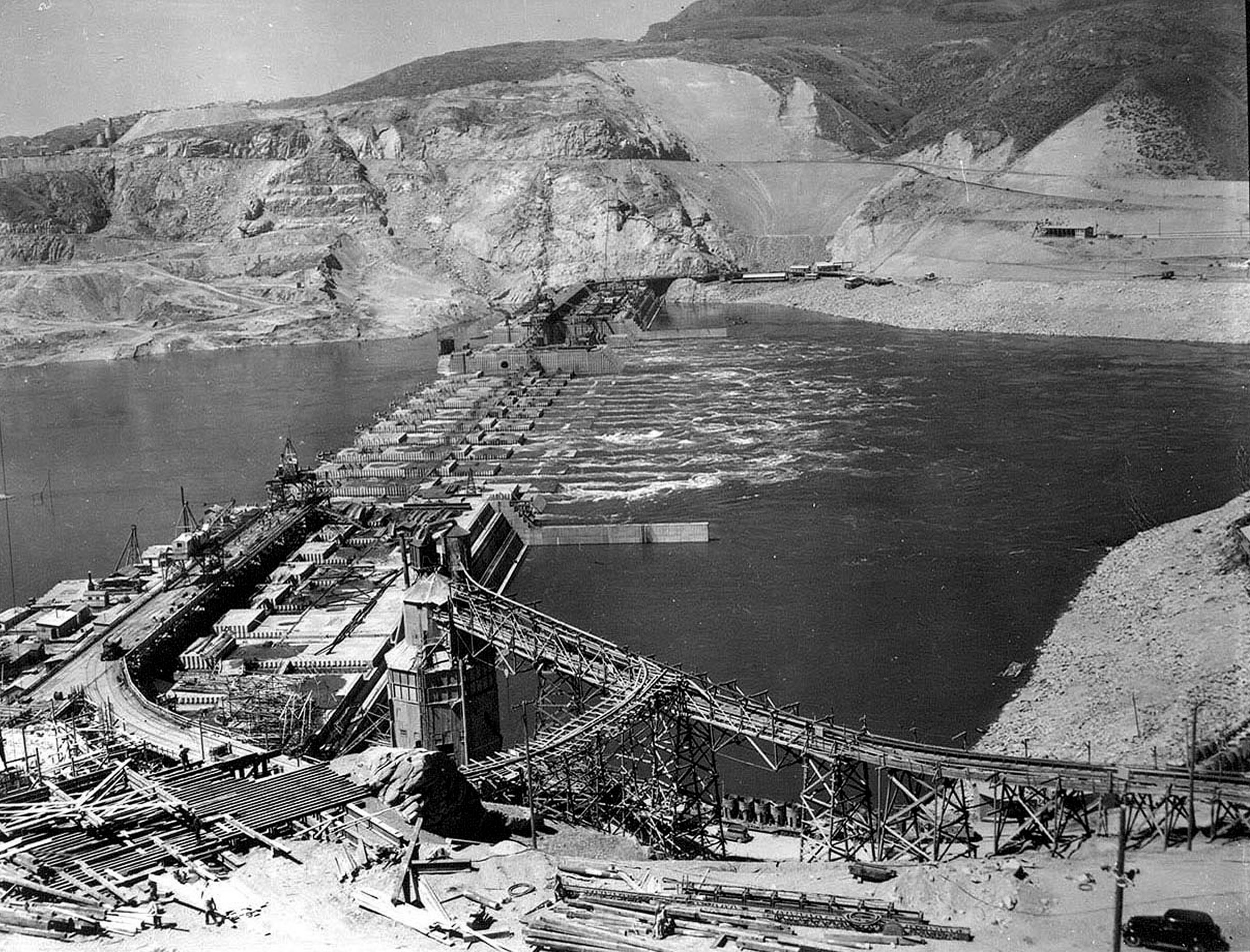
Early stages of Grand Coulee Dam construction (Bureau of Reclamation)
Bonneville Dam (1933–1937, Columbia River near Portland): A gravity dam key for navigation and power, it began generating electricity in 1938. Construction involved over 3,000 workers and was a Depression-era success. The first powerhouse was completed in 1938, making it the oldest in the Federal Columbia River Power System.

Aerial view of Bonneville Dam area, circa 1938
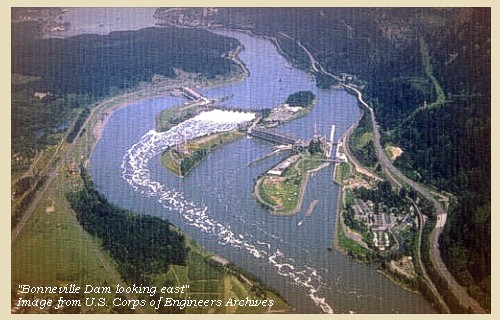
Bonneville Dam on the Columbia River (U.S. Army Corps of Engineers)
Mid-20th Century: Bridges, Urban Growth, and Post-WWII Expansion
Post-WWII, concrete facilitated urban expansion. The Lake Washington Floating Bridge (Lacey V. Murrow Memorial Bridge, 1940) was revolutionary: the world’s first major reinforced-concrete pontoon floating bridge. Proposed by Homer Hadley in 1921, it used 25 pontoons (350 feet long, 60 feet wide) with watertight cells, anchored in deep water. Opened July 2, 1940, it saved 14 miles of travel. Renamed in 1967, it sank partially in 1990 due to storm damage but reopened in 1993.
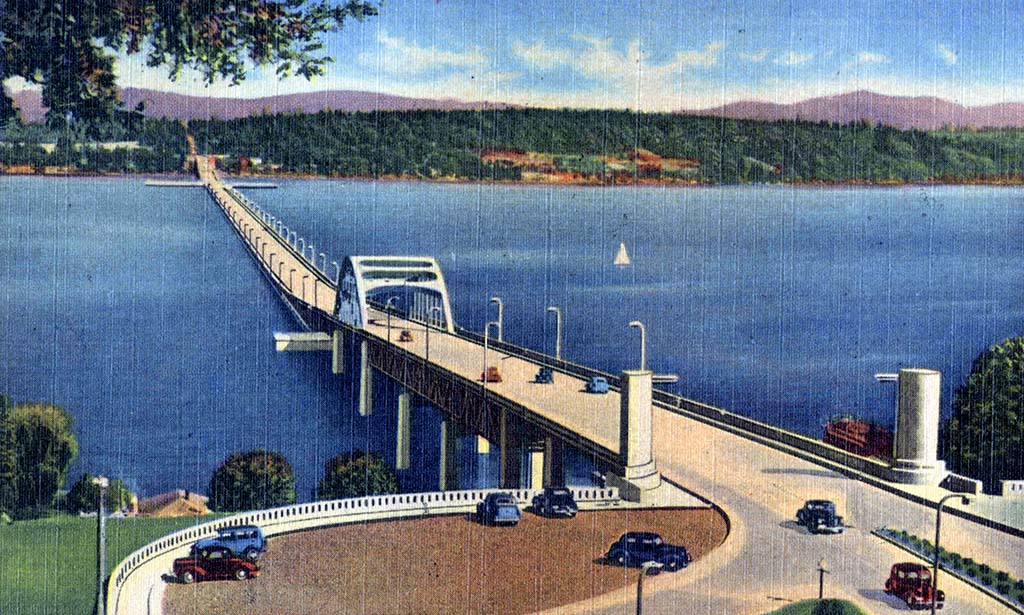
The original Lake Washington Floating Bridge shortly after opening, circa 1940 (Courtesy HistoryLink.org)

Modern aerial view of the I-90 floating bridges, including the Lacey V. Murrow Memorial Bridge
Companies like Glacier Northwest (now CalPortland) expanded ready-mix supply for Seattle and Portland’s growth. Early concrete skyscrapers in Seattle, like those in the 1910s-1920s, showcased regional innovations in high-rise construction.
Modern Era: Innovations in Sustainable Concrete
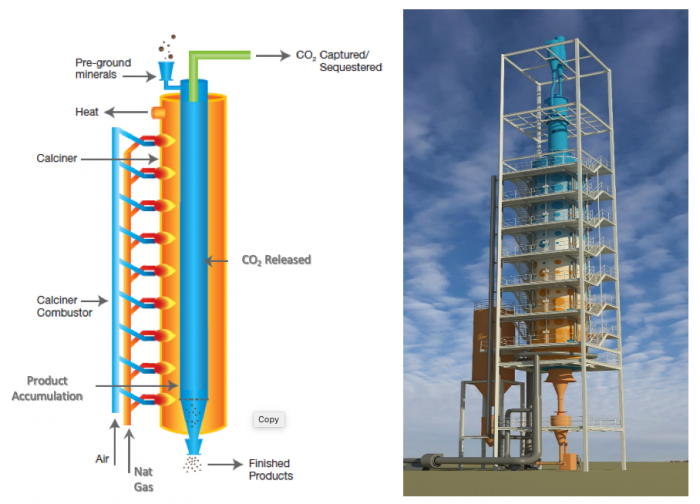
Today, the PNW leads in greener concrete to combat cement’s 8% contribution to global CO2 emissions. Innovations include:
- Granulated slag from steel mills replacing Portland cement in projects like the Seattle Storm’s facility and Amazon Spheres.
- Algae-based substitutes for limestone in Microsoft data centers.
- Carbon-negative cement using biochar from Washington State University.
- Eco Material Technologies’ Lakeview, Oregon plant producing 300,000 tons/year of low-carbon alternatives.
- Solid Carbon’s use of processed sewage as a sand replacement.
These advancements support sustainable building in high-demand areas like Sound Transit’s rail expansions.
Environmental Impacts: The Double-Edged Sword of Concrete Dams
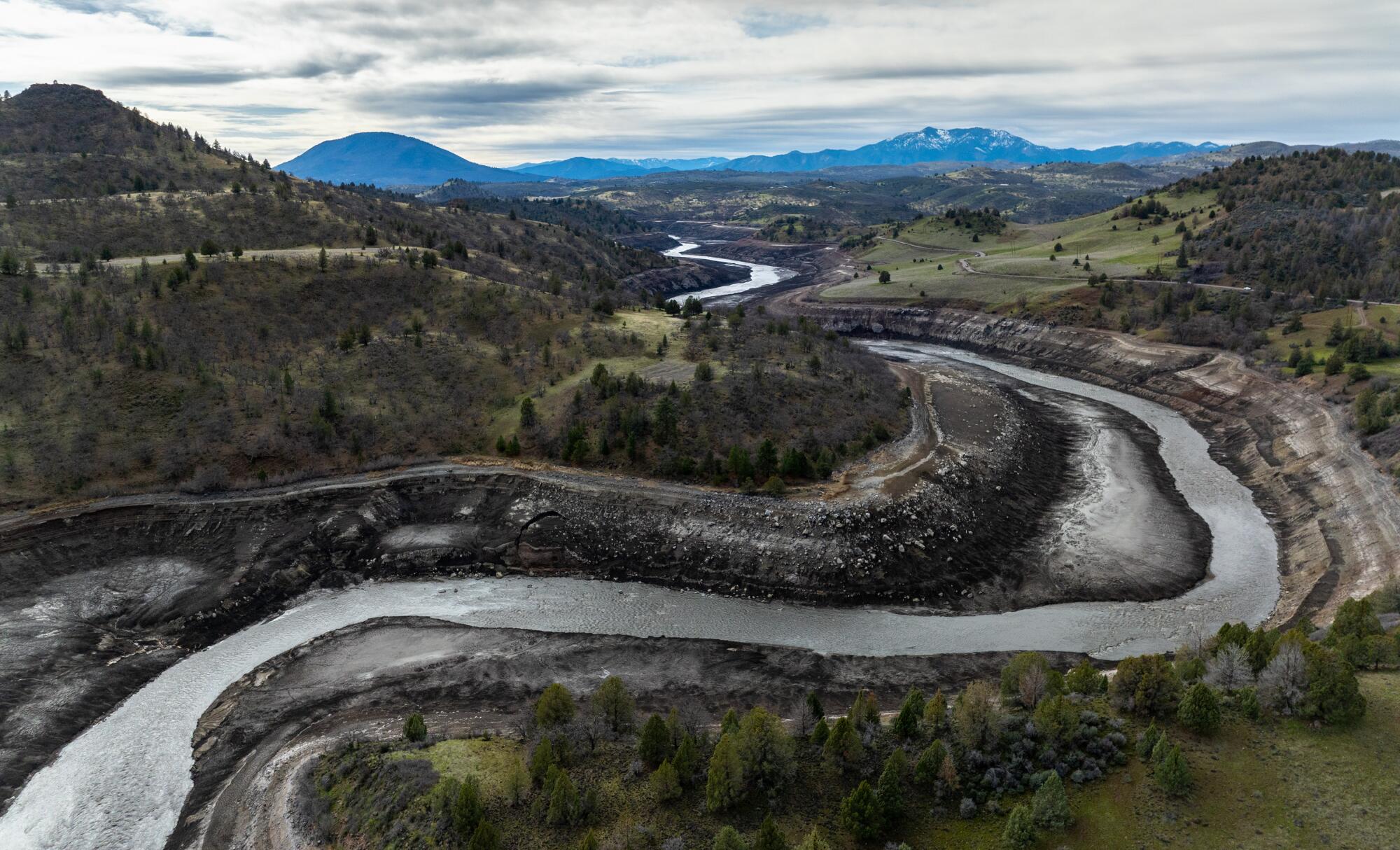
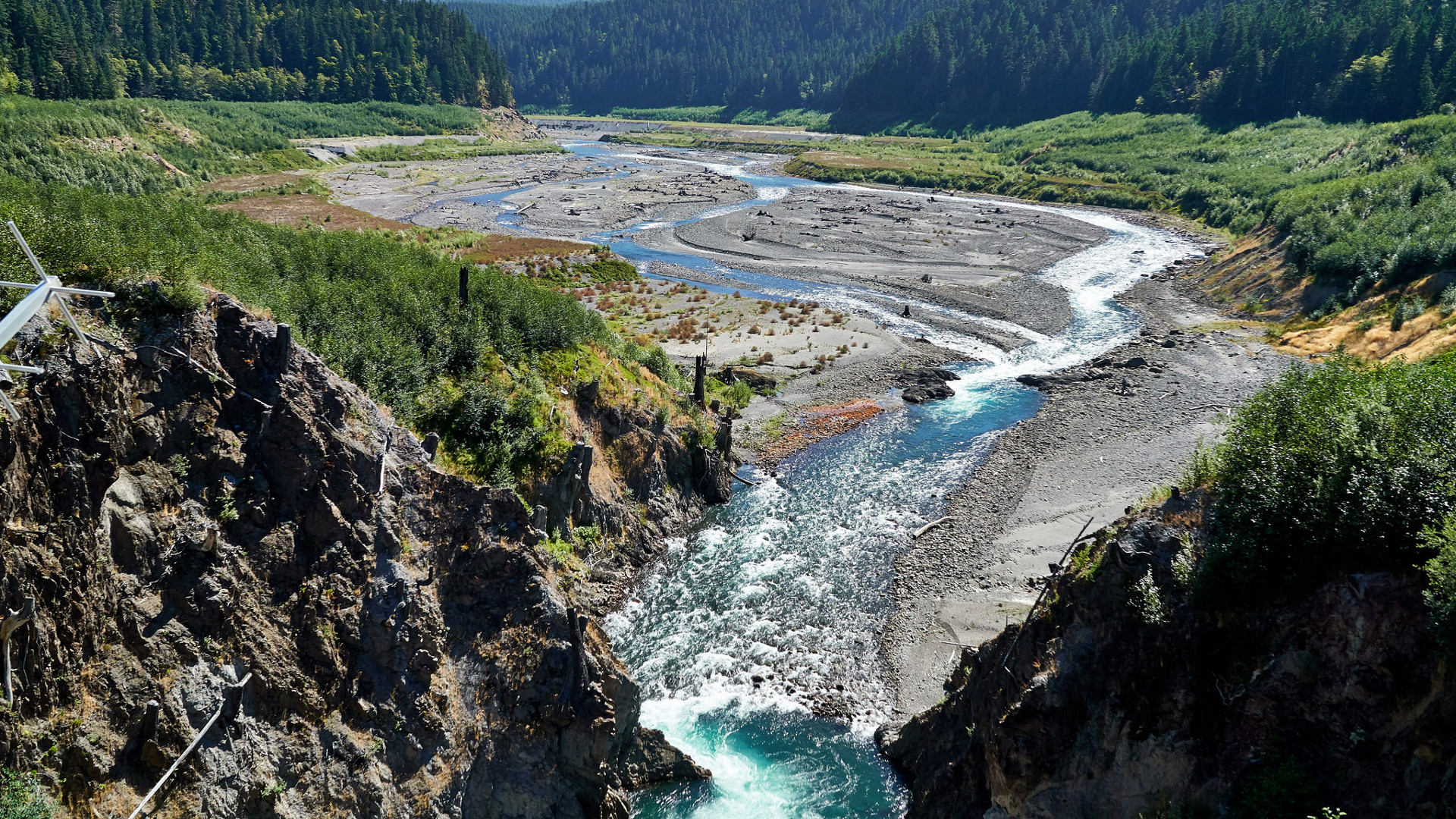
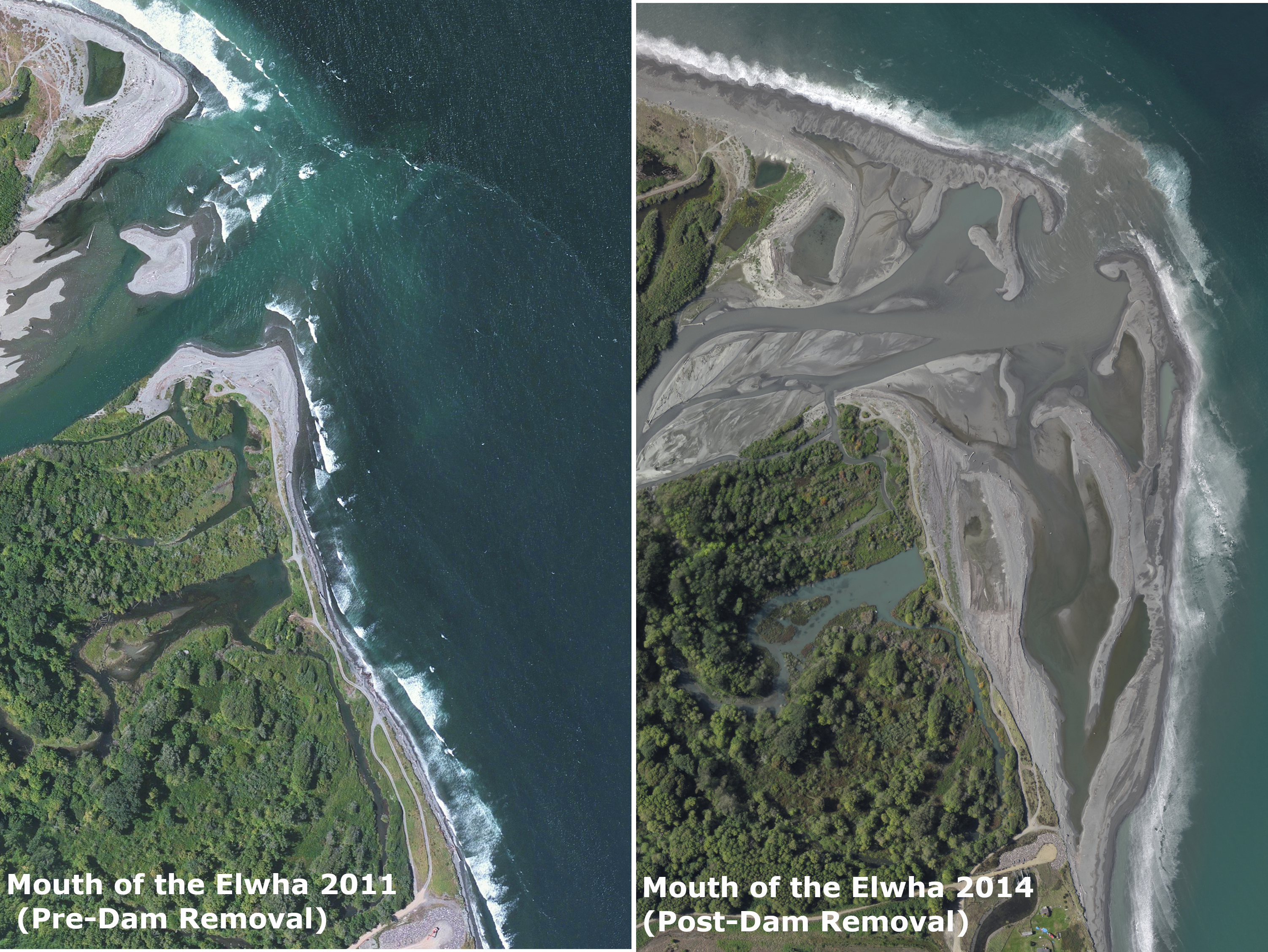
While concrete dams brought economic benefits, they devastated ecosystems. Over 400 dams in the Columbia Basin block fish migration, slowing flows and raising temperatures, causing up to 50% juvenile salmon mortality. Salmon populations have declined 90%, costing $14 billion in recovery efforts. The U.S. government acknowledged harms to tribes in 2024. Dam removals, like on the Elwha River (2011), have restored habitats, increasing salmon returns. Proposals to breach Lower Snake River dams could quadruple Chinook Salmon populations, with energy offsets via renewables.
Conclusion
Concrete has been integral to the PNW’s development, from cement towns to iconic dams and bridges. As the region moves toward sustainability, balancing innovation with environmental stewardship remains key.
References and Further Reading
For Part 2 of this series (covering the Skagit River Hydroelectric Project), see the next post.
.jpg)