Calculate the concrete needed for your ADA-compliant ramps. Adjust for angle and project specifics.
Your Concrete Ramp Estimate:
You’ve used our Concrete Ramp Calculator to get precise concrete volume estimates – fantastic! Now, let’s talk about what makes a ramp truly functional and compliant, and how our tool helps you achieve that.
The Art and Science of Concrete Ramps: Building a ramp isn’t just about pouring concrete; it’s about engineering a safe, accessible, and durable pathway. Key considerations that our calculator helps you manage include:
The Critical Angle: ADA guidelines specify a maximum slope, typically 1:12 (meaning for every 1 inch of vertical rise, there must be at least 12 inches of horizontal run), which translates to a maximum angle of about 8.33 degrees. Our calculator allows you to input your desired angle (or it calculates it based on rise and run), helping you visualize the slope and its impact on the concrete needed. A steeper angle means a shorter, but potentially trickier, ramp surface.
Vertical Rise: This is the total height your ramp needs to overcome, a fundamental measurement for any incline.
Sloped Length vs. Horizontal Run: Notice how our calculator provides both? The sloped length is the actual surface area you’ll be pouring concrete onto. The horizontal run is the footprint on the ground. Understanding the sloped length is crucial for accurate volume calculation.
Width and Thickness: Just like a sidewalk, the width determines the ramp’s capacity, and the thickness ensures its strength. Our calculator accounts for these vital dimensions.
How Our Calculator Guides You: We’ve designed our ramp calculator to simplify this complex geometry:
Input Key Dimensions: Enter the vertical rise, ramp width, thickness, and your desired angle.
See Intermediate Results: Instantly view the calculated sloped length and horizontal run.
Get Total Volume: Our tool then provides the precise cubic yards of concrete required for your ramp.
Smart Ordering Suggestions: Based on your total volume, we offer practical advice on whether bags, a volumetric mixer, or a ready-mix truck is your best option, just like with our other calculators.
Your Partner in Concrete Projects: At VolumeConcrete, we’re dedicated to sharing our knowledge. We want to empower you with the understanding and tools needed to approach concrete projects with confidence. Whether you’re building for accessibility or custom design, our calculator is here to make your planning precise and efficient.
Ready to plan your ramp?
Option 2: Focusing on ADA, Trade Secrets, and Step-by-Step
Title Suggestion: The Pro’s Guide to Concrete Ramps: ADA Angles, Volume, and Your VolumeConcrete Calculator
Description: Concrete ramps are more than just slopes; they’re about precision, compliance, and smart material usage. At VolumeConcrete, we’re pulling back the curtain on the trade craft, showing you how to accurately calculate the concrete for your ramps using our advanced Concrete Ramp Calculator.
Understanding the Anatomy of a Concrete Ramp: For any ramp, especially those adhering to ADA standards, precise measurements and calculations are paramount. Here’s what goes into it, and how our tool simplifies the process:
The Core Challenge: Angle & Slope: ADA regulations dictate a maximum slope to ensure safety and accessibility. This is often expressed as a ratio (like 1:12) or an angle (around 8.33 degrees). Our calculator lets you input your desired angle. Why does this matter? The angle directly affects the sloped length – the actual length of the concrete surface you’ll be pouring. A steeper angle means a shorter ramp, but it’s crucial to respect the maximum allowable slope.
Vertical Rise: This is the total height difference the ramp needs to bridge.
Horizontal Run: This is the ground space the ramp will occupy.
Ramp Width & Thickness: Essential for functionality and durability, just like any concrete slab.
Calculating Volume: Once we know the sloped length, width, and thickness, we can calculate the concrete volume (in cubic yards). Our calculator handles these geometric transformations seamlessly.
How Our Ramp Calculator Empowers You: We’ve made it simple:
Input Your Parameters: Enter the vertical rise, ramp width, concrete thickness, and the specific angle you’re working with.
See Key Dimensions: Our calculator instantly shows you the calculated sloped length and horizontal run, giving you a clear picture of the ramp’s geometry.
Accurate Volume Estimation: You’ll receive the precise cubic yards of concrete needed for your project.
Smart Ordering Advice: Your calculated volume will also guide you on the most efficient way to order your concrete – whether it’s bags, a volumetric mixer, or a ready-mix truck, helping you save time and money.
Volume Concrete: Your Partner in Precision We believe in sharing our knowledge to make concrete projects accessible and successful for everyone. By understanding the geometric principles and material calculations, you can approach your ramp projects with confidence and achieve professional-quality results.
Ready to start planning your concrete ramp? Explore our Concrete Calculators anytime!
Easily calculate the concrete needed for your sidewalk project. Add multiple sections for accurate totals.
Your Sidewalk Concrete Estimate:
You’ve calculated your sidewalk’s concrete needs using our handy Concrete Sidewalk Calculator – excellent! Now, let’s delve deeper into what those numbers tell you and how they guide the best way to order your material. At VolumeConcrete, we see every calculation as an opportunity to educate and share the practical side of our craft.
Why Your Calculated Volume Matters for Delivery: The cubic yards figure is your project’s concrete fingerprint. It dictates not just how much material you need, but also the most practical and economical way to receive it. Understanding these distinctions ensures your project stays on track and within budget.
Your Guide to Concrete Delivery Methods:
Small Batches: The Power of Concrete Bags (Under 0.25 yd³) For very small tasks, like fixing a crack, setting a single post, or creating a small decorative element, ordering a ready-mix truck would be overkill and inefficient. Our calculator directs you to our Concrete Bag Calculator for these scenarios. Mixing concrete from bags gives you precise control over small quantities, minimizing waste and making it ideal for DIYers and quick fixes.
Mid-Range Projects: The Efficiency of Volumetric Mixers (0.25 – 6 yd³) This is where the magic of modern concrete delivery truly shines. If your sidewalk project falls into this volume range, a Volumetric Mixer Truck is your prime choice. Think of it as a mobile batch plant.
On-Demand Mixing: The truck carries all raw materials (cement, sand, aggregate, water) and mixes them on-site according to your exact specifications.
Precise Measurement: You get exactly the volume and mix design you need, preventing both shortages and expensive excess.
Superior Freshness: Concrete is mixed as it’s being poured, ensuring optimal workability and strength. It’s a versatile solution that strikes the perfect balance between quantity and quality for many common sidewalk and smaller slab projects.
Larger Scale: The Economy of Barrel Trucks / Ready-Mix (> 6 yd³) When your project requires a significant amount of concrete, the cost-efficiency of traditional Barrel Trucks (often called ready-mix trucks) becomes paramount. These trucks deliver a pre-mixed batch, typically in larger increments. While you might need to account for minimum order sizes, the per-yard cost is generally lower for bulk orders. They are the workhorses for foundations, large driveways, and extensive sidewalk systems where efficiency and volume are key.
Our Commitment to Your Success: We believe that knowledge empowers you to achieve the best results. By understanding the nuances of concrete measurement and delivery, you can approach your projects with greater confidence and achieve professional-quality outcomes.
Want to recalculate or explore another project? Visit our Concrete Calculators anytime!
How to Order Concrete: A Step-by-Step Guide from Volume Concrete LLC.
Ordering the right concrete is crucial for the success and durability of your project. At Volume Concrete, powered by the pumping expertise of AAA Concrete Pumping, we’re here to guide you through every step. Our slogan, “The Leaders in Long Distance,” reflects our commitment to delivering quality and control, no matter the distance or complexity. Follow this comprehensive tutorial to confidently place your order!
Step 1: Define Your Project Scope and Requirements
Before you even think about concrete specifications, clearly understand what you need the concrete to do and the environment it will be in.
Project Type: Is it a driveway, patio, foundation, sidewalk, pool deck, commercial slab, or something else? Different applications have different strength and durability needs.
Dimensions: What are the length, width, and depth of the area you need to fill? Accurate measurements are essential for calculating the total volume.
Structural Requirements: Does your project require a specific compressive strength (e.g., 3000 psi, 4000 psi)? This is often dictated by building codes or engineering specifications.
Exposure Conditions: Will the concrete be exposed to freeze-thaw cycles, de-icing salts, aggressive soils, or other harsh environmental factors? This will influence durability requirements.
Concrete is ordered and measured in cubic yards (yd³). A cubic yard is a measure of volume equivalent to a cube that is 3 feet long, 3 feet wide, and 3 feet high (3′ x 3′ x 3′).
How to Calculate Volume:
Measure in Feet: Convert all your dimensions (length, width, depth) into feet. If you measure in inches, divide by 12 (e.g., 4 inches = 4/12 = 0.333 feet).
Multiply Dimensions: Multiply your length by your width by your depth (in feet).
Convert to Cubic Yards: Divide the total cubic feet by 27 (since there are 27 cubic feet in 1 cubic yard).
Volume (cubic yards) = Volume (cubic feet) / 27
Why Accurate Measurement is Key: Ordering too little concrete leads to costly delays and the need for an additional pour, which may not match perfectly. Ordering too much can be wasteful. Our online calculator simplifies this process, ensuring you order precisely what you need.
Always order slightly more than your exact calculation (e.g., 5-10% extra) to account for uneven subgrades, spillage, or minor over-excavation. This buffer is standard practice in the industry.
Step 3: Specifying Key Concrete Properties
This is where you define the “recipe” for your concrete. Understanding these terms will help you communicate your needs effectively.
3.1. Compressive Strength (PSI)
This is the most common specification. It refers to the maximum compressive load a concrete cylinder can withstand after a specific curing period (usually 28 days), measured in pounds per square inch (psi).
Common Strengths:
3000 PSI: Suitable for sidewalks, patios, and residential slabs not exposed to harsh conditions.
4000 PSI: Recommended for driveways, garage floors, and most structural applications. Often required for freeze-thaw resistance.
5000 PSI or higher: Used for heavy-duty industrial floors, bridge decks, and situations requiring exceptional strength and durability.
Consult your project plans or local building codes for the required PSI. If unsure, 4000 PSI is a versatile choice for many applications.
3.2. Slump
Slump is a measure of the concrete’s consistency or workability – essentially, how wet or plastic the mix is. It’s measured using a slump cone test, where a cone filled with concrete is lifted, and the amount the concrete slumps down is measured in inches.
Low Slump (e.g., 1-3 inches): Stiffer mix, used for slip-formed barriers, pavements, or where there’s a risk of segregation.
Medium Slump (e.g., 4-5 inches): The most common range, offering good workability for typical slabs, foundations, and driveways.
High Slump (e.g., 6+ inches): Very fluid mix, used for heavily reinforced sections, pumped concrete, or when very easy placement is needed. However, high slump can reduce strength and increase shrinkage if not managed carefully.
Very Low Slump (e.g., 2 inches): As demonstrated by AAA Concrete Pumping’s capabilities, in certain cases, we can successfully pump concrete with slumps as low as 2 inches, which is ideal for applications requiring a stiffer mix and precise placement.
Consider your placement method: Pumping usually requires a higher slump, but AAA Concrete Pumping’s expertise allows us to pump even lower slumps when needed. For standard placement with chutes or wheelbarrows, a moderate slump is ideal.
3.3. Aggregate Size and Mix Types
Aggregates (sand and gravel/stone) make up the bulk of concrete, and their size and type influence the mix’s properties and best applications.
Volume Concrete’s Standard Aggregate:
Our most popular and versatile mix utilizes a blend of aggregates with a maximum size of 1 inch. This mix is engineered for superior industrial applications, providing excellent strength, durability, and excellent pumpability for projects ranging from foundations to large commercial slabs. While not ideal for intricate stamping due to the larger aggregate, its robust nature makes it perfect for demanding industrial environments.
Pea Gravel Mixes:
We also offer mixes featuring pea gravel (typically 3/8″ to 3/4″ aggregate size). Pea gravel mixes are known for their smooth finish and ease of working, making them ideal for decorative concrete applications such as:
Stamped Concrete: The smaller, rounded aggregate allows for easier compaction and a cleaner transfer of stamp patterns.
Color Concrete: The aggregate size helps to achieve a more uniform and consistent color distribution.
Patios and Walkways: Provides a pleasing aesthetic and comfortable surface.
However, due to the smaller aggregate size and potentially lower overall density compared to our standard 1″ aggregate mix, pea gravel mixes are generally not recommended for heavy industrial applications that require extreme load-bearing capacity or resistance to abrasion.
Discuss your project’s aesthetic and structural needs with us. Whether you need the industrial strength of our 1″ aggregate mix or the decorative appeal of pea gravel, we have the right aggregate selection for you.
3.4. Cement Type
The cement is the binder that holds concrete together, and its type significantly impacts its performance.
Ash Grove Type 1L Cement (Durkee, Oregon):
At Volume Concrete, we prioritize quality and performance, which is why we predominantly use Ash Grove Type 1L cement sourced from their Durkee, Oregon plant. This cement is renowned for its superior consistency, excellent workability, and robust strength development, making it an ideal foundation for virtually all your concrete projects. Type 1L cement provides the general-purpose properties of Type I while offering moderate sulfate resistance and a slightly reduced heat of hydration, combining versatility with enhanced durability.
Learn more about the critical relationship between water and cement ratios in our guide:Water-to-Cement Ratio Relationship to Strength in Ready-Mix Concrete. Discuss your project’s specific exposure conditions with our team to determine the optimal cementitious materials.
Step 4: Considering Site and Environmental Factors
The conditions at your job site and the prevailing weather will significantly impact how your concrete behaves and the specifications you’ll need.
4.1. Ambient Temperature & Humidity
Temperature plays a huge role in concrete setting times. Hotter temperatures accelerate hydration, making concrete stiffen faster. Colder temperatures slow down hydration, extending setting times. High humidity can sometimes slow surface drying.
This is where admixtures like retarders become vital. If you’re pouring in hot weather, or if your concrete has a long travel distance, you might need a retarder to keep the concrete workable. Our Euclid Stasis admixture is specifically designed for this purpose, allowing for extended working times even in challenging temperatures. You can use our online Volume Calculator to get an initial quantity estimate, and our Concrete Mixing Time Calculator to help you understand dosage for products like Euclid Stasis.
4.2. Wind
Wind can accelerate the drying of the concrete surface, potentially leading to plastic shrinkage cracking if the surface dries out faster than the concrete can accommodate movement. Using curing compounds or evaporation reducers can help mitigate this, especially in windy conditions.
4.3. Site Access and Placement Method
How will the concrete be delivered and placed? This is a critical consideration for both Volume Concrete and AAA Concrete Pumping.
Chute/Direct Delivery: Standard truck delivery to an accessible site.
Wheelbarrows: Requires concrete that is stiff enough to be moved without segregation.
Concrete Pump: Requires a more fluid mix (higher slump) that can be pushed through the pump lines. AAA Concrete Pumping is “The Leaders in Long Distance,” specializing in pumping concrete efficiently to hard-to-reach locations. They can handle a wide range of slumps, including very low slumps (as low as 2″) in certain cases, which is perfect for projects requiring a stiffer mix and precise placement, like specialized shotcrete applications.
Shotcrete: A specialized application where concrete is pneumatically projected. This requires a specific mix design, often with a retarder like Euclid Stasis, to allow for controlled application and adhesion.
Inform both Volume Concrete and AAA Concrete Pumping about your planned placement method. This helps us tailor the mix and suggest appropriate admixtures for seamless execution.
Step 5: Understanding Admixtures – The Performance Enhancers
Admixtures are ingredients added to concrete during or just before mixing, other than cement, water, and aggregates. They are used to modify concrete’s properties in the fresh or hardened state.
5.1. Euclid Stasis: Your Retarding Solution
As discussed, Euclid Stasis is a premier retarder. It works by slowing down the cement hydration process, thereby:
Extending Workability: Crucial for long haul times (living up to AAA Concrete Pumping’s “Leaders in Long Distance” slogan), hot weather, complex pours, and applications like shotcrete. It ensures your concrete remains plastic and placeable for the duration needed.
Reducing Heat of Hydration: Beneficial in large pours to minimize thermal stress and cracking.
Improving Finishing Time: Gives you a more relaxed window for screeding, floating, and troweling.
While we focus on high-quality Ash Grove Type 1L cement and specialized mixes, understanding other aspects of concrete is beneficial.
Water Reducers (Plasticizers/Superplasticizers): These admixtures reduce the amount of water needed to achieve a desired slump. Less water means higher strength and improved durability.
Air Entrainers: Create microscopic air bubbles within the concrete matrix, significantly improving freeze-thaw resistance and durability in environments exposed to de-icing salts.
Accelerators: Speed up hydration and strength development. Useful in cold weather.
Corrosion Inhibitors: Protect reinforcing steel from corrosion, particularly important in coastal or de-icing salt environments.
Discuss your project’s specific needs with our experts at Volume Concrete and AAA Concrete Pumping. We can recommend the ideal mix design, aggregate selection, and admixtures to achieve optimal performance, durability, and cost-effectiveness.
Step 6: Placing Your Order with Volume Concrete & AAA Concrete Pumping
Now that you’ve gathered all the necessary information, you’re ready to place your order!
Have Your Details Ready:
Total Cubic Yards needed (with a buffer!)
Required Compressive Strength (PSI)
Desired Slump (inches) – noting AAA Concrete Pumping’s ability to pump very low slumps.
Aggregate Selection: Volume Concrete’s standard 1″ aggregate mix for industrial strength, or our pea gravel mix for decorative applications.
Cement Type: Primarily Ash Grove Type 1L from Durkee, Oregon for superior performance.
Any admixtures required (like Euclid Stasis for extended workability)
Contact Volume Concrete & AAA Concrete Pumping: Call us or use our online ordering system. Our knowledgeable team is ready to assist you.
Review with Our Team: Even if you’ve used our calculators, it’s always beneficial to briefly discuss your project with our concrete specialists. They can offer expert advice and confirm your specifications.
Confirm Delivery Details: Provide the exact delivery address, contact person on-site, and any specific delivery instructions, including pump placement needs.
Step 7: The Importance of Learning and Using Our Online Tools
At Volume Concrete, we empower our customers with knowledge and tools. Understanding concrete basics like measurements, PSI, slump, the role of admixtures, our specific product offerings like Ash Grove’s superior cement, AAA Concrete Pumping’s services, and the benefits of our online tools, is invaluable for project success.
Why Learn These Basics?
Better Communication: You can speak confidently with suppliers and contractors.
Cost Savings: Avoid ordering too much or too little, and choose the most cost-effective specifications for your needs.
Improved Performance: Select the right concrete for the job, ensuring durability and structural integrity.
Reduced Risk: Understand how environmental factors and placement methods influence your concrete, allowing for better planning.
Our online calculators and tools, such as the Volume Calculator, the Concrete Mixing Time Calculator, and the Concrete Mix Design Suggestion Tool, are designed to simplify complex calculations and provide essential guidance.
Accurate Quantity Estimation: Ensure you order the right amount of concrete every time with our Volume Calculator.
Admixture Dosage Guidance: Get a baseline for important admixtures like Euclid Stasis, helping you manage workability and setting times effectively with our Mixing Time Calculator.
Mix Design Suggestions: Explore options and learn about material combinations with our Mix Design Tool.
By familiarizing yourself with these concepts and leveraging the tools we provide at Volume Concrete, you significantly increase the likelihood of a successful, high-quality concrete project.
Ready to Order? Let’s Build Together!
Let Volume Concrete, backed by AAA Concrete Pumping’s unmatched pumping services and powered by superior Ash Grove cement, be your partner in building with confidence. Use our tools, call our experts, and experience the difference quality concrete and dedicated service can make.
Calculate the recommended dosage rate for Euclid Stasis based on ambient temperature and time delay.
ⓘ
ⓘ
ⓘ
Result:
Please enter the values above and click ‘Calculate Dosage’.
Euclid Stasis Dosage Recommendations (fl oz/cwt)
Note: The chart provides values for specific temperature and time delay ranges. The calculator interpolates based on these ranges.
Temperature (°F)
Time Delay Range (hrs)
Recommended Dosage (fl oz/cwt)
50-59
0.5 to 1
1 – 2
60-69
0.5 to 1
2 – 3
70-79
0.5 to 1
3 – 4
80-89
0.5 to 1
4 – 5
90-99
0.5 to 1
5 – 6
100-109
0.5 to 1
6 – 7
70-79
2.5 to 3
7 – 8
90-99
5.5 to 6
15 – 16
70-79
7.5 to 8
14 – 15
(Full chart values are used in calculator logic)
Euclid Stasis: Mastering Time and Enhancing Workability in Ready-Mix Concrete
At Volume Concrete, we understand that the demands of modern construction often extend beyond the traditional timeframe. Whether you're facing challenging pour locations, intricate placements, or simply require more control over your concrete's setting behavior, Euclid Stasis is your trusted solution. This advanced admixture is specifically engineered to act as a highly effective concrete retarder, providing unparalleled control over setting times and extending workability, even under demanding conditions.
What is a Concrete Retarder?
Before diving into the specifics of Euclid Stasis, it's essential to understand the fundamental role of a retarder in ready-mix concrete. Concrete, a complex mixture of cement, water, aggregates, and admixtures, undergoes a chemical reaction called hydration once water is introduced. This hydration process causes the concrete to stiffen and eventually harden.
A retarder, like Euclid Stasis, is an admixture that chemically slows down the hydration process. It doesn't stop hydration entirely, but rather moderates the rate at which it occurs. This controlled moderation translates directly into an extended period of plasticity and workability, giving contractors more time to place, consolidate, and finish the concrete without compromising its ultimate strength or performance.
How Does Euclid Stasis Work? The Science of Controlled Hydration
Euclid Stasis operates by influencing the complex chemical reactions that take place during cement hydration. Specifically, it targets the C₃S (Tricalcium Silicate) and C₃A (Tricalcium Aluminate) phases of Portland cement, which are the primary drivers of early heat generation and strength development.
Adsorption onto Cement Particles: When Euclid Stasis is introduced to the concrete mix, its chemical components adsorb onto the surface of the cement particles. This creates a barrier.
Slowing C₃A Hydration: C₃A is the fastest-reacting component in cement. It's responsible for rapid initial stiffening and the generation of early heat. Euclid Stasis effectively hinders the rapid dissolution of C₃A and the formation of early ettringite, a key hydration product. By slowing this down, it prevents premature stiffening.
Modulating C₃S Hydration: C₃S is responsible for much of the concrete's later strength. Euclid Stasis also influences the rate at which C₃S hydrates, ensuring that the overall setting process is managed rather than accelerated.
Reduced Heat of Hydration: By moderating the rate of these exothermic chemical reactions, Euclid Stasis helps to reduce the peak temperature generated within the concrete. This is particularly beneficial in larger pours or in hot weather, where excessive heat can lead to thermal cracking and reduced long-term durability.
The result is a concrete mix that remains fluid and workable for significantly longer periods, providing the crucial time needed for:
Extended Travel Distances: For jobsites that are far from the batch plant, normal concrete can begin to stiffen during transit, making placement difficult. Euclid Stasis ensures your concrete arrives at its destination with excellent workability, even after extended travel times, often extending the practical cutoff from 90 minutes to well over 120 minutes, and sometimes even longer depending on the mix design and ambient conditions.
Complex Placements: Situations requiring intricate pouring patterns, such as filling formwork with complex geometries, large foundations, or continuous pours over a long duration, benefit immensely from the extended plasticity offered by Stasis. It allows for proper consolidation without the risk of cold joints or segregation.
Hot Weather Concreting: In warmer climates or during hot weather, concrete's setting time is naturally accelerated. Euclid Stasis counteracts this effect, providing the necessary working time and mitigating the risks associated with premature stiffening and increased heat of hydration.
Shotcrete Applications: Shotcrete, whether applied pneumatically for tunneling, slope stabilization, or architectural features, relies on the concrete's ability to be sprayed and adhere to surfaces without sloughing. Euclid Stasis is exceptionally well-suited for shotcrete, as it provides the extended plasticity needed for accurate placement and a longer window for curing without premature setting, leading to superior performance and fewer application challenges.
Amazing Results Across the Volume Concrete Product Line
The effectiveness of Euclid Stasis isn't limited to specific concrete types; its benefits are realized across the entire spectrum of products offered by Volume Concrete. Whether you're using our high-strength mixes, specialized decorative concretes, or standard structural mixes, incorporating Euclid Stasis ensures:
Enhanced Workability: Provides a smooth, consistent, and extended period of plasticity, making placement and finishing operations more manageable and less rushed.
Reduced Risk of Cold Joints: By maintaining workability over longer periods, it allows for continuous placement, crucial for monolithic pours and preventing structural weaknesses that can arise from cold joints.
Improved Durability: By preventing premature stiffening and managing heat of hydration, Stasis contributes to a more uniform internal structure, leading to better long-term strength and durability.
Greater Project Efficiency: More time for placement and finishing means less stress, fewer costly delays, and more efficient use of labor and equipment.
Highly Recommended for Critical Applications
For projects where time is a critical factor, travel distances are significant, or the pouring process is inherently slow, Euclid Stasis is not just recommended – it's essential. It's a testament to our commitment at Volume Concrete to provide solutions that address the real-world challenges faced by contractors. When you need to ensure your concrete performs perfectly, from batch plant to final set, trust Euclid Stasis to deliver the control and reliability you require.
Concrete. It’s the most widely used man-made material on Earth, forming the very backbone of our modern world. But its story stretches back millennia, woven with tales of ingenuity, accidental discoveries, and groundbreaking innovation. From ancient civilizations harnessing volcanic ash to today’s high-performance, sustainable mixes, the journey of concrete, cement, and their remarkable predecessor, pozzolan, is nothing short of fascinating.
At Volume Concrete, we understand the past informs the future of our industry. Join us on this interactive timeline to explore the pivotal moments, iconic structures, and brilliant minds that shaped the material we rely on every single day.
Interactive Concrete History Histogram
The Enduring Legacy of Concrete, Cement & Pozzolan
Cement slurry, often referred to as neat cement, is a fundamental and versatile material in the construction industry, playing a critical role in ensuring the durability and stability of various projects. At Volume Concrete, we specialize in providing high-quality cement slurry tailored for specific applications, including cellular concrete production, grouting, and other innovative uses. This detailed overview, as of June 11, 2025, aims to educate and inform, covering the composition, properties, applications, and the specific advantages of Volume Concrete’s product, ensuring you have all the information needed for your construction needs.
Cement slurry is defined as a homogeneous mixture of cement, water, and sometimes chemical additives, designed to create a pourable consistency. It is commonly used in construction to create strong and stable foundations, particularly in areas with soft or unstable soil. When poured onto wet ground, it binds with the soil, forming a hard, smooth, and water-resistant layer. The thickness can vary depending on the project, typically applied by pumping into a space or pouring from a cement truck chute.
Composition Details:
Cement: Typically Portland cement, which provides the binding property essential for hardening.
Water: Used to hydrate the cement and achieve the desired consistency, with the amount determined by the water-to-cement (w/c) ratio.
Additives: Optional chemical compounds such as accelerators (to speed up setting time), retarders (to slow down setting time), dispersants (to improve workability), and extenders (to reduce cost or density). These are chosen based on the specific application, such as enhancing flowability or controlling setting time for large pours.
The composition is critical, as it directly influences the slurry’s performance. For instance, Volume Concrete’s most popular slurry has a 0.6 w/c ratio, which we’ll explore further for its implications on strength and workability.
Properties and Technical Specifications
The properties of cement slurry are determined by its composition and are crucial for its application. Key properties include:
Water-to-Cement Ratio (w/c): This ratio is pivotal, affecting the slurry’s strength, durability, and workability. A lower w/c ratio, such as below 0.5, generally results in higher compressive strength but reduced workability, making it harder to pump or pour. Conversely, a higher ratio, like Volume Concrete’s 0.6, improves workability but may slightly reduce final strength. Research suggests that for cellular concrete, a range of 0.40 to 0.80 is common, with many designs falling between 0.50 and 0.65. Volume Concrete’s 0.6 ratio is a balanced choice, ensuring good flow while maintaining structural integrity.
Density (Pot Weight): Measured in pounds per cubic foot (pcf), density indicates the slurry’s weight per unit volume. Volume Concrete’s slurry has a pot weight of 108 pcf, which is typical for a base slurry before adding foam for cellular concrete. This density is crucial for calculating volumes and ensuring the slurry performs as expected in applications like grouting or as a base for cellular concrete. Calculations show that for a 0.6 w/c ratio, the density aligns with approximately 108.8 pcf, confirming it’s reasonable for a cement paste without aggregates.
Rheology: This refers to the slurry’s flowability and setting time, influenced by the w/c ratio and additives. For instance, dispersants can reduce viscosity, making the slurry easier to pump, while retarders extend setting time for large pours. In cellular concrete production, the slurry’s rheology must be compatible with foam injection, ensuring uniform air bubble distribution.
Compressive Strength and Stability: The strength develops over time, with minimum requirements like 500 psi after 24 hours for some applications. Stability, measured by free-fluid tests, ensures no excessive sedimentation, critical for liner and horizontal well cementing. For Volume Concrete’s slurry, the 0.6 w/c ratio suggests it can achieve adequate strength for most construction uses, especially when additives are tailored for specific needs.
Applications and Uses
Cement slurry’s versatility makes it indispensable across various construction scenarios. Here, we detail its primary and innovative applications, including those specifically mentioned by Volume Concrete and additional ideas for potential uses:
Cellular Concrete Production:
When cement slurry is mixed with preformed foam, it transforms into cellular concrete, a lightweight material used for insulation, void filling, and structural applications. Cellular concrete offers benefits such as reduced weight, improved thermal insulation, and fire resistance, making it ideal for roofs, bridge abutments, and reducing loads on underground utilities. Production can be batch-wise or continuous, with continuous methods allowing higher volumes and on-the-go density adjustments.
Grouting:
Cement slurry is used to fill voids, cracks, or spaces in structures, enhancing integrity and stability. It’s essential in foundation work, tunnel construction, and repairing concrete structures, such as filling gaps in under-slab tunneling or lifting sunken slabs. The consistency can be adjusted, thinner for filling (like pancake batter) and thicker for lifting (like cookie dough), depending on the purpose.
Soil Stabilization:
Injecting cement slurry into weak or unstable soil strengthens it, providing a solid base for construction. This is particularly useful in areas with poor soil conditions, such as soft or damp ground. It supports heavy loads and resists moisture, making it ideal for roads, parking lots, and building foundations.
Slurry Walls:
These are constructed by excavating a trench and filling it with cement slurry, which hardens to form a barrier. Slurry walls prevent water seepage, contain contaminants, or provide structural support, crucial for environmental protection and structural integrity in construction projects.
Foundation Repair:
Cement slurry can lift and level sunken concrete slabs or fill voids beneath foundations, restoring structural integrity. This application is used in under-slab tunneling and concrete repair, with consistency adjusted for filling (thinner) or lifting (thicker).
Other Uses and Innovative Ideas:
Paving: Creates smooth, durable surfaces for parking lots and driveways, forming a water-resistant layer.
Road Repair: Fills cracks and potholes, repairing damaged concrete surfaces like countertops and floors.
Tile and Brick Bonding: Acts as a bedding material for laying tiles, stones, and bricks.
Pipeline Lubrication: Used in concrete pumping to lubricate pipelines, ensuring smooth flow.
3D Printing of Concrete: Emerging use in creating complex, customized structures, leveraging slurry’s flowability.
Self-Healing Concrete: Research into adding microcapsules or bacteria to autonomously repair cracks, extending structure lifespan, enhancing durability and reducing maintenance costs.
Sustainable Construction: Incorporating supplementary cementitious materials (SCMs) like fly ash and slag to reduce carbon footprint, promoting eco-friendly construction.
Underwater Construction: Specialized slurries for marine environments, ensuring performance in challenging conditions.
Rapid Setting Applications: For emergency repairs or quick construction, slurries with accelerators can set in minutes, enhancing project efficiency.
These applications highlight cement slurry’s role in both traditional and cutting-edge construction, with Volume Concrete’s product well-suited for many of these needs.
Volume Concrete’s Specific Product and Advantages
Volume Concrete’s most popular cement slurry is formulated with a 0.6 w/c ratio and a pot weight of 108 pcf, ensuring optimal performance for cellular concrete, grouting, and other applications. This formulation is calculated to have a density of approximately 108.8 pcf, aligning with expectations for a base slurry before foam addition for cellular concrete.
Why Choose Volume Concrete’s Slurry?
Consistency: Every batch is produced with precision to meet strict quality standards, ensuring reliability.
Versatility: Suitable for a wide range of applications, from cellular concrete production to grouting and soil stabilization.
Reliability: Designed to perform consistently, even in challenging conditions, with the 0.6 w/c ratio providing a balance of workability and strength.
Customization: We can tailor formulations, including the addition of additives like water reducers or superplasticizers, to meet specific project requirements, especially for cellular concrete where lower w/c ratios might be needed with high shear mixers.
This focus on quality and adaptability makes Volume Concrete’s slurry a top choice for contractors and builders.
Future Trends and Innovations
Looking ahead, cement slurry is at the forefront of innovative construction techniques, reflecting its evolving role:
3D Printing of Concrete: Utilizes cement slurry’s flowability for creating complex, customized structures, a growing field in construction technology.
Self-Healing Concrete: Research, as part of future trends, involves adding microcapsules or bacteria to slurry, enabling autonomous crack repair and extending structure lifespan, enhancing durability and reducing maintenance costs.
Sustainable Construction: The incorporation of SCMs like fly ash and slag reduces the carbon footprint, promoting eco-friendly construction.
Underwater Construction: Specialized slurries are developed for marine environments, ensuring performance in challenging conditions.
Rapid Setting Applications: For emergency repairs or quick construction, slurries with accelerators can set in minutes, enhancing project efficiency.
These trends underscore cement slurry’s potential to meet the evolving needs of the construction industry, with Volume Concrete positioned to support these advancements.
Importance and Conclusion
Choosing the right cement slurry is crucial for the success of any construction project, ensuring durability, structural integrity, and cost-effectiveness. At Volume Concrete, we understand this importance and are committed to delivering top-tier cement slurry that meets the highest standards of quality and performance. Whether you’re producing cellular concrete, grouting foundations, or exploring innovative applications, our slurry, with its 0.6 w/c ratio and 108 pcf pot weight, is designed to empower builders and contractors with reliability and versatility.
This comprehensive overview, as of June 11, 2025, aims to provide all the details you need to make informed decisions for your construction projects, highlighting cement slurry’s role as a cornerstone of modern construction.
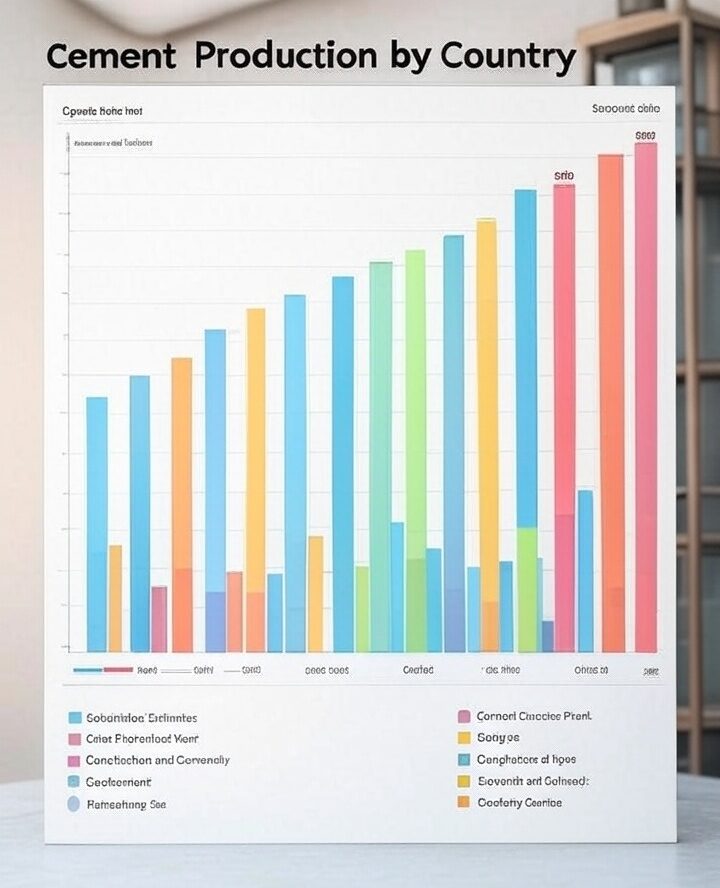
The global cement industry is a critical component of infrastructure development, with production and ownership structures reflecting economic, political, and environmental dynamics. This note provides a comprehensive analysis of who produces and owns cement worldwide, based on recent data and industry trends as of May 31, 2025. It expands on the key points and includes detailed insights into major producers, country-level production, and ownership structures.
Global Cement Production Landscape
Cement production is heavily concentrated in certain countries, with China leading by a significant margin. In 2023, China produced over 2.1 billion metric tons, accounting for approximately 50% of global output.
India follows with 410 million metric tons, and Vietnam with 110 million metric tons, highlighting Asia’s dominance in the sector. This concentration is driven by rapid urbanization and infrastructure projects, particularly in China, where cement is a cornerstone of construction, unlike regions like the United States, where wood is more common for housing.
The industry faces challenges, including environmental concerns, with large-scale production contributing to pollution, especially in China, where state support has boosted over-production.
Sustainability efforts, such as reducing CO2 emissions, are increasingly important, with companies like HeidelbergCement and Holcim investing in alternative fuels and low-carbon technologies.
Major Cement Producers and Their Capacities
The largest cement companies by production capacity, based on 2024 and 2025 data, are as follows:
Other notable producers include China Resources Cement Holdings (71 million metric tons, state-owned), Taiwan Cement Corporation (64 million metric tons, publicly traded), Eurocement (45 million metric tons, likely private with possible state ties in Russia), and Votorantim Cimentos (45 million metric tons, privately held by the Brazilian Votorantim Group).
Ownership Structures and State Influence
Ownership is a critical aspect, with significant variation across companies:
State-Owned Enterprises (SOEs):
CNBM is fully state-owned by the Chinese government, reflecting China’s strategy to control key industries .
China Resources Cement Holdings is part of China Resources, another state-owned enterprise, emphasizing state dominance in China’s cement sector.
Anhui Conch, while publicly listed on the Hong Kong and Shanghai Stock Exchanges, has its largest shareholder, Anhui Conch Holdings, owned by the Anhui Provincial People’s Government via subsidiaries like Anhui Provincial Investment Group Holdings Co., Ltd. and China Conch Venture Holdings . This structure indicates significant state influence, with the government controlling major stakes.
Publicly Traded Companies:
Holcim, headquartered in Switzerland, is publicly traded on the SIX Swiss Exchange, formed by the merger of Lafarge and Holcim in 2015 . It operates in over 90 countries, focusing on sustainability and innovation.
HeidelbergCement, based in Germany, is listed on the Frankfurt Stock Exchange, with operations in over 50 countries, emphasizing sustainable practices like reducing CO2 emissions .
Cemex, headquartered in Mexico, is listed on both the Mexican Stock Exchange and the New York Stock Exchange, serving the Americas and beyond .
Taiwan Cement Corporation, based in Taiwan, is publicly traded, reflecting the region’s industrial focus .
Private Companies:
Votorantim Cimentos, the largest in Brazil, is privately held by the Votorantim Group, a conglomerate with diverse interests .
Eurocement, Russia’s largest, is likely private, though large Russian companies often have indirect state ties, though specific ownership details were not fully clarified in the data .
Mergers, Acquisitions, and Industry Dynamics
The cement industry has seen significant consolidation, affecting ownership and market share. For instance, Holcim was formed by the merger of Lafarge and Holcim in July 2015, creating one of the largest global players.
Similarly, Italcementi (Italy) became part of HeidelbergCement in 2016, expanding its global footprint.
Technological advancements, such as AI in supply chain optimization, are enhancing operational efficiency, with companies like Anhui Conch collaborating with Huawei on AI models for cement production.
These innovations are crucial for meeting growing demand, driven by infrastructure projects and government initiatives, particularly in Asia
Economic and Environmental Implications
Cement production is closely tied to economic growth, with demand often reflecting real estate and infrastructure activity.
However, the environmental impact is significant, with China’s cement industry criticized for pollution despite economic benefits.
Companies are responding with sustainability goals, such as Anhui Conch’s target to reduce emissions intensity by 6% by 2025 compared to 2020, aligning with China’s carbon peak and neutrality goals
Conclusion
In summary, no single entity produces or owns all the cement in the world; instead, the industry is dominated by a mix of state-owned enterprises (especially in China), publicly traded companies, and private firms. Chinese companies like CNBM (state-owned, 530 million metric tons/year) and Anhui Conch (state-influenced, 288 million metric tons/year) lead in capacity, followed by international players like Holcim (publicly traded, 274 million metric tons/year) and HeidelbergCement (publicly traded, 121 million metric tons/year). Ownership structures reflect national policies, with China’s state control contrasting with the public and private models in other regions. This diversity underscores the global and multifaceted nature of the cement industry as of May 31, 2025.
This post explores the world cement market, highlighting production by country, key producers’ capacities, and ownership details. Data is based on 2023-2024 figures and 2025 projections from sources like Statista, World Population Review, and IMARC Group.
Cement Production by Country (Million Metric Tons, 2023 & 2025 Est.)
Key Producers, Capacity, and Ownership
Company
Headquarters
Production Capacity (Million Metric Tons/Year, 2024)
Ownership
China National Building Material (CNBM)
China
530
State-owned
Anhui Conch Cement
China
288
Publicly listed, state-influenced
Holcim
Switzerland
274
Publicly traded
HeidelbergCement
Germany
121
Publicly traded
Cemex
Mexico
87
Publicly traded
Market Insights:
Total Production (2023): 4.1 billion metric tons, estimated to remain stable or grow slightly by 2025 due to demand in Asia, Africa, and infrastructure projects.
Market Value: Valued at USD 407.4 billion in 2024, projected to reach USD 673.8 billion by 2033 (CAGR 5.16%).
Trends: Shift toward sustainable cement (e.g., blended cement with fly ash, slag), driven by environmental regulations and urbanization.
Key Drivers: Population growth, infrastructure investments (e.g., India’s Smart Cities Mission), and eco-friendly production innovations.
🚧 Portland contractors: Need quick concrete volume estimates for PBOT-approved curb & gutter? Our free online calculator now includes presets based on the latest P-540 Curbs standards (updated 05/18/2022) from the Portland Bureau of Transportation. Volume Concrete – PBOT Curb & Ramp Calculator (P-540 / P-549 / P-550) PBOT Curb, Gutter & Ramp Concrete Calculator…
Washington State Concrete Contract Leads – January 9, 2026 Washington State Concrete Contract Leads – January 9, 2026 This internal report compiles open bids for Washington state contracts involving concrete work, construction, paving, repair, or related materials/services. Focus is on opportunities relevant to concrete supply, pouring, repair, or paving. Entries are sorted by category and…
Idaho State Concrete Contract Leads – January 9, 2026 Idaho State Concrete Contract Leads – January 9, 2026 This internal report compiles open bids for Idaho state contracts involving concrete work, construction, paving, repair, or related materials/services. Focus is on opportunities relevant to concrete supply, pouring, repair, or paving. Entries are sorted by category and…
Weekly Concrete Contract Leads Report – Week Ending January 9, 2026 Weekly Concrete Contract Leads Report – Week Ending January 9, 2026 Dear Volume Concrete Team, This is your internal weekly roundup of new and updated bid opportunities for concrete work, construction, paving, and related services in Oregon, with a focus on Portland. Curated from…
Daily Lead Gen: Local Construction Leads in Oregon Daily Lead Gen: Finding Local Construction Leads in Oregon Date: January 09, 2026 Guide for Volume Concrete to find state/local bids in Oregon/Portland. Focus on concrete-related projects (e.g., roads, infrastructure). Free to register on most sites. Why? Access state, city, metro contracts for construction work. Key Resources…
Daily Lead Generation Report: Guide to Acquiring a SAM.gov Account for Federal Concrete Contracts Daily Lead Generation Report: Comprehensive Guide to Acquiring a SAM.gov Account Date: January 09, 2026 This report provides a step-by-step HTML guide for registering on SAM.gov, essential for accessing federal contracts out for bid relevant to Volume Concrete (e.g., infrastructure, construction…
Comprehensive Interactive Guide to NAICS Codes for Construction: Focus on Concrete Industry DECLASSIFIED TOP SECRET // INTERNAL USE ONLY Comprehensive Interactive Guide to NAICS Codes for Construction: Focus on Concrete Industry Volume Concrete Team – Declassified for Internal Training Purposes Only! This redacted document provides an in-depth, interactive guide to NAICS codes relevant to our…
Research suggests geopolymer cements reduce CO2 emissions by up to 80% compared to Portland cement, using industrial byproducts.
It seems likely that geopolymer cements offer higher compressive strength and durability, suitable for precast and marine applications.
The evidence leans toward geopolymer cements being fire-resistant and chemically stable, with potential in specialized uses like coatings.
There is some controversy around standardization, as lack of uniform testing methods hinders widespread adoption.
Geopolymer cements are sustainable alternatives to traditional Portland cement, leveraging waste materials like fly ash and slag to create low-carbon binders. They show promise in reducing environmental impact and enhancing construction durability, but challenges like curing requirements and standardization need addressing.
Environmental Benefits
Geopolymer cements can cut CO2 emissions significantly, using industrial byproducts to minimize waste and conserve resources, making them eco-friendly for construction.
Performance and Applications
They likely offer superior strength and resistance to fire and chemicals, ideal for precast elements, bridges, and even innovative uses like water filtration, expanding their utility in modern building.
Challenges
However, the lack of standardized methods and high curing needs pose hurdles, with ongoing research aiming to improve accessibility and long-term data.
Survey Note: Detailed Analysis of Geopolymer Cement Alternatives
Geopolymer cements represent a transformative approach to sustainable construction, offering low-carbon alternatives to traditional Portland cement. This analysis, as of May 29, 2025, explores their composition, environmental benefits, mechanical properties, applications, challenges, and future prospects, drawing from recent insights and industry trends. It builds on the narrative of sustainable cement alternatives, particularly in relation to limestone-based cements, and positions geopolymer cements as a critical component in decarbonizing the construction sector.
Definition and Composition
Geopolymer cements are inorganic polymers formed through the geopolymerization process, which involves the reaction of aluminosilicate materials with alkali activators. The resulting structure consists of semi-crystalline or amorphous three-dimensional networks of [SiO4]4- and [AlO4]5- tetrahedra. Key source materials include:
Natural or processed materials: Metakaolin (calcined kaolin clay), calcined clays, zeolite, rice husk ash, red mud, mining waste, waste glass, and feldspar.
Alkali activators, such as sodium hydroxide (NaOH), potassium hydroxide (KOH), sodium silicate (Na2SiO3), or potassium silicate (K2SiO3), initiate the reaction by dissolving the aluminosilicate phases, followed by reorganization, condensation, and polymerization to form a solid binder. This process contrasts with Portland cement, which relies on calcium silicate hydration and involves high-temperature calcination of limestone, making geopolymers a lower-energy alternative.
Environmental Benefits
The environmental advantage of geopolymer cements is significant, driven by their reduced carbon footprint and resource efficiency. Research, as cited in Geopolymer Concrete: A Sustainable Alternative to Portland Cement, suggests geopolymer concrete can reduce embodied carbon by up to 80% compared to ordinary Portland cement (OPC) concrete. This is primarily because geopolymerization does not require limestone calcination, a process that emits approximately 0.8 to 1 ton of CO2 per ton of cement in Portland cement production, as noted in Geopolymer: A cheaper, greener alternative for cement. The CO2 footprint of geopolymer concrete is estimated to be 9% less than concrete containing 100% OPC, per Geopolymers as an alternative to Portland cement: An overview.
Moreover, geopolymer cements utilize industrial byproducts, contributing to a circular economy by valorizing waste materials. This reduces the environmental burden of waste disposal and conserves natural resources, aligning with global sustainability goals. The global annual cement production, expected to reach 5.9 billion tons by 2020, generates over 4.8 billion tons of CO2, highlighting the urgency of such alternatives, as per Geopolymers as an alternative to Portland cement: An overview.
Mechanical Properties and Performance
Geopolymer cements exhibit mechanical properties that are often superior to Portland cement, enhancing their suitability for construction. Studies indicate higher compressive strength, particularly in the early stages, due to rapid polymerization. For instance, Geopolymer Concrete: A Sustainable Alternative to Portland Cement notes that geopolymer paste achieves higher compressive strength than OPC paste at 3 days, with strength increasing over time due to continuous polymerization and condensation. Geopolymer: A cheaper, greener alternative for cement adds that geopolymer is twice as strong in compression and three times as strong in flexure, with the ability to set within one day.
Durability is another strength, with geopolymer concrete showing excellent resistance to chemical attacks (e.g., sulfates, acids), freeze-thaw cycles, and fire. Its dense microstructure and low permeability make it ideal for harsh environments, such as marine settings or industrial facilities, as detailed in Geopolymers as an alternative to Portland cement: An overview. This durability, combined with lower corrosion rates for reinforced steel bars, extends the lifespan of structures, enhancing long-term sustainability.
Advantages and Applications
Geopolymer cements offer a range of advantages, expanding their potential applications. Key benefits include:
Precast elements like railway sleepers, sewer pipes, and tunnel segments, benefiting from rapid strength gain.
Structural elements such as piers and bridges, especially in coastal or underwater environments.
Specialized uses like fire and corrosion-resistant coatings, water and air filtration, CO2 sequestration materials, projectile armor, and paint substitutes, as highlighted in Geopolymer: A cheaper, greener alternative for cement.
Waste immobilization, where geopolymers encapsulate hazardous waste, providing a safe and durable solution.
Challenges and Limitations
Despite these benefits, geopolymer cements face several challenges that limit widespread adoption. Key issues include:
Lack of Standardization: There are no standardized mix designs or testing methods, making it difficult for engineers to adopt, as noted in Geopolymer Concrete: A Sustainable Alternative to Portland Cement. This lack of uniformity is a significant barrier, with ongoing efforts needed to develop global standards.
These challenges highlight the need for continued research to address technical and regulatory barriers.
Future Prospects
The future of geopolymer cements is promising, with research focused on overcoming limitations and expanding applications. Key areas include:
Agro-Waste Utilization: Using agricultural waste, such as rice husk ash, rich in silica, can improve quality and reduce costs, as noted in Geopolymer Concrete: A Sustainable Alternative to Portland Cement. This aligns with the circular economy and provides an outlet for agricultural byproducts.
As of May 29, 2025, geopolymer cements are gaining traction in niche markets, with potential to capture a significant share of the global cement market by 2030, especially if supported by policy and technological advancements.
Summary Table: Geopolymer Cement Alternatives
Type
Key Materials
Emission Reduction
Strength/Durability
Challenges
Fly Ash-Based
Fly ash, alkali activators
Up to 80%
High compressive, durable
Declining fly ash availability
Slag-Based
Blast furnace slag, alkali activators
50-70%
Excellent durability
Limited slag supply, high costs
Metakaolin-Based
Metakaolin, alkali activators
40-60%
High strength
High cost, energy-intensive
Calcined Clay-Based
Calcined clay, alkali activators
30-40%
Good resistance
Calcination control, standardization
This table encapsulates the key alternatives, providing a quick reference for stakeholders in construction.
Expert Insights
Experts like Trudy Kriven, as cited in Geopolymer: A cheaper, greener alternative for cement, emphasize geopolymer’s potential to reduce global CO2 emissions, particularly in large-scale construction projects. This aligns with global efforts to decarbonize, with geopolymer cements seen as a practical step forward.
In conclusion, geopolymer cement alternatives are well-supported by their environmental benefits, performance enhancements, and growing applications. As of May 29, 2025, their adoption is shaping a more sustainable future for the construction industry, balancing performance with ecological responsibility.